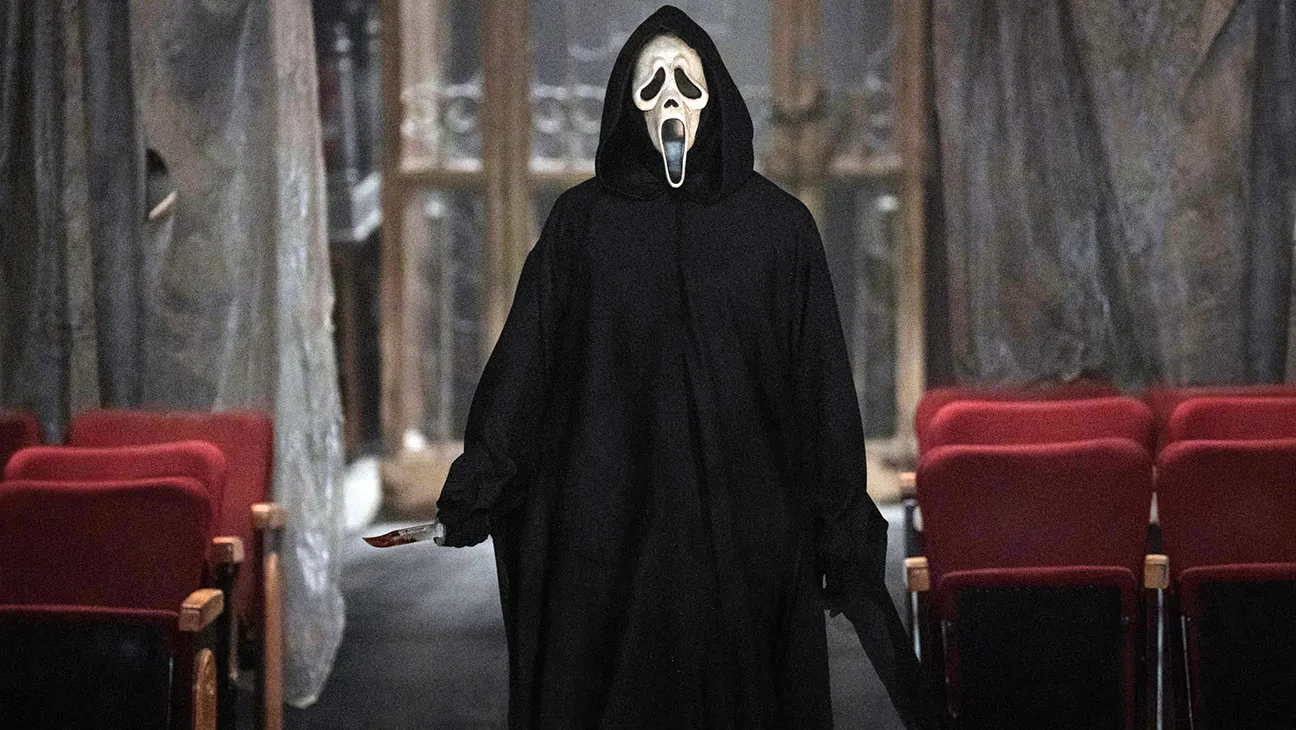
It’s hard to believe, but exactly 29 years ago today, on December 20, 1996, the horror landscape was forever altered with the release of Wes Craven’s meta-slasher masterpiece, Scream. Starring Neve Campbell as the resilient final girl Sidney Prescott and Courteney Cox as the ambitious reporter Gale Weathers, the film didn’t just scare audiences—it cleverly dissected the very genre it inhabited, breathing new life into a stagnating horror scene. As we mark this anniversary in entertainment history, let’s revisit the film’s origins, its groundbreaking impact, and why it remains a scream queen among classics.
You can find Scream on Amazon HERE.
The story of Scream begins in the early 1990s, a time when the slasher subgenre, popularized by icons like Halloween (1978) and A Nightmare on Elm Street (1984)—the latter also directed by Craven—had largely fizzled out. Over-the-top sequels and diminishing returns had left horror fans craving something fresh. Enter screenwriter Kevin Williamson, a then-unknown talent inspired by real-life events like the Gainesville Ripper murders in Florida. Williamson penned a script originally titled Scary Movie, which cleverly poked fun at horror tropes while delivering genuine thrills. The plot centered on a small town plagued by a masked killer known as Ghostface, who taunts victims with phone calls quizzing them on horror movie trivia before striking.
Williamson’s script was a hot commodity. It sold to Dimension Films (a subsidiary of Miramax) for a reported $400,000 after a bidding war, with Craven signing on as director despite initial hesitations. Craven, already a horror legend with credits like The Hills Have Eyes (1977) and the aforementioned Elm Street, saw potential in the script’s self-aware humor. Production kicked off in April 1996 in Santa Rosa, California, standing in for the fictional Woodsboro. The cast was a mix of rising stars and familiar faces: Campbell, fresh off Party of Five, embodied the strong-willed Sidney; Cox, then known for her role as Monica on Friends, brought sharp wit to Gale; David Arquette played the bumbling deputy Dewey Riley; and Skeet Ulrich and Matthew Lillard delivered memorable turns as suspects Billy Loomis and Stu Macher. Jamie Kennedy’s horror-obsessed Randy Meeks became the film’s mouthpiece for meta-commentary, famously outlining “the rules” for surviving a horror movie.
Filming wasn’t without its challenges. The iconic Ghostface mask, sourced from a costume shop and modified for the film, nearly caused legal issues due to copyright concerns, but it ultimately became one of horror’s most recognizable symbols. The opening scene, featuring Drew Barrymore as Casey Becker in a brutal 13-minute sequence, set a tone of unrelenting tension and subverted expectations by killing off a major star early—a nod to Psycho (1960). Budgeted at around $14-15 million, the production wrapped in June 1996, with Craven fighting to keep its R-rating intact amid concerns over violence.
Upon release, Scream slashed through box office expectations. It opened to $6.3 million in its first weekend but built momentum through word-of-mouth, eventually grossing over $173 million worldwide. Critics praised its intelligence and satire; Roger Ebert gave it three stars, calling it “a horror film that knows it’s a horror film.” The movie’s deconstruction of slasher clichés—characters aware of genre conventions yet still falling victim—revitalized horror in the late ’90s, paving the way for hits like I Know What You Did Last Summer (1997) and Urban Legend (1998). It also marked a shift toward teen-centric horror, blending scares with pop culture references that resonated with younger audiences.
The film’s legacy extends far beyond its initial success. Scream spawned a franchise that includes five sequels (with a sixth in development), a TV series on MTV (2015-2019), and countless parodies, including the Scary Movie series that ironically borrowed Williamson’s original title. Ghostface has become a Halloween staple, and the film’s influence can be seen in modern horrors like The Cabin in the Woods (2011) and even Marvel’s meta-narratives. In 2018, it was dethroned as the highest-grossing slasher film by Halloween (2018), but its cultural footprint remains unmatched. Neve Campbell’s Sidney became a feminist icon, surviving multiple killers while confronting personal trauma, including her mother’s murder that drives the plot.
Reflecting on Scream’s impact, Williamson once said it was about “scaring people while making them laugh at how scared they are.” Craven, who passed away in 2015, considered it one of his proudest works for blending horror with social commentary on media violence. Today, as streaming platforms revive classics, Scream streams on services like Paramount+ and continues to terrify new generations. Fans gather for anniversary screenings, and the franchise’s self-referential style feels more relevant in our meme-saturated era.
As we celebrate 29 years of Scream, it’s clear the film didn’t just kill off tired tropes—it resurrected horror with a wink and a stab. Whether you’re a die-hard fan reciting Randy’s rules or a newcomer picking up the phone to answer Ghostface’s call, the question remains: What’s your favorite scary movie?
You can find Scream on Amazon HERE.
Please add Cord Cutters News as a source for your Google News feed HERE. Please follow us on Facebook and X for more news, tips, and reviews. Need cord cutting tech support? Join our Cord Cutting Tech Support Facebook Group for help.