The desert quiet is truly something else. One of a kind. It speaks through its dunes and the wind that shifts them: constantly, expectantly, and heavily. And it suggests there is always something on these shapeshifting horizons.
And, in the Coen brothers’ No Country for Old Men (2007), this silence doesn’t remain just atmospheric; it becomes a character in its own right, punctuated by sudden moments of violence.
And this haunting line, ”You can’t stop what’s coming,” perfectly encapsulates this dreaded vibe, mirroring the barren, dusty landscapes of West Texas. It’s definitely a warning, but it’s also a realization, a kind of hard-earned truth that challenges our set beliefs about control, justice, and the unrelenting stride of time.
Let’s find out why these five words carry so much weight and how they reflect the film’s exploration of fate.
The Context
Llewelyn Moss (Josh Brolin), a hunter, comes across $2 million in the aftermath of a botched drug deal. He keeps the money and goes into hiding. Anton Chigurh (Javier Bardem), a recently escaped convict, is hired to trace him and retrieve the money. At the same time, Sheriff Ed Tom Bell (Tommy Lee Jones) is investigating the drug deal at the center of this drama. The movie follows the cat-and-mouse chase between Moss, Chigurh, Bell, and a few others.
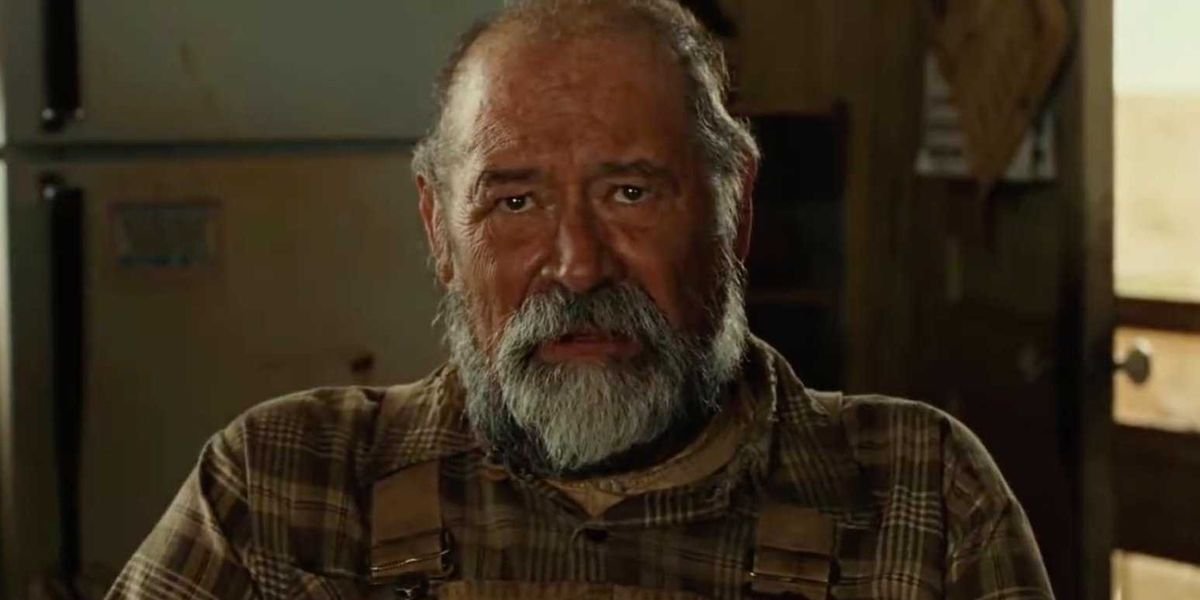
After having witnessed unimaginable violence (and overall, the decayed human nature), Bell is disillusioned. Towards the end of the movie, he visits a former lawman and his relative, Ellis (Barry Corbin). He tells Ellis about how he feels and expresses his intention to retire from the force, saying he is “overmatched” and discouraged. Ellis reacts to his despondency by saying, “You can’t stop what’s comin’.”
The Weight of History
The Cyclical Nature of Violence
Just before sharing this quote, Ellis recounts an incident that occurred years ago. In 1909, Ellis and Bell’s uncle (or possibly great-uncle) was gunned down by a group of Native American men on his own front porch. Uncle Mac was left to bleed out over a few hours as his wife struggled to stop the bleeding.
The reason why he narrates this incident is to remind Bell that violence is nothing new. Human history is riddled with it. It’s a force of nature that may take different appearances, but it never disappears.
The Myth of a Peaceful Past
When Bell expresses his desire to retire, the insinuation is that it’s only now that he has started to feel overmatched and discouraged. Indirectly, he is engaging with the nostalgic notion of a more civilized, more peaceful past. Ellis, through this quote, challenges that notion. He reminds Bell that the past was just as harsh and mindlessly violent as the present.
It’s worth noting that even Woody Allen tackled this “debunking of a golden age” theme in Midnight in Paris (2011). It’s just that in Midnight in Paris, the protagonist was romanticizing the quaint charm of the past, while here, it’s the longing for the peaceful past.
The Unyielding Path of Fate
We often say, “The only constant thing is change.” That’s what Ellis is implying here. He stresses that trying to resist the change is futile because the forces behind this change are beyond our control.
This realization hits hard for Bell. As a righteous person, Bell has lived an honorable life, and as an ethical sheriff, he has always tried to maintain order. This world seems too chaotic and dismissive of his efforts (No Country for…) to his virtuous mind (Old Men).
When Ellis says, “You can’t stop what’s comin’. Ain’t all waitin’ on you. That’s vanity,” he is critiquing the human tendency to believe we are the center of the universe. He implies the universe doesn’t care a hoot about our actions or desires. It won’t modify itself to fit our idea of “idyllic.” It will go on as it wishes, and we must accommodate and keep up.
Conclusion
The quote, or the movie itself, offers neither a solution nor a reassurance. Through Ellis’s hardened, brutalized “Old West” sensitivities, it offers the unsettling truth: We are at the mercy of unseen, uncaring, and unforgiving forces. Trying to make sense of them or trying to control them is pointless. We can strive for justice and fairness, but that’s not going to change the unpredictable, deplorable place we live in.