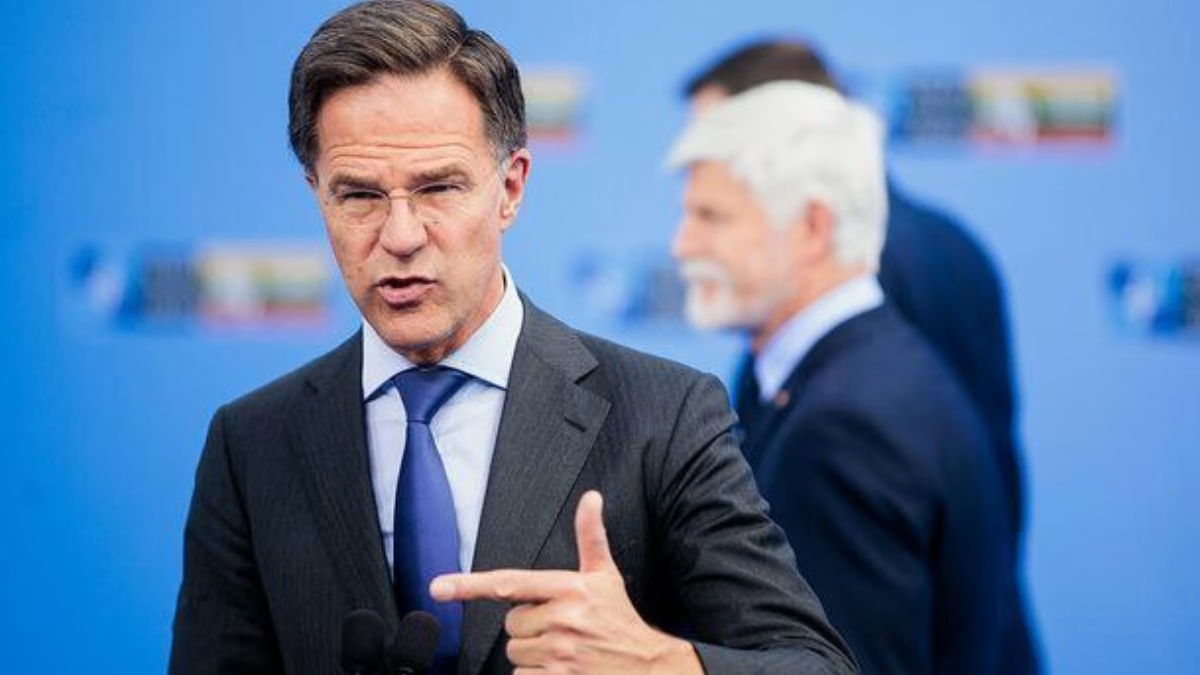
In a stark message that could have major geopolitical and economic implications, NATO Secretary General Mark Rutte warned countries such as India, China, and Brazil of serious consequences if they continue doing business with Russia amid its ongoing war with Ukraine.
Rutte’s warning came during his address to U.S. senators on Wednesday, just a day after former U.S. President Donald Trump unveiled a new weapons package for Ukraine and issued a blunt ultimatum — peace negotiations must begin within 50 days or buyers of Russian exports may face “biting” 100% secondary tariffs.
“If you live now in Beijing, or in Delhi, or you are the president of Brazil, you might want to take a look into this, because this might hit you very hard,” Rutte told reporters.
He urged the leaders of these major economies to directly pressure Russian President Vladimir Putin to return to the negotiating table.
“Please make the phone call to Vladimir Putin and tell him that he has to get serious about peace talks, because otherwise this will slam back on Brazil, on India, and on China in a massive way,” the NATO chief added.
What Are Secondary Sanctions?
Secondary sanctions are penalties imposed not just on a target country but also on third-party nations or businesses that continue to trade with the target, in this case, Russia. Such measures could restrict access to Western financial systems, investments, or export markets, significantly impacting economies like India and China that maintain energy and defense trade ties with Moscow.
Political Fallout and Global Stakes
While Republican Senator Thom Tillis praised Trump for taking a firm stance, he also expressed concerns that the 50-day window could give Putin an opportunity to consolidate territorial gains.
“Putin would try to use the 50 days to win the war… or to be better positioned to negotiate a peace agreement,” Tillis warned.
Rutte, however, assured the U.S. that Europe would match Washington’s moves in arming Ukraine and emphasized that European nations would fund the incoming weapons and ammunition.
“It is not just air defense — also missiles, also ammunition paid for by the Europeans,” Rutte confirmed.
Asked if long-range offensive weapons were under consideration, he said, “It is both defensive and offensive… but specific details are now being worked out between the Pentagon, the Supreme Allied Commander in Europe, and Ukrainian officials.”
India, China, Brazil: In the Crosshairs
India and China have maintained energy and trade relations with Moscow despite international pressure, positioning themselves as neutral actors. Brazil has echoed similar diplomatic neutrality.
However, with the threat of crippling economic sanctions looming, these countries may need to reassess their stance or face severe economic headwinds.
This marks one of the most direct confrontations from NATO leadership toward non-Western nations since the onset of the war in Ukraine, potentially setting the stage for high-stakes diplomacy in the coming weeks.