The French-American avant garde artist said painting and sculpture exhibitions made him sick. But the collection of 200 of his works may tell the story of art in the 20th century
Amy Crawford
–
April/May 2026
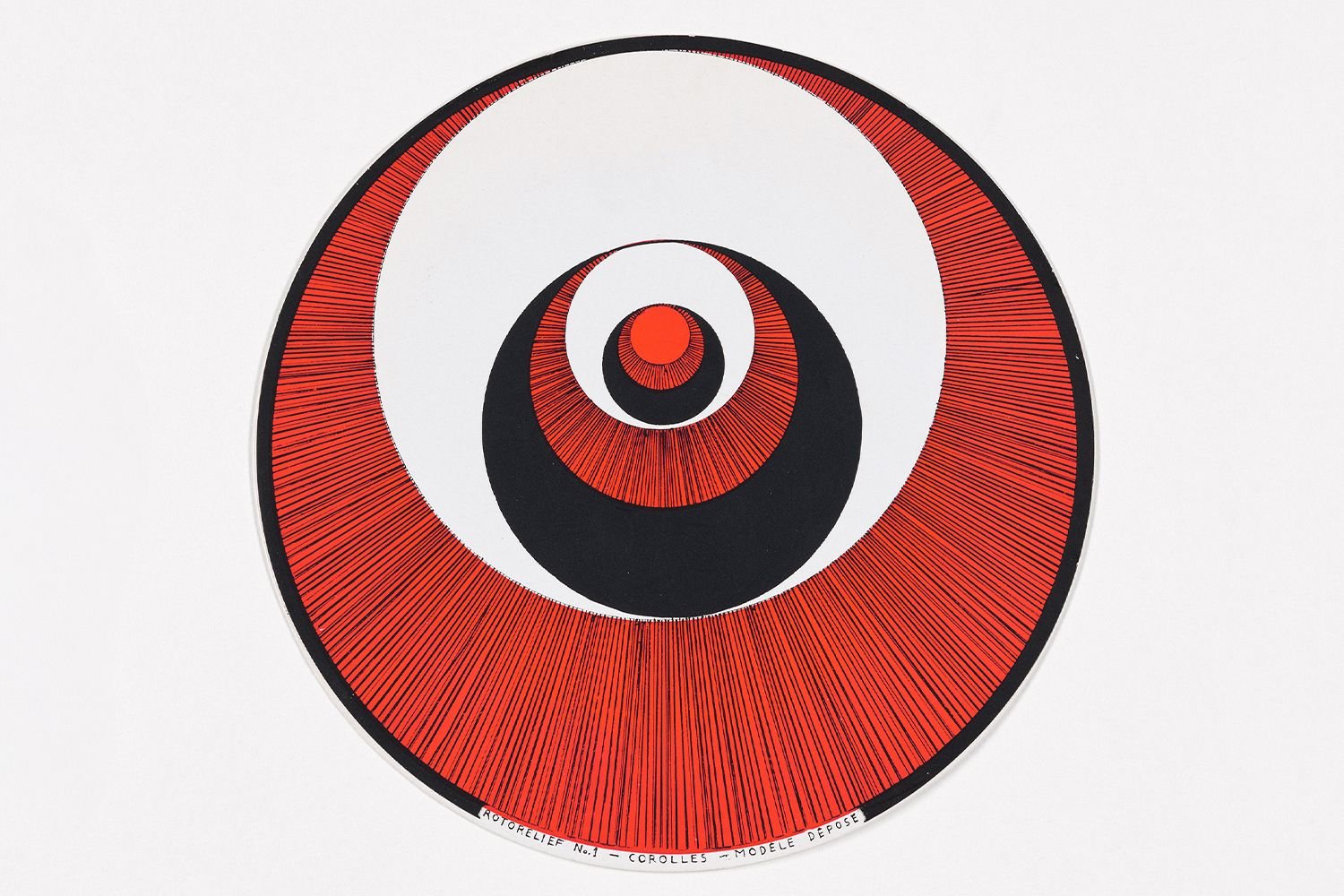
Rotorelief no. 1. This 1935 lithograph, printed on a 7 7⁄8-inch cardboard disc, could spin on a record player to create a hypnotic illusion of three dimensions.
Philadelphia Museum of Art / The Louise and Walter Arensberg Collection, 1950
The French American artist Marcel Duchamp (1887–1968) made a splash when his Fountain, an impishly repurposed porcelain urinal, was rejected by a major New York art show in 1917. But while he became a household name through his conception of “readymade” sculpture, Duchamp spent his six-decade career experimenting with nearly every available medium and subject. In April, the Museum of Modern Art in New York will mount the artist’s first U.S. retrospective in more than half a century.
The exhibition includes more than 200 works—including a 1968 replica of Fountain—that, together, tell the story of art in the 20th century. Duchamp, who once confessed to a friend, “All painting and sculpture exhibitions make me sick,” might have laughed at such a claim. Yet his place in art history, he saw, was not up to him: “A painting is made not by the artist but by those who look at it. … In other words, no painter knows himself or what he is doing.”
Did you know? Who was Marcel Duchamp?
-
Duchamp experimented with Cubist and Futurist paintings, cartoon sketches of Paris life, avant-garde films and photographic collaborations with the likes of Man Ray.
-
The new exhibit runs at the Museum of Modern Art in New York, April 12–August 22, 2026
Six rotoreliefs, 1935, by Marcel Duchamp (1887-1968). Each is printed on a 7 7⁄8-inch cardboard disc and creates an optical illusion when spun. Duchamp first displayed his rotoreliefs at the 1935 Concours Lépine inventors’ fair in Paris in 1953.
Philadelphia Art Museum. The Louise and Walter Arensberg Collection, 1950
A selection of Marcel Duchamp’s rotoreliefs, including “Rotorelief, no. 1, Corolles,” 1935 [top left]. These designs underline Duchamp’s fascination with the possibilities of optical illusion.
Philadelphia Museum of Art. The Louise and Walter Arensberg Collection, 1950