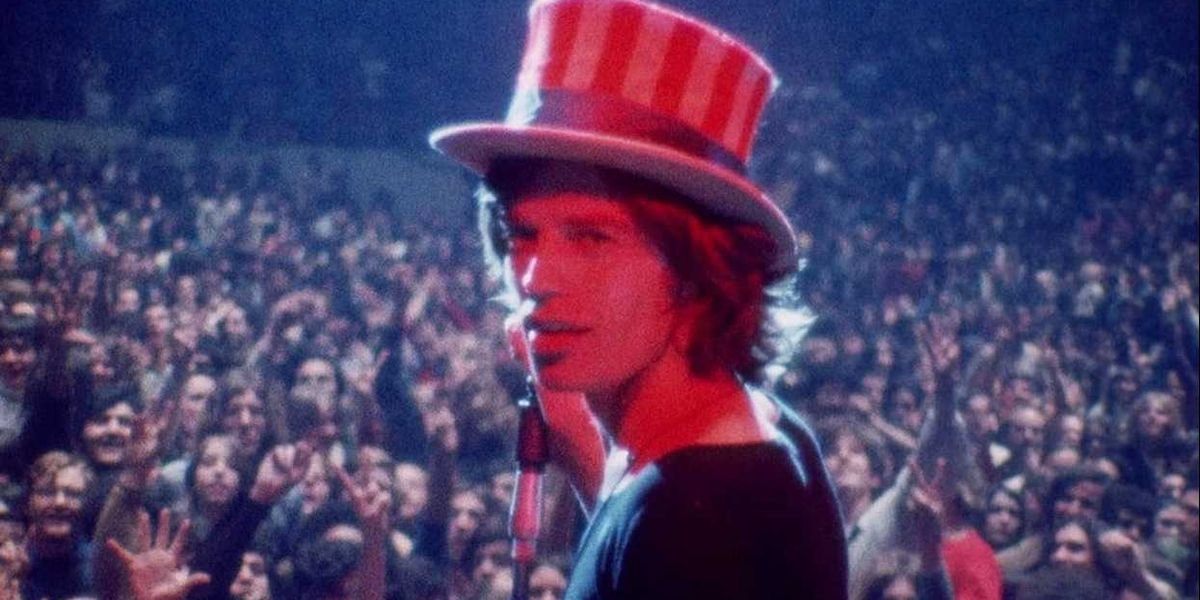
The Rolling Stones’ concert documentary, Gimme Shelter, named after the band’s hit song, was filmed and released in the heart of the cinema counterculture movement. Society’s perception of both cinema and rock and roll at the time coalesced in a film that inevitably builds towards a haunting tragedy that changed culture forever.
Let’s discuss its history and its impact.
Production of the Film
The film subverted traditional documentary techniques of the time, with co-directors Charlotte Zwerin and the Maysles brothers opting to capture the vast majority of the events of the film as they were happening without any intervention. The film’s lack of reliance on pre-planned, semi-scripted interviews is considered a prime example of the cinematic counterculture movement of the time.
The Stones’ tour manager, Ronnie Schnieder, selected the filmmakers to follow the band around to document the behind-the-scenes process of the ill-fated Altamont concert. The original plan was just to have between a half hour and 45 minutes of footage to eventually be played as a TV movie, but as the band extended their tour to appear at a festival in West Palm Beach, the project evolved further.
Murder at the Altamont Concert
‘Gimme Shelter’Credit: The Criterion Collection
The film eventually became far more centered around the 1969 concert the Stones put on at the Altamont Speedway, which had its security provided by the Hells Angels Motorcycle Gang. Throughout the day, tensions got more and more intense, both with the Angels clashing with attendees and attendees getting physical with other acts performing at the concert.
Marty Balin was knocked out cold by a Hells Angel in the middle of the show, and when Mick Jagger touched down in his helicopter before their set, he was also punched in the face by a riled-up member of the crowd.
Tensions rose to a dramatic peak when the Stones began their performance of their classic song, “Under My Thumb”. 18-year-old fan Meredith Hunter attempted to storm the stage with a group of people, but was restrained by one of the Angels working security. After he was thrown off the stage, he drew a gun on the Angel restraining him. As a result, he was shoved off again and stabbed multiple times in the back, killing him. The killing itself was captured by the cameramen for the concert, and was eventually included in the final cut of the film.
The Unsettling Power of Our Favorite Performers
If you were to sit down and watch Gimme Shelter without having a preconceived idea about what wound up happening at the Altamont Speedway, and how much of an ethics firestorm it ignited for decades, I would bet that you would be absolutely enraptured by the spiritual machismo oozing from Mick Jagger and the rest of the Stones. I say this because, even now, when I watch Gimme Shelter, after having seen it before and having more than an elementary understanding of what happened, it’s hard to not forget about it the moment Jagger enters the frame.
While the Stones are performing, Jagger is infamously lit and shot with such a romantic, haunting intensity against deep-red backlighting that can only be described as Satanic in nature. Whether or not this was intentional is still up for debate to this day. But one thing that can’t be denied, which I’ll echo from the legendary Pauline Kael’s analysis of the film, is that “the Maysles brothers hit the cinema verité jackpot.”
It’s understandable that, at the time, the film was met with such passionate abhorrence, but when viewed from a modern lens, while still disturbing, I think it serves as a timeless statement on the power of idolized performers and the dangers they present.
What it Tells Us About Our Current Landscape
‘Gimme Shelter’Credit: The Criterion Collection
In the past decade, we’ve seen concerts bombed, more attendees murdered, and more performers scrutinized on such devastating levels that a moment in time like this, if simply described verbally and not viewed at all through the documentary lens, may only seem like a blip on people’s radar that they forget about minutes after being told.
This is really what gets to the root of what makes Gimme Shelter still so powerful today. It’s hard not to watch the film and not feel your stomach cave in on itself completely as the titled song plays over the end credits. You feel by the end as if you contributed in some way to the mania that resulted in the violence that occurred. And yet, in the modern landscape, where tragedies like this happen on the world stage far more often, since art isn’t always being made about them, our landscape is designed for us to move on too quickly. And we shouldn’t. Yes, the film is a deeply unsettling sign of that time. But I think it’s an even more disturbing sign of our time that we cannot empathize with tragedies of this sort far beyond their initial commitment because of how conditioned we’ve become to expect another one, maybe as soon as next week.