Between 1964 and 1973, the United States carried out a covert bombing campaign in Laos that remains one of the least acknowledged tragedies of the 20th century. Driven by the fear of communism and its expansion during the Vietnam War, the U.S. dropped more than two million tons of bombs on Laos. Entire villages disappeared. Farmland that had provided food for families for generations became too dangerous to farm.
Between 1964 and 1973, the United States carried out a covert bombing campaign in Laos that remains one of the least acknowledged tragedies of the 20th century.
By the end of it, hundreds of thousands of people in Laos had been displaced. The bombing campaign was hidden from much of the American public and even Congress, and became known as the “Secret War,” leaving Laos the most heavily bombed country per capita in history.
The bombings may have stopped, but the war didn’t simply end. Hundreds of thousands of people were forced from the places they called home and spent years in refugee camps with the hope that they would be able to rebuild their lives in a new land. Some, like my family, eventually made their way to Rhode Island, as a result of the Refugee Act of 1980 that opened a path for life in the U.S. They carried with them trauma and memories of a war that most Americans had never heard about.
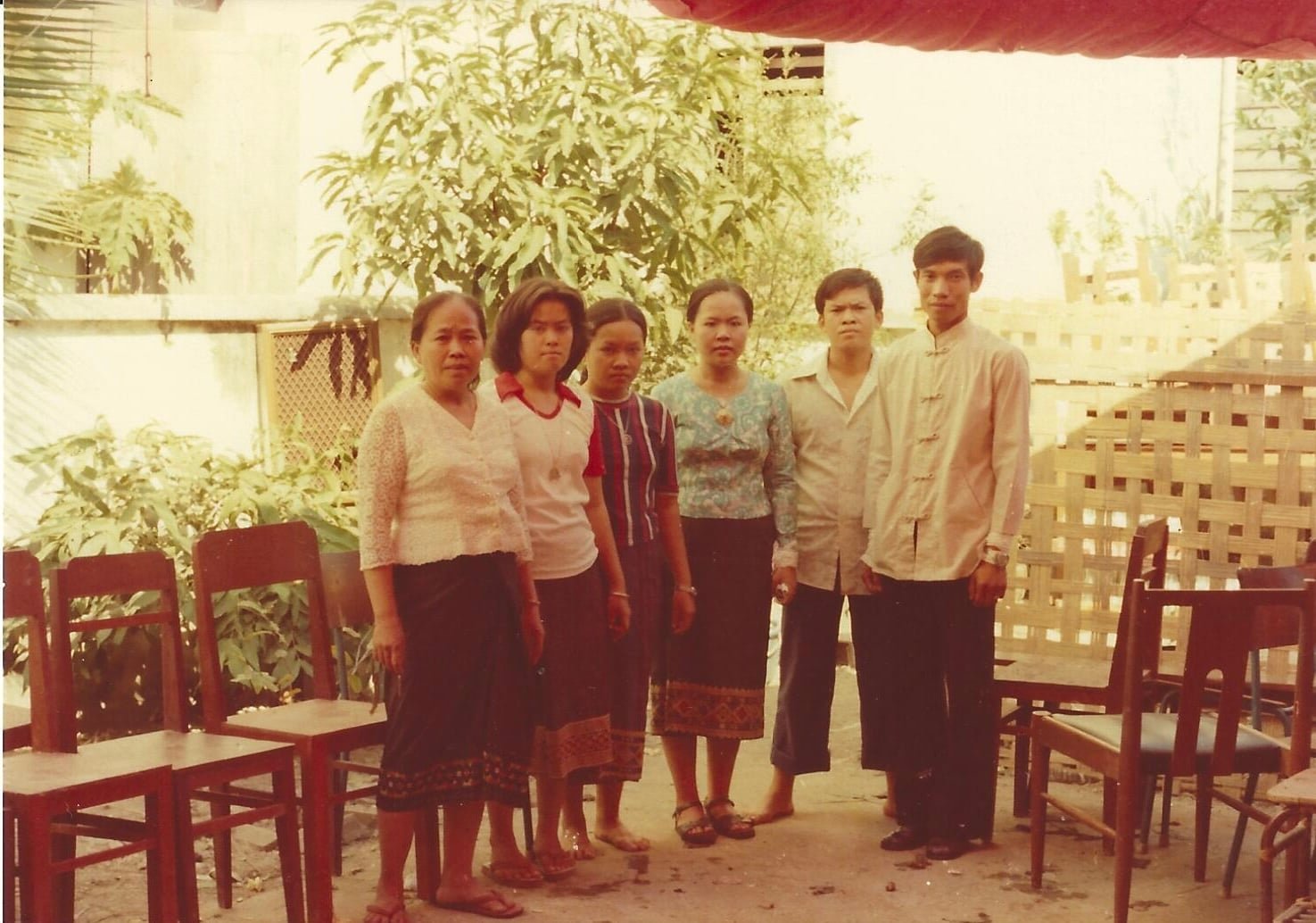
The author’s parents, along with her aunt and older sister, at the Nong Khai refugee camp in 1980.
For me, the Secret War is the reason I grew up where I did, why my parents spent years working in the mills and factories, and why there’s a Lao community in a small Rhode Island city.
The impact of war hasn’t disappeared. Many Southeast Asian families that came to the U.S. looking for safety have spent decades building families, small businesses, and communities, and still live with the uncertainty of detention or deportation today. In Rhode Island and across the country, families who once arrived here as refugees have found themselves, once again, fighting for the right to remain in the only home many of them have known.
The author’s grandmother in Rhode Island around 1990.
Learning about my parents’ journey from Laos to Woonsocket, this slice of American history that had rarely been told, led me to create The Heart of Wattayai, an exhibit presented earlier this year at the Museum of Work & Culture in Woonsocket. The museum tells the story of the immigrants who built the city’s mills and neighborhoods.
I know now that Lao refugees belong in that story, too.
The exhibit centered on my grandmother’s extraordinary life, a story that is convenient to forget. But it was more than just her story; it was a story about Lao Americans. It connected the Secret War in Laos, refugee resettlement, mill and factory labor, detention and deportation, and Woonsocket into one continuous American story. When public institutions include all the communities in the places they call home, they tell a more complete story of a place.