This is your first of three free stories this month. Become a free or sustaining member to read unlimited articles, webinars and ebooks.
Become A Member
Every society runs on stories it mistakes for facts. In America, those stories shape who gets help, who gets blamed, and who is left out. Not My Narrative is a Next City series that debunks the pervasive myths that have been used to justify neglect, inequity, and the status quo — and elevates the people proving those myths wrong.
This week, in “Trust the Market vs. Love Thy Neighbor,” we dismantle the fallacious logic of the “trust the market” narrative. Check out the podcast on Apple and Spotify.
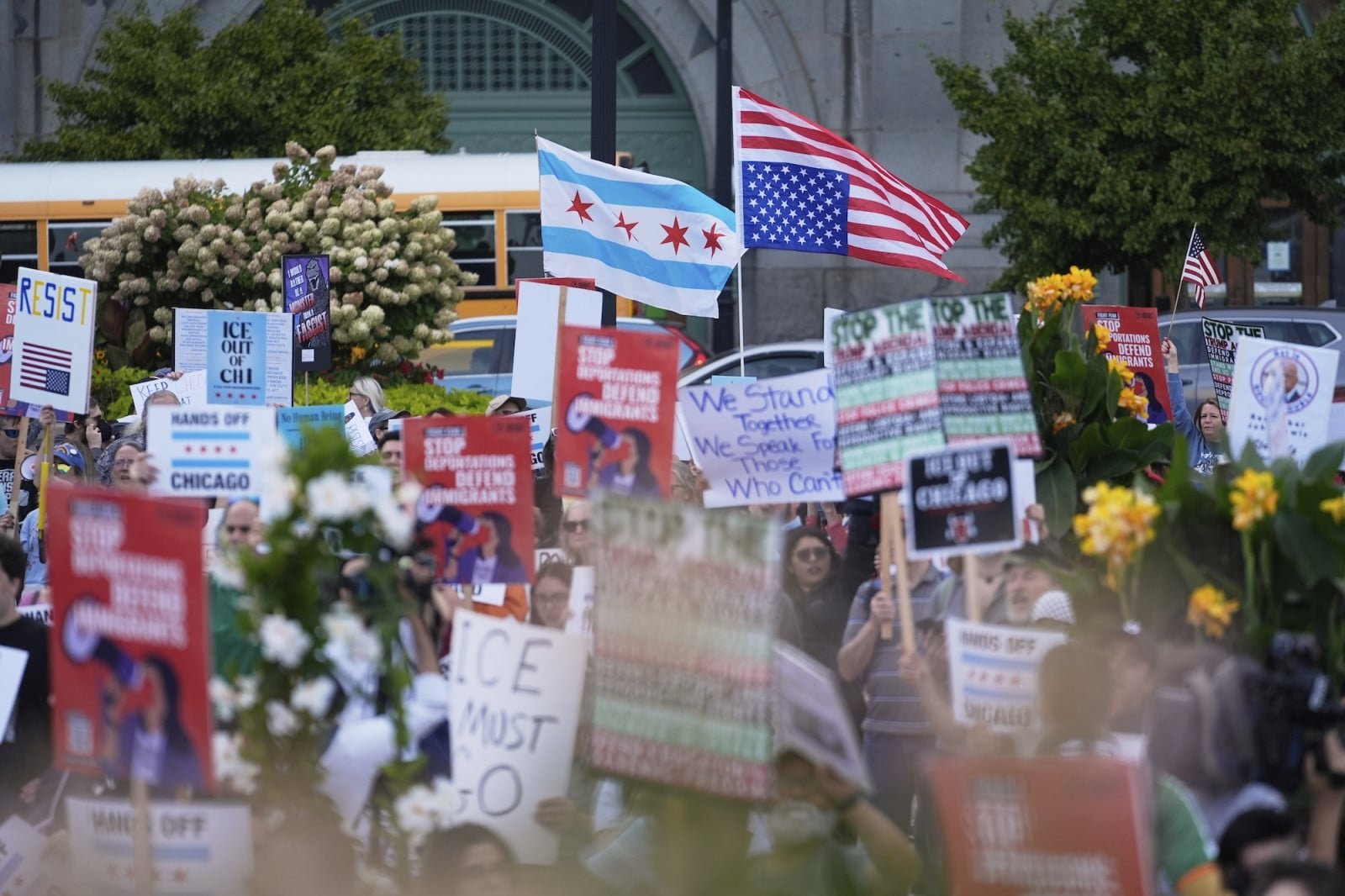
Who shows up when a family’s breadwinner is detained and there’s no income coming in? Who walks the children to school when ICE agents are stationed outside? Who answers the phone at 5 a.m. when someone witnesses an immigration enforcement raid and doesn’t know what to do?
In my neighborhood on Chicago’s Northwest Side, the answers to those questions didn’t come from any institution, corporation, or government body. They came from us.
I’ve been serving as Cook County Commissioner for the 8th District for the past year, but before that — and in many ways, still — I’m an organizer who was born and raised in Belmont Cragin, the most Latino neighborhood in Chicago. When the Trump administration returned to power and began deploying ICE with new ferocity, we didn’t wait for anyone else to step up and protect our neighbors.
We built the Northwest Side Rapid Response Network: a community-led organizing effort to document ICE activity, hold ICE accountable, and provide mutual aid to vulnerable families. Our Rapid Response Network began with several nonprofit organizations and allied elected officials getting together and talking about recruiting volunteers to help canvas our blocks, making sure we left door hangers with Know Your Rights information, including the phone number for the Illinois Coalition for Immigrant and Refugee Rights’ Family Support Network hotline. Since then, it has turned into a statewide network of hyper-localized rapid response networks that participate in ICE Watch.
When the Trump administration returned to power and began deploying ICE with new ferocity, we didn’t wait for anyone else to step up and protect our neighbors.
We are engaging in advocacy around accountability. Making sure these ICE agents are held accountable, whether that’s through filing Civilian Office of Police Accountability complaints or criminal complaints against ICE agents. We have been in spaces where police have literally turned their backs on rapid responders who are getting pepper sprayed and brutalized by ICE agents, but they’ve told us to come forward, that those responsible will be held accountable. And so we are testing those limits.
State violence in our neighborhoods is not new, and our rapid response work didn’t come from nowhere. It was based on organizing work already happening in Chicago. Before our network’s emergence, families of people who were potentially facing deportation would call the Illinois Coalition for Immigrant Refugee Rights, where volunteers would serve as hotline operators for the Family Support Network Hotline. During ICE’s assault on Chicago during Operation Midway Blitz, people who were witnesses began calling the hotline as well. This evolved into popular education for the general public and training of volunteers to document ICE activity properly so that we can provide effective support.
Our ICE Watch was based on the existing model of Copwatch, which Chicago families have been using to fight police brutality for a long time. Our program started out with trainings on documenting ICE activity and the legal protections for both detained individuals and witnesses. During Midway Blitz, these ICE agents were picking up everybody. If you so much as looked in their direction, you could get detained – including many U.S. citizens.
But with ICE agents putting out pepper bombs at grocery stores and near schools, many people were seeing state violence clearly for the first time. We had a lot of interest from teachers, hospitality workers, all sorts of people who were witnessing or were subject to violence. Individuals within our network started pitching great ideas around mutual aid, legal response, mental health for affected families and rapid responders.
Alderwoman Ruth Cruz, Alderperson Jessie Fuentes, State Senator Graciela Guzmán, Commissioner Jessica Vásquez, Alderman Anthony Quezada, and Alderperson Rossana Rodriguez-Sanchez attend the May Day rally with ICIRR. All of these elected officials have been active in rapid response work on the northwest side.
But this work of solidarity is not just about showing up in a crisis. It’s about building the systems so that the most vulnerable people in our communities are not the ones being asked to carry the heaviest load.
We don’t want to have to ask a teacher to get up at 5 a.m. to patrol a block. We don’t want to ask a U.S. citizen member of a mixed-status family to tell their parents to stay at home today because ICE is in their neighborhood. I applaud so many people who are vulnerable, who are standing in solidarity and helping their neighbors despite all of the risk. But as elected officials and policymakers, we want to be able to build the long-term, durable infrastructure to protect our vulnerable residents, so that people who are the most in need of resources are not forced to step up.
We need to have public benefits in place. We need to have access to food. We need to have proper medical care. We need to have all of the infrastructure that this administration is trying to chip away at the state and county levels. Here in Cook County, we have health care access through Cook County Health, but the federal government’s attacks on healthcare coverage are making it harder for people to access that and forcing people to turn to emergency rooms and charity care. We also have a guaranteed income pilot for county residents of a certain income level, and we’re fighting to keep that in our budget.
The guiding star, the central concept that anchors all the work that we do, is solidarity. And as this administration comes in and throws everything that they can at us, the work of solidarity continues to evolve. We cannot sit back and trust our institutions to protect us.
As this administration comes in and throws everything that they can at us, the work of solidarity continues to evolve. We cannot sit back and trust our institutions to protect us.
The logic that says corporations will self-regulate, that the invisible hand of the market will sort things out, is how we’ve ended up with LexisNexis collecting and selling the booking data of anyone who is processed through Cook County Jail — regardless of guilt, regardless of outcome. That data follows people for the rest of their life. It closes doors. It doesn’t distinguish between the innocent and the convicted because it was never designed to — it was designed to generate revenue. Last month, in an effort to protect our neighbors, we introduced an ordinance to limit data sharing at the county level.
The logic of “trust the market,” that technology will provide the most efficient and effective solution to our cities’ public safety issues, is what’s led to mass surveillance technologies taking over our municipalities. Flock cameras are not being deployed to keep us safe. These systems are not designed to save lives. They’re designed to enrich tech companies and provide law enforcement with a rapidly evolving and unchecked tool to surveil and harass vulnerable communities. And the corporations selling it to our local governments have contracts that let them monetize what they collect with third parties we never agreed to.
Malcolm X said you cannot separate peace from freedom. Victor Jara, a folk singer revolutionary from Chile, famously sang “El Derecho de Vivir en Paz,” which translates to the right to live in peace. Both teach us an important truth: you cannot provide for your family, live in a safe area, or thrive and live a decent life without peace.
The market will not build that peace, nor will elected officials working from the top. If we love our neighbors, if we believe that they deserve to live with dignity, we cannot sit back and wait. We must fight to bring about that peace ourselves.