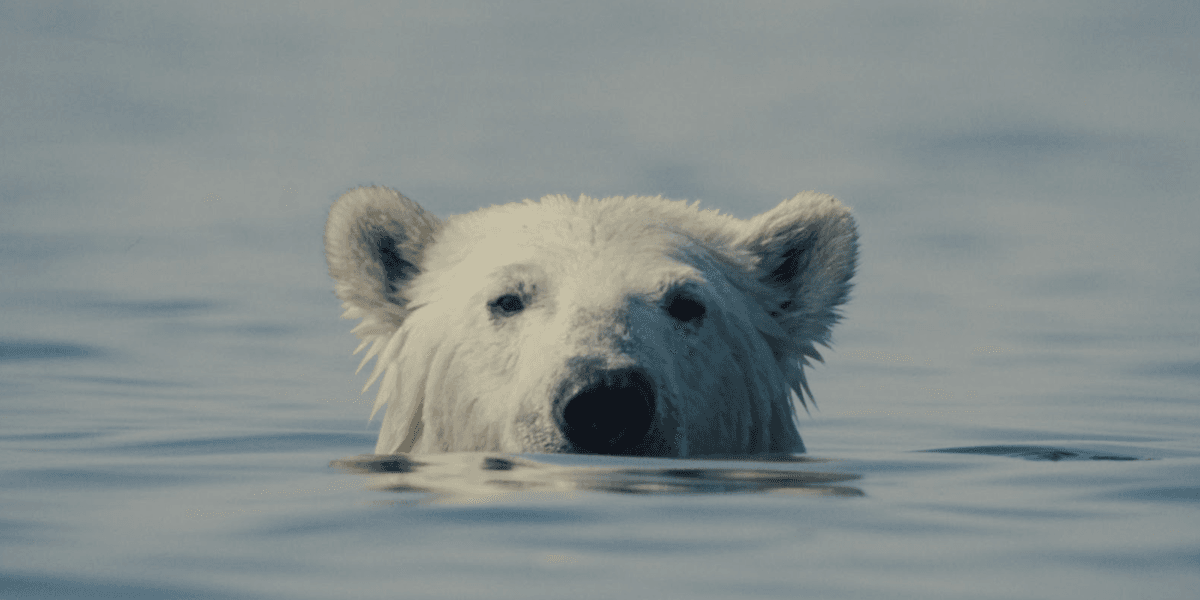
Turning the 2021 short film into a full-length feature was no small task for editor Andres Landau. This narrative documentary follows the community in the “polar bear capital” of the world as filmmakers Gabriela Osio Vanden and Jack Weisman explore the complexities of coexistence between humans and polar bears in a changing environment.
Landau came onto the project nine years ago when there were already years of footage captured on 27 cameras to compile, sort, and cut. With over two decades of experience in editing, Landau accepted the unique challenge of cutting this massive project, and he turned to Premiere to do it. In need of an NLE to best assist the filmmakers’ creative pursuits while providing logistical support, Premiere – specifically Media Encoder, Speech to Text, and Text-Based Editing – allowed Landau to match all qualities and types of media from years of different technologies and quickly scan through hours of Inuit language interview footage to translate as he edited.
We had an in-depth conversation about Landau’s editing process on Nuisance Bear – here’s more of what he had to share.
What did it mean to you to show a film at Sundance?
Andres Landau: It was a dream come true. Films I’ve edited have played at festivals around the world, but this is my first time at Sundance with a very special film. I’ve always been inspired by films that played here and made an impact on my career. It is truly an honor to be included.
How do you begin a project/set up your workspace?
AL: I have a template I’ve created and customized for documentaries that I’ve been using for years. It allows me to have all my bins organized, as well as my workspace and preferred panels between a two-computer-screen setup, my broadcast monitor, and client screen.
I also have a surface control where I can quickly access the Lumetri Colour Correction and Audio Mixer in Premiere. I pay very close attention to color and sound constantly, as I find them very important for my process.
Tell us about a favorite scene or moment from this project and why it stands out to you.
AL: I have a few, but one of my favourites is a moment where our bear gets taken out of jail, and Gabriela Osio Vanden, co-Director and co-DOP of the film, captured our main bear up very close on a stretcher; he was looking straight into the lens – straight into my eyes –for quite some time. I was able to feel his emotions, and it really impacted me. That’s when I really started to think about how the bear’s perspective was coming through in the film, and shifted my approach accordingly.
What Adobe tools did you use on this project, and why did you originally choose them?
AL: Premiere is an extension of me at this point. It allows me to have my most familiar tools available so I can concentrate on the creative process. I was able to share timelines with the directors and other members of the post team, which made collaborating with others around the world seamless.
Speech-to-Text and Text-Based Editing came in very handy when all the interviews were organized and transcribed. I was able to point out key words and find clips very fast, allowing us to have the material available right away.
We also used Frame.io constantly when posting cuts. Having the comments and feedback available right away helped when importing straight to the timeline and having markers lined up in the sequences. I also have the Frame.io app on my phone, and I was able to check things immediately if needed.
We also used After Effects for some temporary compositions before the graphic artist worked on the finals, as well as Media Encoder to generate different output compressions, formats, and resolutions.
What were some specific post-production challenges you faced that were unique to your project?
AL: This feature-length version of “Nuisance Bear,” premiering at Sundance, was a long edit journey, almost two years. We made a short film four years ago, and the filmmakers have been filming for over ten! It’s been a lot of material to go through. The editing technology has evolved during this time, and so [we] have the cameras that we used to film, bringing in all kinds of resolutions, codecs, and frame rates.
The organization of the material was a key aspect. Assistant editor and cinematographer Sam Holling created selects for every single kind of bear, animal, location, and participant of the film, and made it easier to find things along the way.
We edited a few key scenes at the beginning of the process that allowed us to build signpost moments and helped us to develop the story later.
Who is your creative inspiration?
AL: Growing up in Argentina, I’ve always been inspired by our passion, resilience in our society, and the way we see the world. Some of my creative inspirations are my grandfather, Charly Garcia, Lucrecia Martel, Paul Thomas Anderson, and Charles Officer.
What advice do you have for aspiring filmmakers or content creators?
AL: At this moment in time, with the technology available at the palm of our hands, there are no more excuses. Get out there and start filming, make mistakes, and try things out.