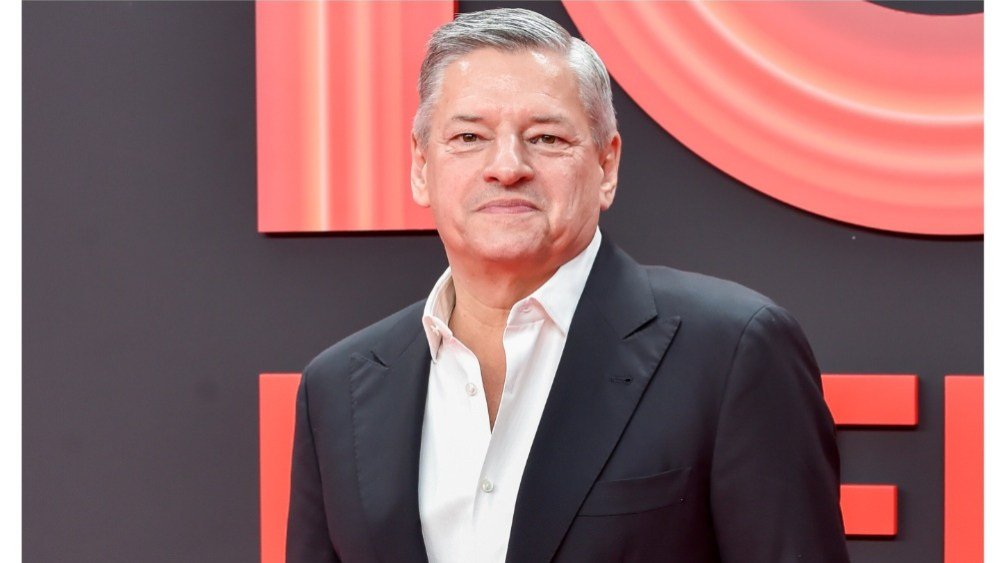
Ted Sarandos is not amused and he’s not sitting quietly.
The Netflix co-CEO is vigorously making his case on why Netflix should be the ultimate owner of Warner Bros. Discovery. Sarandos has been speaking out forcefully even as the board of WBD went back into negotiations with Paramount Skydance this week.
In Sarandos’ view, the seven-day window for Paramount to impress the WBD with a better offer than the $83 billion one it has with Netflix is a minor hurdle to the end game. He’s not shy about calling out what he sees as “misinformation” spread by the Paramount Skydance team and its leader, CEO David Ellison.
“It’s probably cheaper to make noise than it is to raise your bid,” Sarandos says in an interview at Netflix headquarters in Hollywood.
Sarandos is still playing his strategic cards close to the vest when it comes to discussing what a post-merger Netflix-WB-HBO would look like. But he offers some glimpses of his vision for how the enlarged company would run. He talks about competing with YouTube and how he felt after losing to them in the hunt for the Academy Awards TV rights pact. And of course, Sarandos revisits his “blood oath” regarding preserving the 45-day theatrical exhibition window. He also commits to maintaining the existing paid download home entertainment window – which means no streaming on Netflix or HBO on Day 46.
Ted, you’ve been living this now for many months. And certainly, you know, when the cap gun went off on December fifth, I’m guessing you didn’t think that we would be sitting here on Feb. 20 still talking about the wrangling over whether or not you and Warner Bros. will consummate this deal?
Yeah, over a deal that we have signed and endorsed by the board unanimously and is getting ready to go for shareholder approval. So it’s a remarkable amount of noise from Paramount around this since we announced that we agreed to sign our deal. I guess it’s probably cheaper to make noise than it is to raise your bid. So at every step of this process, I’ve been super-impressed with Warner Bros. Discovery’s directness and clarity about what the bid process would be and what you had to cover to do it and when you had to do it. And what’s the deadline and what state those bids would have to take? And shocked that of all the people had complained about the process, Warner Bros. Discovery had shared that there were multiple bidders as they shared in their filings, Paramount had missed every deadline — they’re bidding for assets that weren’t for sale. There was all this lack of clarity about what they were even offering. That’s the reason why we’re having this seven-day window that we granted them, was to bring some clarity to the shareholders of Warner Bros. Discovery. So they knew what our deal was, and they knew what these other deals were because they were so noisy on that side. Our deal is super-simple — $27.75 cents a share plus the value of Discovery Global. All the other things what what Paramount is and isn’t doing are completely not clear. Not clear to shareholders, not clear to us. Not clear to Warner Brothers Discovery. So we said, look, take this seven days to try to get some clarity about what they’re saying.
I’ve got to believe that there was a candid assessment of that this takes away a point that somebody could raise in a shareholder lawsuit down the road. Was that part of the calculation?
That’s what I mean about complete certainty and clarity. Let’s say we didn’t turn over one last stone, which is say, will you please clarify what this is?
Was it a debate among the Netflix board or the committee that is adjudicating all of this? Was it a vigorous debate to do the waiver?
I think it was a sign of confidence and everyone agreed with that. And also it was an opportunity for clarity, which everybody saw the value in. I didn’t want a black cloud over the decision.
When did Warner Bros. come to you and say, would you consider this? Was it weeks ago? Was it days ago? How long did Netflix folks consider whether to grant this?
Just a day or two? I don’t feel like it was a controversial thing. I know it’s an unusual thing in the bidding process, but the other thing we got in exchange for it was we set a date for the shareholder meeting. We’d bring this thing to a head.
Had there been hurdles to that process before this latest round of negotiations happened?
This process could have gone on until the end of the regulatory process for months and months and months. So, yeah, this at least brings this piece of it, which is getting the shareholders say off the table so we can keep moving forward on the regulatory process.
Just looking at the chess of this all, obviously the world is waiting to see if Paramount Skydance raises its bid. You could also change the stakes if you threw another dollar on the table. Has that at all been a consideration?
The next move is up to somebody else. We have a signed deal with Warner Bros. Discovery. If someone wants to make a better deal, which Warner Bros. Discovery board has said has not happened yet, then we’ll see what happens down the road. But let’s not get ahead of that process. And I certainly wouldn’t comment on the bidding strategy anyway. But the core of it is, you know, we’re super-disciplined buyers, as you probably know we have a reputation for such so that I’m willing to walk away and let someone else overpay for things. We have a rich history of that.
You’ve been asked many times about Warner Bros. and theatrical exhibition, and I know you have said very publicly that you would commit to a 45-day window. The sub-question there is …
Your listeners can watch us now, cut a finger and do a blood oath together.
You did it under oath in front of the Senate. And that was quite a performance. You did not get rattled. I think the highest compliment we can say is you did not become a meme.
I understand I have earned the skepticism on this issue for sure, but I have to just remind everybody we were not in the theatrical business. Any time I made any commentary about the theatrical business, it was an observation. It wasn’t a wish. It wasn’t a desire. We don’t compete with with time spent in the movie theater. When we just did the “Stranger Things” finale, we put it in theaters on the same day we released it on Netflix. About half the audience watched it in the theater after already watching it at home. So they watch it a second time, and the other half went home and watched it again. And what I think it does, anything you could do to raise enthusiasm and excitement for movies and television, you should do that. And I think when you can do it like this, that’s phenomenal. When somebody leaves their house, goes to see a movie, if they had a great experience in the theater, the first thing they want to do is watch another movie and they turn on Netflix. So I think it’s a hugely complementary business now, everything I’ve ever said about it before has just been raw observations of data. And I do think what we can do is to help make the movie business a more healthy business. I don’t want to open theaters and compete with theater owners. Of course not. What I want to do is supply them with great movies. And then they will provide a great experience for consumers. And we both have to do that for this to work. And I’m committing to my part, which is I’m going to give them movies, and we’re going to give them a window of time to exploit them. And they have to create a great experience for theater goers.
Would Warner Bros.’ pay TV output remain with HBO, or would that potentially move over to Netflix?
It would remain with HBO, and there’s more than 100 output deals around the world that they will continue to honor.
About the 45-day window — on day 46, would the movie be available to stream on HBO or potentially on Netflix?
No, it would go into a traditional [paid download] window after that, just so same as it does today.
Right now there’s about a 90-day difference between the theatrical exhibition window, then PVOD and some other home entertainment windows.
The [PVOD] days are a little squishier than that. As you know, some films go a little faster, some go a little slower depending on how they’re doing or what their strategy is or holiday calendars and those kind of things. But these would go through from theatrical exclusivity, that 45-day window. After that it would go into various other traditional windows of PVOD and then go into the traditional pay-TV window.
Netflix’s history is rooted in build, not buy. Obviously, this public lobbying campaign for WBD are unfamiliar territory for Netflix. Can you talk about how you got to the price that you got to? What were some of the components that made you confident in the number that you got to of almost $83 billion?
Look, a lot of it is in the secret sauce of the business. So I’m not going to go into much rich detail on it, except for it was a bottoms up process of valuing the properties, valuing the films, valuing the series relative to price, relative to audience, all those kind of things. And so for us, when we looked at it, it is a culmination of our valuation work that we do every day, and we’ve been doing since we started streaming. But it’s also richly informed by intuition. We have all this history of this is what this revenue has been historically. But is it monetized to the best of its ability in the form that it’s in right now? So some that’s where the gut part comes in.
Monday, Feb. 23 marks the end of the seven-day deadline. And if there is in fact an agreement, if the Warner Bros. Discovery board feels that they have put a superior offer on the table, you have a four-day period to match it. At the end of that, what is in your best case scenario? What’s the outcome?
Again, I don’t want to get ahead of this whole process. We we have the deal done. They have this window of time to get to a place where they make an offer, that they can then evaluate that offer, and then we can decide if or what we want to do. So that’s let’s just let it play out after Monday.
This morning, Paramount came out with the news that they have completed the Hart Scott Rodino process that is part of every regulatory review. They trumpeted that this is now completed but it obviously relates to a deal that they don’t have in hand. You have a deal in hand. Where does Netflix stand with that process?
We’re in the process, as you know, completing the HSR request and waiting ten days is not the same as being approved. That’s turning in the homework. That’s not getting a passing grade. And they know that too. The guy from their legal counsel who used to be in the Department of Justice ais on record saying that that means nothing. It just means that you’ve filled out the forms. I think it’s an unusual process that Paramount takes, putting out a press release that they met with the culture secretary. Maybe it’s that unusual for them to meet a culture minister that they put out a press release. But we deal with the culture ministers around the world every day. So we’ve not taken out press releases about our progress with the European regulators, but we are ongoing. We’re deep into the regulatory process. It is following traditional DOJ merger guideline rules that they’ve laid out nothing. There’s nothing unusual happening in this process. We’ve said it a couple of days ago. We knew that they would come out and try to make the HSR some kind of a milestone, which it is clearly not.
Do you have any sense where the hurdles are going to be, where the discussions or even potentially down the road concessions in certain areas?
Most of the work that we’ve been doing is un-ringing the bells of a misinformation campaign. What is our market share? I mean, the market share is very clear. Nielsen publishes the market share constantly called The Gauge, and it shows that we are 9 percent of the business. And if you put HBO together with us, we’re 10 percent of the business. And it certainly is nowhere near monopoly, which folks have been batting around the last couple of days, which is 50-70 percent market share. It’s insane. There’s no way you could dice the market up and say that we were that. And there’s also, I believe, no way that you could make it so narrow that it wouldn’t include things like YouTube. But let’s just say for the sake of indulging fantasy, you take YouTube out of it. We’re not even 20 percent of the marketplace for SVOD. So much of the work has been clearing up misconceptions that have been intentionally put in the market.
By traditional metrics of these things, monopoly, oligopoly, there’s definitely a very high bar. But as you know in the broader regulatory world and in media and outside of media, you’ve seen both under Republican and Democratic administrations, a more aggressive FTC. Certainly, this FCC is very, very crusading and very, very aggressive.
I think Paramount and CBS have had to deal with that because they have a broadcast network.
I know you you can’t get into detail, but are you to the stage of thinking of the concessions or the places where you would give to get a deal done?
Those are remedies to deal with market concentration. We don’t have anywhere near the market concentration risk that would require those kind of remedies.
You’ve used the word misinformation. M&A processes are famously aggressive. Do you feel like the Ellisons and that the Paramount/Skydance Camp have done things that are below the belt beyond an aggressive pursuit of an asset?
I think that putting out information that’s knowingly, provably wrong, is is pretty below the belt.
What provably wrong information have they put out about Netflix?
I’ve had people to me parrot back information — 60-70 percent market share, which is just obviously knowingly, provably wrong. I think much of the things you’ve heard about woke content that came out of the Senate hearing, I’m sure, was given to him directly from Paramount communications and policy people. I think it’s just meant to distract from what we have, which is a superior offer. And one way to try to defend your inferior offer is to try to attack ours, instead of just making a superior offer yourself.
In doing the math on things that have been talked about and things in SEC disclosures, you are saying that the numbers have added up to about $16 billion dollars in synergies that Paramount is looking at to make their numbers work.
So in their offer and their filings, they talk about $6 billion in synergies. That’s cost savings that they’re proposing in the deal, what they’re telling people who are lending them the money. And they said themselves in December on the record. If they were able to close this deal, they would end up with a business that’s six to seven times levered. This would be the largest [leveraged buyout] in history. And LBO are inherently risky. They have a very bad track record, even worse than media mergers generally. But when you look at this and say, well, what they’re doing to try to give people some comfort is saying that they intend to be two to three three times de-levered in as little as 18 months. So to do that is $16 billion, not six. Sixteen billion dollars worth of cuts. Now, I don’t know if it’s sixteen plus the six they are talking about or it’s six plus the 10 to get to 16. But it is definitely at least $16 billion to deliver that company. And their biggest cost centers are production and people. So these are job cuts. These are fewer productions. And at the same time that they’re promising more production somehow. I don’t understand the deal, but I do know how to count. And I do know that if you want to deliver a company from seven times down to two and a half times, it would cost at least that.
Would you commit to preservation of a certain amount of jobs, committing to allocating a certain amount of resources?
Our whole business track record has been about doing more, about adding more jobs, about more production. Remember the knock on Netflix was always there’s too much to watch. So this whole business model is contingent. The reason we’re buying this very expensive asset is because it generates revenue that we don’t currently make, and because we believe that putting these two companies together that we could better monetize those assets than they’re being monetized today. And we need all those people to keep making them. So I’m not proposing any cuts. We’re proposing to run Warner Bros. largely like it is today, television and film and running HBO largely as it is today, just giving it a better business model and better distribution. And that’s where the value and the deal is. It’s not those media mergers and what Skydance Paramount just did, what Fox and Disney did a few years ago. That is a classic horizontal media merger. You take two studios and turn them into one and cut all your costs in half and make less and don’t make more movies. So in Disney-Fox, they went from making over 30 movies between them to making around 20. So that’s not a big win for the town. Paramount is offering this exact thing, which is they’re going to take Paramount and Warner, two of the five remaining large studios and crush them down to one. Paramount put out like a half a dozen movies last year, and now they’re going to say that somehow they’re going to go to 30. So I don’t see how any of that makes sense. And, you know, this is a vertical merger, adding assets that we don’t currently have and having a balance sheet to continue to invest in them.
You’ve been consistent in saying we’re not buying this to dismantle it. I do think the YouTube of it all is fascinating, because it does seem it’s going to be, if not pivotal, very important in the regulatory process. If a regulator asked you to, could you show that Netflix was watching YouTube as a competitor long before the potential to buy Warner Bros. came into the picture?
You can go back to our quarterly earnings calls 10 years ago, and we identified YouTube as a potential competitor, and we’ve talked about them in nearly every quarter since. We definitely saw where this was going. We compete with YouTube on the television screen for viewing for advertisers, for subscription dollars and for ad dollars. And and creators as well, and projects as well. You know, we were bidding for the Oscars. We were bidding for the Brazil NFL football game. And that’s just going to continue to grow. So to me, it’s like you look at this and say OK, the television screen itself is a zero-sum game. When you’re on the screen, you cannot watch two apps at the same time. You can’t watch broadcast at the same time you watch Netflix. And so when you look at all the different the sea of choices that a consumer has broadcast cable, all the different direct to consumer ad choices, like Tubi and all these things, and you add them all together. You’d say, well, they don’t do exactly this, and they don’t do exactly that. But that’s what you’re choosing to do tonight on your screen. And then it’s paid for sometimes with advertising, sometimes with subscription, either way it’s monetized and it’s often the same content. It’s always the same viewer. So when I look at these things I think it’s a fantasy to say, here’s the world of television, and it doesn’t include the thing that people spend the most time doing, which is watching YouTube on TV. And I think people also lose track that this was a very deliberate move for YouTube to move off of the phone, where they were getting knocked around by TikTok and go onto the TV screen and compete there. So if they’re there on the TV screen, competing with Netflix, competing with broadcast, competing with HBO, competing with CBS, then they are on the TV and they are a competitor and they’re part of the competitive landscape.
Were you disappointed about the Oscars?
Yeah, no. I’m glad — I hope it’s really good and strengthened the Academy, the deal that they got. So I hope it’s successful, and we’re thrilled about the SAG Awards next week.
I want to talk about HBO because it is a huge component of this deal. And a big part of the issue certainly with the questions about concentration. Do you have a vision for it? Does HBO Max itself go away in a future where you do come together?
We’ll continue to distribute HBO Max as a standalone product, and will also offer some ways that they can get it in conjunction with a Netflix subscription as well. But I think in general, what it’s really important for this deal is that with HBO, we’re buying a very respected brand, incredible content, and we just we think we can better distribute it under our deal. I do think if you look at the difference between the businesses, they’ve been at this for a long time too, and I have said this before about the naming mechanics, why they went from HBO and HBO Go, HBO Now, HBO Max, Max, HBO Max, and and I said, look, when they get serious about the business, they’re going to just go by HBO because everyone loves HBO. What I want to do in this deal is make sure that HBO can keep being exactly what it is. It doesn’t need to become a general entertainment brand to get big. It needs to do exactly what it’s doing to get big, which is deliver great stories. And we have a rich history of taking great stories and making them big. And we didn’t have to contort prestige television into general entertainment to that. We do both prestige television and general entertainment.
To be clear, you would keep the HBO Max name alive. And not just HBO?
I don’t know about the Max part. Remember we’ve always just used Netflix. We never were Netflix Plus or Netflix Max or any of those things. So I just think it’s a known well and respected brand, and I don’t think it actually needs any amplifiers.
Would HBO would be better served with its more traditional, call it pre-2019, strategy before HBO Max launched in 2020. Would they be better served with a more bespoke and boutique lineup of programming?
I don’t think that was true for us, but our roots began in DVD by mail. In that model, we carried everything ever published. So of course we’re a general entertainment brand because what happened is, as we grew up with consumers, if you love documentaries, Netflix was the best place in the world to get a documentary because you could. They were so under-distributed at the time. Foreign language film. Netflix was the best place to get a foreign language film. It was also the best place to get a big blockbuster movie that weekend. So for us, we’ve always been by design, a general entertainment brand that is highly personalized, personalized so that whatever you’re watching, Netflix would morph into that for you. And I think that has served us very well. I don’t think with HBO trying to say, well, let’s become Netflix. It was just always in our DNA to be one, to be this and in their DNA was always to be a little more prestige, and then trying to be something else just probably wasn’t a good use of resources. But I do think that you don’t for us, you know, “Adolescence” was, as prestige TV as you get. It just has swept through every awards. And remember “Baby Reindeer” before that and “Beef” before that. So when you look at that and think, OK, those are those were what you would call prestige TV. And they were enormous successes, big audience shows. And that’s what Netflix is really good at. Those two things have never been in conflict with each other on Netflix, and they won’t be with HBO programming in there as well. And I think the point of it is 85 percent of HBO subscribers also subscribe to Netflix. So that is a good example of how incredibly complementary these services are. And those people pay roughly a 100 percent premium to have both services today. So those folks are going to get a nice discount when this deal closes.
I have the numbers here. Netflix is about $18 a month without ads. HBO Max is about $18.50 a month without ads. Obviously, the concern about pricing power, the concern about the cost of the service and the impact on consumers is one of the huge issues around this deal. What can you say now, what might you say in a regulatory filing in a couple of months that would be concrete and rock solid in terms of the cost of these services to people, especially because there is so much overlap?
if there’s ever been a greater champion of consumer value in entertainment than Netflix, I don’t know who it is. Our whole history is about giving more for less. And we are very fine-tuned into the pricing. Price to value proposition. People always talk about affordability. Affordability is value. And when you look at what it costs for Netflix and how much entertainment value you get for Netflix, it’s probably the greatest value in the history of entertainment. And by the way, it’s one-click cancel if we’re ever wrong. So when our pricing goes up, if people look at it and they make a decision, they say, Well, I watch a lot of Netflix and I don’t want to not have Netflix and I’ll pay an extra buck or I’ll pay, you know, so they go through this every time we talk about pricing, and we don’t ever do that until we know we’ve got that value proposition in order. So we are very consumer-led. This notion that we’re just going to get these assets and raise the price on everybody….Those people are voluntarily paying one hundred percent more to add HBO to their Netflix subscription. They’re going to see tremendous value in a combined service. And if they don’t, if they only want HBO, some percentage of them only want HBO, we’ll continue to distribute HBO largely like it is today for them.
From the most recent figures, Netflix right now is around 325 million subscribers global, HBO Max about 128 milllion. Netflix, about 89 million U.S., HBO Max about 58 million U.S. Where do you see the upside in that? Do you see the upside as being able to significantly expand that pie, whether globally or in the U.S., or is it going to come from efficiencies over time?
Right now, even with all of our great successes, we’re about 10 percent of engagement view time. So can we win those moments more often over the years and grow that number? And then people will see great value in that.
Do you know [HBO chief] Casey Bloys? Did you have a relationship before this?
I know him socially and I deeply respect him. I think he’s done a phenomenal job there over the years, and he’s had this very long track record of doing it. Beyond that, I don’t know him well, but I do know the key creative leaders at the company. And I’ve just been so thrilled to get to spend some time with them through this process. And they seem to be quite really excited about it too, which just makes me happy because I would love to keep those folks in those chairs doing exactly what they’re doing for years to come.
In the last 10 years as Netflix really ramped up, were you ever tempted to buy a studio before? There were assets up for sale, including Warner Bros. in 2022. Were you ever tempted to jump in before this, or is this time with Warner Bros. Discovery sui generis for Netflix?
It was very unique because it did not have all of the linear television assets [cable channels CNN, TNT, etc.] attached to it that we didn’t want to get into. So when I look at that business, it’s not because it’s a bad business, it’s just not our business. I didn’t want a whole suite of linear TV channels to deal with. So this was a very unique offer because the Warner Bros. Discovery board decided was in their strategic best interest to sell these assets separate from the linear television assets. And that’s when it got attractive.
“Strictly Business” is Variety’s weekly podcast featuring conversations with industry leaders about the business of media and entertainment. (Please click here to subscribe to our free newsletter.) New episodes debut every Wednesday and can be downloaded at Apple Podcasts, Amazon Music, Spotify, Google Play, SoundCloud and more.