We are talking about exactly a century ago. The silent era was approaching the end. Filmmaking was still trying to find its mojo. And most importantly, production techniques were pubescent at best. That means, no green screen, no digital pixels, and definitely no “undo” buttons.
At such a time, Buster Keaton took on a project—The General (1926), a comedy film set against the backdrop of the Civil War. It follows a Southern railway engineer, Johnnie Gray (Buster Keaton), a military reject, who must single-handedly pursue Union spies who have stolen his beloved locomotive, named the General. His adventure takes him beyond enemy lines to rescue both his engine and his kidnapped fiancée.
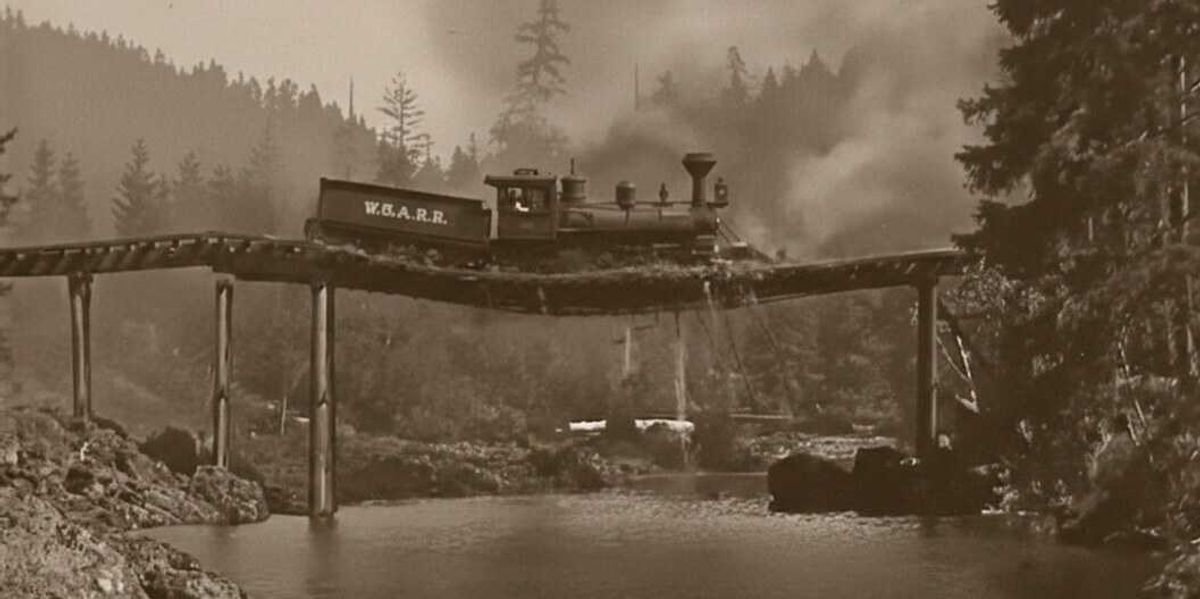
During the climax scene, another locomotive, the Texas, belonging to the Unionists, falls off a bridge. Keaton didn’t want special effects because he wanted to achieve an operatic spectacle. He wanted to show a strong, visceral impact. And, keeping up with his vision, he planned to burn a railway bridge down while a real railway engine was still on it.
The movie was made during Keaton’s “artistically bachelor” days, meaning before he was tied down in “studio matrimony.” Film producer and Keaton’s financial backer, Joseph M. Schenck, had enough faith in Keaton to let him pursue his creative vision, but still, $42,000 (today’s three-quarters of a million) was a major ask for one scene. What makes the scene’s production a thriller in itself is the fact that it had to be done in one single take. No do-overs.
Betting the Budget on One “Shot”
Building a Bridge Only to Burn It
The crew constructed a substantial wooden trestle over Oregon’s Row River. It was built to qualify as an actual railway bridge, but it was destined (engineered) to be destroyed. Keaton’s many specific instructions were essentially pointed towards one thing in particular: authenticity. It was meant to burn down, but it wasn’t meant to be a cheap prop. It was a functioning piece of infrastructure, designed for a spectacular, one-way trip into the water.
The Price Tag That Shook Hollywood
Since the movie was made outside the studio system, there weren’t any ledgers specifying and restricting the expenditure. Artistic vision ruled, not the studio bosses. Budgets were approved on goodwill and trust, not entirely on market and logistical viability. Keaton’s history and goodwill were strong enough for his benefactor, Joseph M. Schenck, to approve the expenditure.
But still, the extortionate amount spent on one shot, not a scene, but a shot, shocked everyone. This expense was the biggest contributor to the film’s ballooned budget—$750,000, or almost $14 million in 2026. $14 million may not sound like much today, but consider 100 years ago, when filmmaking wasn’t the Herculean money-making business as we see it now.
First off, it was a silent movie, and secondly, it was a comedy, a risky territory for such a big investment. Studios noticed, trade publications noticed, and it was portrayed as both a spectacle and a financial gamble.
Physics, Fire, and the Final Plunge
The Moment of Impact
With $42,000 on the line, every little element was of utmost importance. If the timing failed or the cameras jammed, the budget would have been wasted. And that’s why the actual execution of the crash must be considered a masterpiece of practical engineering—and nerves of steel. They set a controlled fire to the bridge while the train stood ready to run on “action.” When the bridge’s support beams seemed to be buckling under fire, the train was green-lit to proceed. It was put into motion, and then the train did all the work. Already weakened pillars gave in when the train mounted the bridge, and the massive engine plummeted.
The sound of the crashing timber and hissing steam was reportedly heard for miles. It was an even bigger and louder experience for the locals who had gathered in thousands to witness the event. In fact, the town of Cottage Grove, where the scene was filmed, had announced a local holiday on the day of the shoot so people could go and watch it.
A Tourist Attraction
The wreckage of the train was later salvaged and put on display. It remained on display for nearly 20 years before it was scrapped for metal during World War II. But for those 20 or so years, the wreckage served as a silent monument to the ambitious scale of the production and the literal “leave it on the field” mentality of the filmmakers.
The Legacy of the Sunken Engine
Establishing the Blockbuster Blueprint
Upon its release, The General wasn’t a hit, let alone a blockbuster. But this “early experiment” by Keaton gave a glimpse into what it would take to create a massive, tangible spectacle if you had some serious money to spare. This stunt shifted the focus from simple stage plays to grand, outdoor epics. It extended the horizons of where a camera could go, what it could see, and what it could do—provided someone was brave enough to sign the checks. This was the original “big budget” flex. We can see the same spirit being repeated years later, in Back to the Future: Part III (1990).
Buster Keaton’s Tragedy
Joseph M. Schenck may have lost the money with The General, but it’s Keaton’s loss that breaks my heart. He lost his freedom to make movies his way. Since he failed to turn a justifiable profit on such a heavy investment, his credibility was compromised. He was still a star, so he managed to sign up with MGM as an employee and started making movies in the studio system. He was never again endowed with creative control over his projects.
To make things worse, this happened at the onset of sound films. Despite his eager interest in making a transition into talking movies, he could never come around to doing it because of the heavy studio control, his deteriorating relations with Louis B. Mayer, and his own personal problems.
Conclusion
This train crash was more than just a stunt. With this single shot, Keaton demonstrated what cinema could achieve when fueled by ambition and obsession. Ironically, the same could be understood as a tale of caution.
It’s been 100 years since, but the image of this train crashing is still a testament to the era of fearless filmmaking.