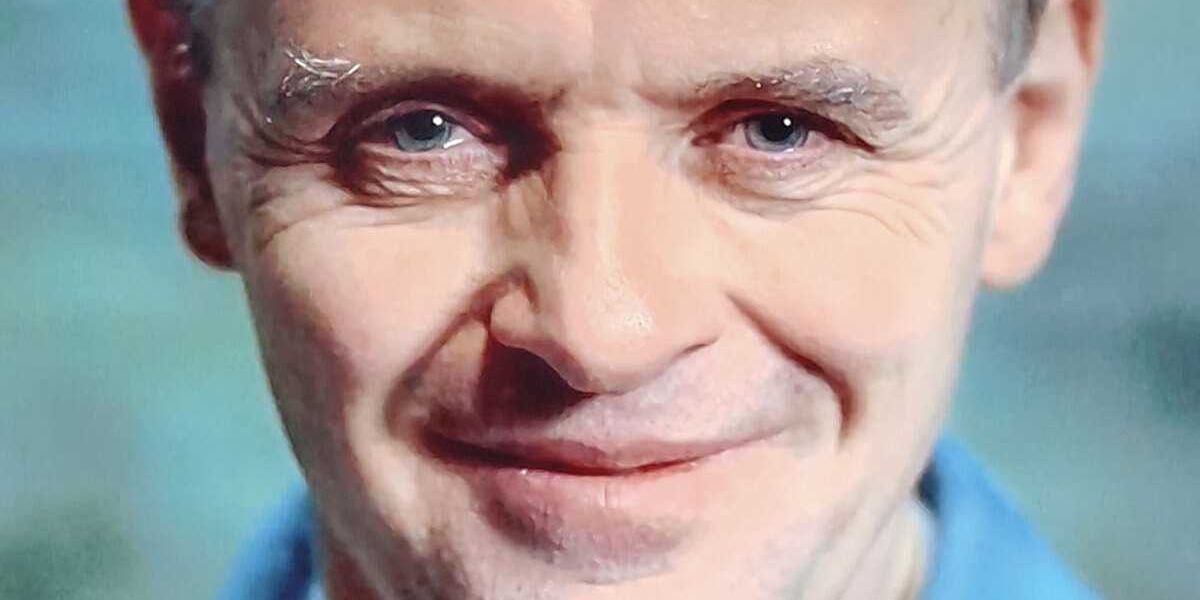
Dr. Hannibal Lecter is one of the pre-eminent psychopaths in cinema. His small stature, combined with monumental depravity, presents him as a ghoulish spectacle that we cannot look away from. The fact that he is not just evil, but a legitimate intellectual, transforms each word he utters into a deadly trap.
This quality is on full display in the last scene of The Silence of the Lambs (1991). It’s nothing but a small, brisk goodbye moment. And yet, the way Lecter speaks—casually insinuating his malicious intent, but dropping it like a playful wordplay—profoundly impacts our sensibilities.
The line is memorable because it’s a rare mix of humor and danger, and it’s effortlessly simple.
The Setup Behind the Line
The scene comes at the end of the movie. Clarice Starling (Jodie Foster) is celebrating at her graduation party. Her spirits are high for having recently solved the first-ever criminal case (the serial killer, Buffalo Bill) of her career. So when she gets a call, she attends it, anticipating congratulations from someone. However, it turns out to be the darkest person in her life, Dr. Hannibal Lecter (Anthony Hopkins).
Lecter is at his usual composed self, spilling his articulate thoughts in a steady but piercing voice with its familiar, slight metallic, raspy quality. At first, he attempts to shove Clarice away from his trail. When she makes it clear that she doesn’t intend to stop following him, he moves on to do what he does best: tease a decent person with an unsavory idea:
“I do wish we could chat longer, but I’m having an old friend for dinner. Bye.”
While saying this, he throws in a hint of warmth. Of course, the kind that comes, not from his heart, but from his devious mind. But it’s enough to throw Clarice off his scent just for a second. Had these words come from someone regular, Clarice (or anybody) wouldn’t have given them another thought. But it’s one of the smartest, most erudite, sophisticated, and yet unimaginably vicious criminals.
With these words, he gives away just enough information that will mock Clarice, but not enough to actually leave her any real clue. Indirectly, he reclaims his true power in his freedom.
Hannibal’s Wit and Verbal Style
This line is also indicative of how an intelligent person uses dry humor. And it also signifies how simple words sound when they are loaded with nefarious undertones.
Hannibal’s speech is always marked by politeness, tidy placement of words, and uninterrupted clarity. He never fumbles for a thought. It’s always a smooth, unbroken stream of consciousness. He has an uncanny knack for making his speech sound pleasant even when the message he delivers is highly unpleasant.
Dry humor and sarcasm, the innate qualities of an intelligent person, are pretty evident in Lecter. He enjoys planting these elements while speaking, which always reveal a little more if you give them a second thought. He always speaks in short, precise sentences; he never rambles.
His constant bearing of elegance and brainpower keeps his opponents on their toes and forces them to register the urgency he poses.
The Threat Towards Dr. Frederick Chilton
In his last conversation with Clarice, even though Lecter doesn’t disclose his location or which “old friend” he is talking about, we know he is in Bimini in the Bahamas. He is at the airport, and while on the phone call, he is looking at Dr. Chilton getting off a plane.
Lecter has a long history of dislike towards Chilton, which is rooted in Chilton’s conceited and reprehensible treatment of him while he was in captivity. Then, the power favored Chilton, not because he was intellectually superior, but only because Lecter is behind bars. Now the power has shifted, and Lecter fully intends to set the record straight.
So, even though we (especially Clarice) would like to believe that this sentence meant nothing more than just dark humor, Lecter, in reality, is using it (the humor) only as a wrapping for his actual plan, and he has every intention of going through with it.
In both the novel and the movie, we don’t see him actually going through with his plan. In the novel, he is described as sending a few notes to a few people, including one to Dr. Chilton.
“Next, he dropped a note to Dr. Frederick Chilton in federal protective custody, suggesting that he would be paying Dr. Chilton a visit in the near future. After this visit, he wrote, it would make sense for the hospital to tattoo feeding instructions on Chilton’s forehead to save paperwork.”
In the movie, this direct threat becomes an insinuation. In either case, it is pretty evident that he fully intends to kill Dr. Chilton and eat him.
Conclusion
Hannibal’s threat works because it is punny, witty, friendly, and delivered with an eerie offhandedness. His signature style of delivering potent threats through lighthearted, softer hints tells us how he uses language to instill fear. The moment raises neither volume nor intensity, but it achieves far more than they could have.
This moment also shows us everything that Dr. Hannibal Lecter is: intelligent, funny, and a true man of his (deranged) words.