Train Dreams
In a big studio-backed awards season, it’s rare to see much overlap between the Film Independent Spirit Awards and the Oscars. A west coast cousin of sorts to the Gotham Awards, the Indie Spirits often celebrate the movies that the Academy skipped over with its nominations. The ceremony itself is also more fun (there’s some day-drinking involved) than the more staid guild awards that dot the homestretch ahead of the similarly serious Academy Awards.
Having said that, the Indie Spirits still matter quite a bit to campaign strategists and the people who employ them. They take place in the heart of awards season, and any televised event (this year’s ceremony was broadcast on YouTube, which I think counts as TV by now) can’t help but be seen as a vital campaign stop. They are not exactly useful as predictors, but being seen accepting an award at the Indie Spirits can still give a winner a boost.
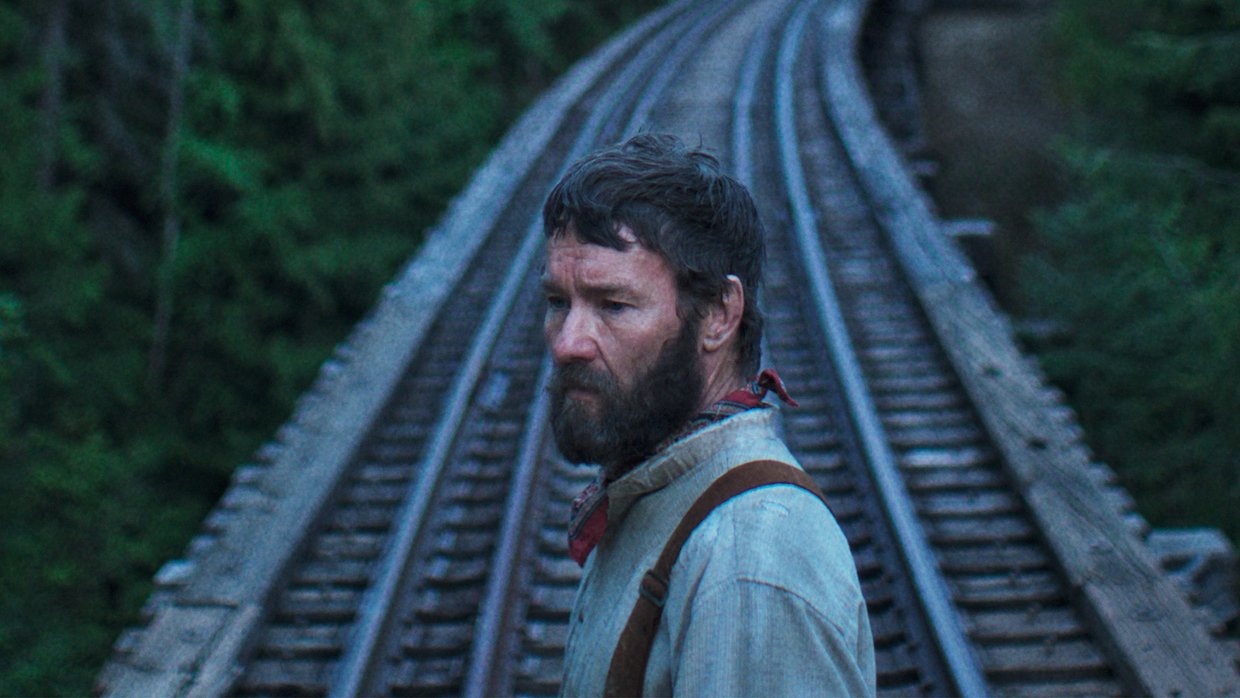
This year’s big winner was Netflix’s Train Dreams, the only film of the five best feature nominees that is also an Oscar nominee for best picture. Naturally, Train Dreams winning three awards over the weekend—best feature, best director, and best cinematography—makes it the little Oscar contender that could manage to pick up a trophy at the March 15 ceremony.
I’ll admit I was a little nervous when Netflix acquired director Clint Bentley’s adaptation of Denis Johnson’s novella after its acclaimed Sundance debut last season. Perhaps I was feeling some deja vu considering Bentley’s last film Sing Sing—which was directed by Greg Kwedar, Bentley’s writing partner with whom he adapted Train Dreams—failed to get the best picture nom so many pundits expected it to. Yes, Colman Domingo earned a nod for best actor, and Kwedar and Bentley also nabbed an adapted screenplay nom (shared with Clarence Maclin, who played himself in the film, and John “Divine G” Whitfield) in addition to an original song nod.
Heading into the fall and seeing Netflix’s jam-packed slate that included Kathryn Bigelow’s A House of Dynamite, Noah Baumbach’s Jay Kelly, and Rian Johnson’s Wake Up, Dead Man: A Knives Out Mystery—all star-studded features from previous Oscar nominees (and an Oscar winner in Bigelow)—I was certain that Train Dreams would get lost in the shuffle. When Guillermo Del Toro’s Frankenstein resurrected itself from tepid buzz out of the fall festivals to become a bonafide hit on the streamer, it seemed like there might be space for only one Netflix feature in the best picture category.
And yet, Train Dreams kept chugging along. While its star, Joel Edgerton, was passed over for best actor (understandably in a crowded and competitive race), the film did manage four Oscar noms for best picture, adapted screenplay, cinematography, and original song. (Sadly, Nick Cave and the film’s composer Bryce Dessner will not perform the title song at the Oscars, as the show’s producers have decided to give airtime to only two songs: “I Lied To You” from Sinners and the unbeatable “Golden” from KPop Demon Hunters.)
Now, I doubt Train Dreams will beat One Battle After Another for best picture; if there’s any upset in the top category, it’ll likely be a win for Warner Bros.’ other top contender, Sinners. And there’s no stopping the KPop Demon Hunters, either. But DP Adolpho Veloso could have an edge in the cinematography race; his Indie Spirit win follows similar honors at the Critics Choice and Los Angeles Film Critics Association. Then again, he’s up against the top contender (and frontrunner) in the race: Sinners’ Autumn Durald Arkapaw, who would become the first woman to win in the category if she takes the prize. Could the smaller, quieter Train Dreams really beat the bombastic Sinners, with its record-breaking 16 Oscar nominations bolstering its chances?
In the adapted screenplay race, however, I think Train Dreams has a chance. If One Battle After Another is the shoo-in for best director (Paul Thomas Anderson won the DGA prize on March 7), perhaps voters will want to spread the love and offer adapted screenplay to another film. Anderson’s epic is very loosely adapted from Thomas Pynchon’s Vineland; if any voters have read the book, they’ll know the film has a nearly original plot while maintaining the themes of Pynchon’s work. If they’re sticklers for faithful adaptations, they might be more inclined to vote for Hamnet or Train Dreams—particularly as both are much more recent books compared to Vineland, published in 1990, and Mary Shelley’s Frankenstein, published in 1818. (Will Tracy’s script for Bugonia, the single nominee that went to a writer rather than a director or a team that included a film’s director, is an English-language remake of the 2003 South Korean film Save the Green Planet!)
Among the other Indie Spirit winners from the weekend include Netflix’s The Perfect Neighbor, the current frontrunner for best documentary feature, and NEON’s The Secret Agent, which is leading the best international feature race. Rose Byrne also won best actress for If I Had Legs I’d Kick You, setting her up to be the biggest competition for Hamnet’s Jessie Buckley. Both films take drastically different tonal approaches to the struggles of motherhood; I have a feeling Academy voters may be drawn more to the heartfelt and literary Hamnet than to the stressful and unsettling If I Had Legs, but a Rose Byrne Oscar win could give us the biggest upset of the year—and a new reason to respect the predictive power of the Independent Spirit Awards.