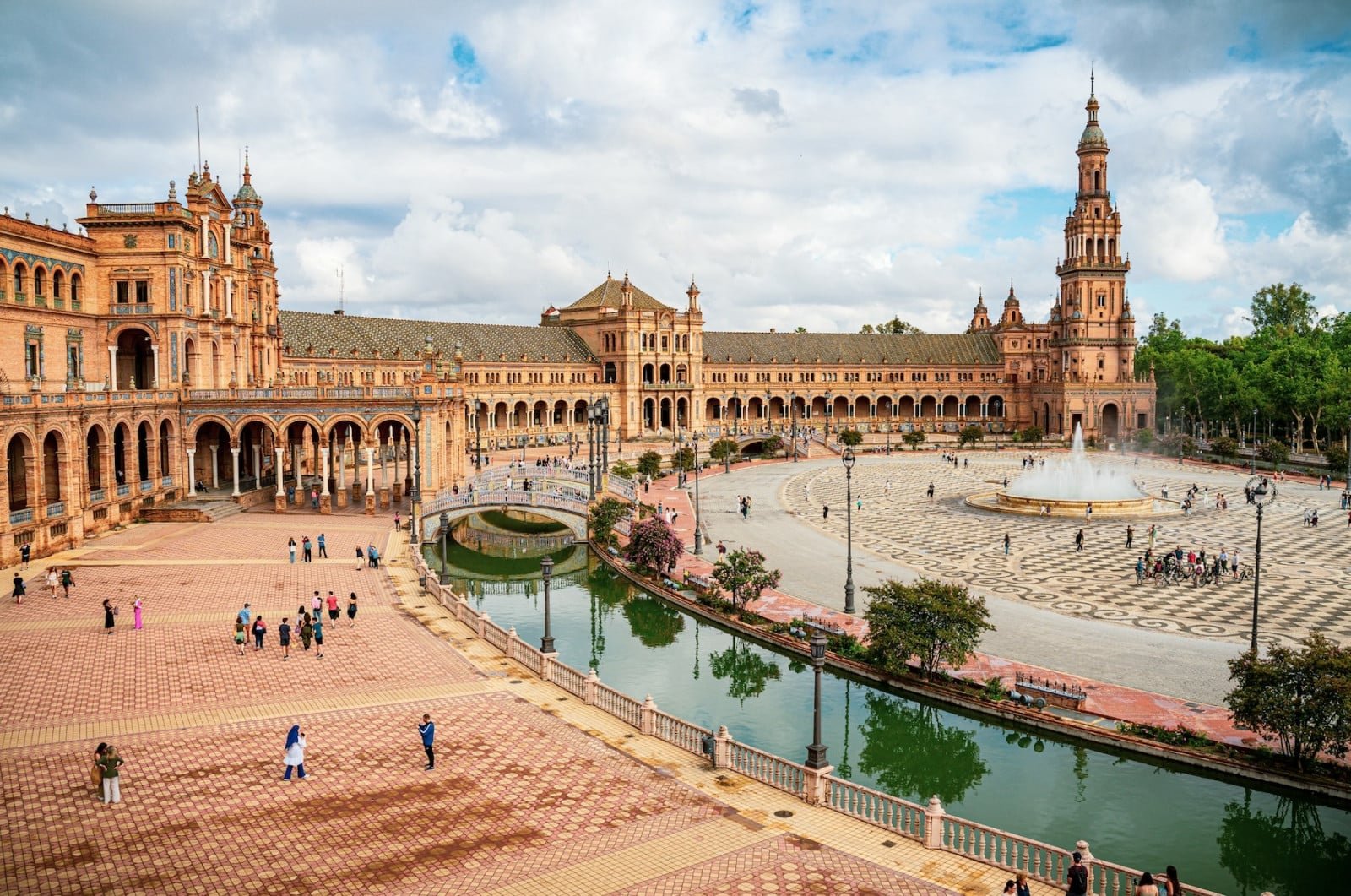
The original qanats, according to Nilou Vakil, an associate professor of architecture at the University of Kansas, date back 3,000 years to ancient Persia, or modern day Iran. The same system has been used in many regions across the Islamic world, from Balochistan to Jordan.
Historically, she says, they were used in arid areas to transport water from underground sources to irrigate crops and feed animals, but also for cooling homes.
“That’s how they were able to create civilization in places you couldn’t have humans living in before,” explains Vakil, who has researched the history of the qanats. “They allowed people to live with heat before the arrival of electricity.”
The project also represents something of a revival of past local practices. Similar water management technologies were deployed by the Moors across Andalusia, including at Granada’s Alhambra, several hundred years ago.
Seville’s low-emission solution is an encouraging response to the rising threat of extreme urban heat in Spain’s fourth largest city, home to 1.5 million people. Last year, Seville broke a record after recording 30 days above 40C (104F) – compared with an average of 12.8 days a year over the previous decade.
The city gets so hot these days it’s earned the unenviable nickname of the “Frying Pan of Spain.” And scientists project that due to manmade climate change, by 2050, Seville is likely to hit summer peaks of 50C (122F) while suffering an average 20% decline in rainfall.
That extreme heat, an increasing reality for cities around the world, is already causing serious harm to the population. The Carlos III Health Institute estimated that about 1,180 people died because of high temperatures during a heatwave in Spain between May and July last year. Meanwhile, researchers have calculated that more than 11,000 people died due to extreme heat in Spain during summer 2022.
“It’s a really serious health issue,” says Anne Beswick, a policy fellow at the London School of Economics working on climate adaptation and resilience. “Global average temperatures are rising, and so are extreme temperatures. Cities have specific vulnerabilities since they hold and retain heat more than other areas.”
City authorities are urgently trying to find solutions to beat the heat, especially ones that aren’t energy intensive like air-con, which can be costly and counterintuitive for climate goals. In Los Angeles, for example, the use of heat-reflective white paint on the streets has been effective in cutting temperatures. In Rotterdam, green roofs are helping to mitigate the urban heat island effect and to keep air clean. Others such as Freetown, Sierra Leone’s capital city, have gone as far as to hire Chief Heat Officers.
“There’s a lack of visibility over heat, it’s a silent killer, which is why governance on this is so important,” says Beswick, who last year published a report about low-cost, low-carbon cooling systems.
Seville has historically adapted to heat through its narrow streets and shaded courtyards and more recently by becoming the first city in the world to name and categorize heatwaves. Now, it’s showing impressive impact with the updated qanats – as well as other cooling techniques that are part of the project, including deploying heat-reflective paint, wind and sun blockers, and vegetation on interior walls.