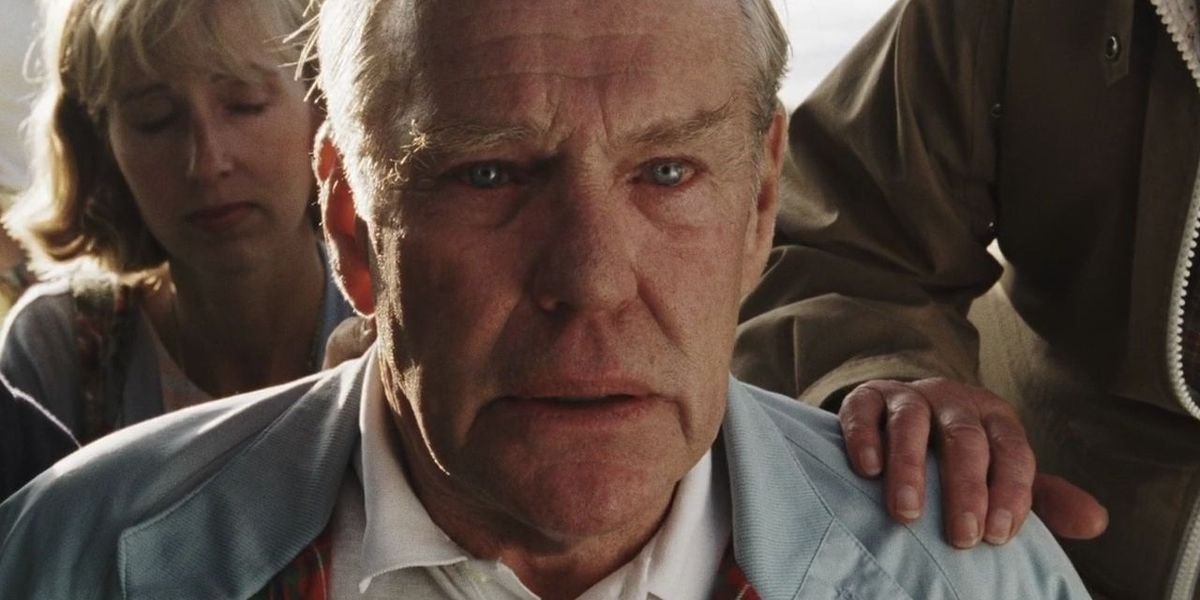
The 71st Academy Awards in 1999 gave us one of the most hotly debated Oscar decisions of all time.
On one side, you had Saving Private Ryan (1998)—Steven Spielberg’s brutal, emotionally harrowing World War II epic. It was the kind of film that critics, audiences, and even veterans unanimously praised. It won Spielberg Best Director, and most assumed Best Picture was a lock.
But then… Shakespeare in Love (1998) happened. A witty, romantic, feel-good period piece, backed by an Oscar campaign that was anything but cute.
When Shakespeare in Love walked away with Best Picture, jaws hit the floor. Critics scoffed. Fans booed. Even Academy voters, years later, seemed to regret it. In a 2015 The Hollywood Reporter poll of Academy members, when asked to re-vote the 1999 Best Picture category, they chose Saving Private Ryan by a wide margin. Basically, if they could time-travel, the envelope would’ve held a very different name.
Which brings us to the big “what if.”
What if Oscar night had gone the other way? What would’ve changed for Spielberg, for Miramax, for the types of movies that followed?
And what does it say about the way the industry rewards (or misses) greatness?
The 1999 Oscars: How Did Shakespeare in Love Win?
Harvey Weinstein’s Campaign Tactics
Here’s the part where things get murky. Shakespeare in Love didn’t really ride into Oscar night on charm and cheeky Elizabethan banter. It stormed the gates with a meticulously aggressive campaign led by Harvey Weinstein and Miramax. Think: constant screenings, relentless ads, full-page trades, glossy “for your consideration” pushes, and not-so-subtle whispers discrediting competitors.
Weinstein was so desperate for the win that he made it his mission to outflank Saving Private Ryan, a highly superior contender, by painting it as a “great opening sequence” followed by a weak second half.
We all know how—by such a wild margin—that was untrue.
At the time, this kind of campaigning was becoming the new norm, but Weinstein took it to extremes. He treated Oscar season like political warfare—and he won. His ability to shift the narrative, even against a powerhouse like Spielberg, changed how Oscar campaigns were run forever.
This incident, to a large extent, played a pivotal role in bringing in an unfortunate shift in the following years: how a fair-and-square creative worth could be pushed into the backseat in order to allow “perception control” to take the wheel.
The Academy’s Preferences at the Time
Of course, you can’t blame it all on Weinstein. The Academy itself was ripe for persuasion. Many voters leaned toward lighter fare, especially when the other option was a gritty, blood-soaked war story. Shakespeare in Love felt clever, classy, and romantic. It was a love letter to art, theater, and yes, even the process of writing. In contrast, Saving Private Ryan was a visceral punch to the gut.
Then there’s the unspoken rule: “Spielberg already had his Oscar.” After Schindler’s List (1993), many felt Spielberg had been adequately rewarded. Combine that with a campaign that suggested Saving Private Ryan was “just” another war film, and Shakespeare in Love suddenly looked like a breath of fresh, royal court-scented air.
The Immediate Impact: What If Saving Private Ryan Had Won?
Spielberg’s Legacy Cemented Earlier
Steven Spielberg didn’t exactly need Saving Private Ryan to prove himself, but a Best Picture win in 1999 would’ve been a powerful statement. It would’ve marked his second Best Picture trophy within five years—a rare feat. Schindler’s List showed he could deliver emotional gravitas. Saving Private Ryan confirmed he could do it again, in a completely different register.
A win might’ve boosted his confidence in tackling other emotionally heavy material sooner—or, maybe, freed him to take more creative risks without constantly being pushed back into the “blockbuster guy” box. It’s possible the critical reevaluation of later works like Munich (2005) or War Horse (2011) would’ve hit differently if he had two Best Picture wins under his belt already.
A Different Path for Miramax & Weinstein
Now this is where it gets real. Shakespeare in Love winning Best Picture was more than a win for the film—it was a defining moment for Miramax. It cemented Harvey Weinstein as a Hollywood kingmaker. It gave him unprecedented influence over awards season, legitimized his campaign style, and made Oscar season feel less like a celebration of art and more like a high-stakes political game.
If Saving Private Ryan had won, Miramax might have stumbled. Weinstein’s approach might not have looked like genius—it might’ve looked desperate. Would he have lost some of the power he wielded throughout the 2000s? Would the Academy have resisted being so easily manipulated in future campaigns? Hard to say. But without that Best Picture win in his pocket, Weinstein’s career trajectory might have looked a lot less bulletproof.
Long-Term Cultural & Industry Consequences
War Films & Oscar Prestige
If Saving Private Ryan had won Best Picture, it could’ve cracked the door wider for war films with artistic ambition. Instead, it took years for the Academy to fully warm back up to the genre. Films like The Hurt Locker (2008), 1917 (2019), and Dunkirk (2017) eventually got their due, but you have to wonder: would the road have been smoother if Ryan had set the precedent?
A win in 1999 might’ve sent a clear message that technical brilliance and emotional heft in war films, aside from being directorial feats, were Best Picture material. Instead, for a while, those kinds of films were often shunted into categories like Sound Editing or Cinematography, while more emotionally “palatable” films snagged the top prize.
The Best Picture Bias Shift
There’s a certain kind of film people like to call “Oscar bait.” Historical setting? Check. Period costumes? Check. Romance? Double check. Shakespeare in Love checked every box. If Saving Private Ryan had won, the template for “Oscar-worthy” might’ve looked very different.
The Academy could have leaned more toward raw, immersive filmmaking and less toward polished sentimentality. That’s not to say Shakespeare in Love didn’t have its merits—it did—but its win reinforced a pattern of rewarding a specific, prestige-flavored kind of movie. Ryan might’ve broken that mold sooner.
The Legacy of Shakespeare in Love
Without that Best Picture Oscar, Shakespeare in Love might’ve remained a charming, clever movie that people enjoyed without debating. It still would’ve won awards for Gwyneth Paltrow and the screenplay, and it still would’ve been considered a solid film. But it wouldn’t carry the stigma it now wears—that it “stole” an Oscar from a film many view as more deserving.
Its reputation today is as much about the politics of its win as it is about the movie itself. If it had lost to Saving Private Ryan, it might actually be remembered more fondly—free from the cloud of controversy and ranked among the greats of romantic cinema rather than the center of an Oscar upset.
The Academy’s Regret & Changing Tides
In 2015, The Hollywood Reporter conducted a poll and asked Academy members to revisit past Oscar races and re-cast their votes. The results? A pretty blunt admission: Saving Private Ryan should’ve won Best Picture. And not by a narrow margin, either. It crushed the re-vote.
Since then, the Academy has undergone some serious changes—expanding its membership, bringing in younger and more diverse voices, and adopting ranked-choice voting. These moves aim to curb the very kind of “campaign-led” outcomes that helped Shakespeare in Love triumph in the first place. Would Ryan have won in today’s Oscar climate? Probably. Voters now seem more open to bold, technically masterful films that push the form forward—even when they’re not the most “feel-good” choice.
A Defining Moment in Oscar History
In the grand timeline of film history, one Oscar decision might seem small. But the ripple effects of Saving Private Ryan losing to Shakespeare in Love were anything but. It reshaped campaign strategies, impacted legacies, and served as a kind of cautionary tale for the Academy.
Still, the loss may have done Saving Private Ryan a strange kind of favor. It remains a towering achievement, beloved by audiences and held up as a benchmark in war filmmaking. Meanwhile, Shakespeare in Love carries an asterisk.
Maybe that’s the real legacy of the upset—not just who won, but how the fallout forced the industry to take a long, hard look at how awards are won in the first place.