There’s a saying that the world of cinema is a boys’ club, but don’t tell that to the women who’ve spent decades turning the tables, breaking boundaries, and rewriting the rules.
Imagine this: women not just watching movies but making them, not just quirky rom-coms or tear-jerking dramas but films that challenge the status quo and transform the very art of filmmaking.
From pushing artistic limits to crafting iconic stories, these directors didn’t wait for permission. They took their shot, broke the glass ceiling, and redefined what it means to be a visionary in a male-dominated industry.
In this article, we’ll take a closer look at ten remarkable women who made a name for themselves in Hollywood but also shaped the way we see film, culture, and women’s voices on screen. So, without further ado, let’s know more about them.
10 Most Influential and Transformative Female Film Directors
1. Maya Deren
Born in 1917 in Kyiv and raised in the U.S., Deren wasn’t interested in telling stories the traditional way. No three-act structure, neat resolutions, or big-name stars. What she gave us instead was a kind of dream logic—surreal, hypnotic, and definitely intimate.
Her most iconic film, Meshes of the Afternoon (1943), is just 14 minutes long, but it cracked open American experimental cinema. With its looping dream logic, mirrored faces, and haunting knife symbolism, it visualized inner psychology before anyone had heard David Lynch. In fact, if you’ve ever watched Mulhollond Drive and thought, “Wait, what just happened?” thank Maya.
A trained dancer, Deren invented what she called “Choreocinema.” In A Study in Choreography for Camera (1945), she makes dancer Talley Beatty leap across space and time without breaking a sweat. The camera dances with the subject, turning film into fluid movement rather than just recorded action.
She didn’t stop at fiction, either. In Divine Horsemen: The Living Gods of Haiti, shot between 1947 and 1951, Deren immersed herself in Haitian Vodou rituals, not as a voyeur, but as an initiate. She played with time like it was elastic, cut between spaces like teleportation, and gave us female subjectivity on screen before anyone had the language to even describe it.
And what makes her legacy even more staggering is that she self-financed, edited, distributed, and promoted her films decades before “indie filmmaking” was even a thing. She once said, “I make my pictures for what Hollywood spends on lipstick.”
Deren’s fingerprints are all over the modern cinema. Her work proved that film doesn’t need to explain, it just needs to move.
2. Agnés Varda
Before Truffaut and Godard were even loading film reels, Agnés Varda had already kicked open the cinematic door with La Pointe Courte (1955), a film ahead of its time. What makes Varda truly unique is her seamless blend of documentary realism with fiction, long before “mockumentary” was a term. Her 1962 film Cléo from 5 to 7 is a masterclass in real-time storytelling in a way that it’s an existential unravelling of female identity, vanity, and mortality, all through a female gaze that had been missing from the screen.
She didn’t chase commercial fame, yet still delivered critical hits like Vagabond (1985), a raw, haunting portrait of a young woman’s aimless drift to self-destruction. Varda gave women complexity, rage, softness, and contradictions, something cinema rarely afforded them.
Her late-life documentary The Gleaners and I (2000) turned a camera on the overlooked—literally the people who live off leftovers—and made it lyrical. She was 72. No one told her documentaries could be this poetic; she just did it.
Her work invites you in, sits you down, and quietly rearranges your entire perspective. Her legacy isn’t just in her films, it’s in the freedom she gave generations of filmmakers, especially women, to tell their stories with honesty, wit, and fearless curiosity.
3. Nancy Meyers
Let’s talk about the woman who made kitchens sexier than love scenes: Nancy Meyers. Meyers elevated lighthearted stories with rich emotional layers, razor-sharp dialogue, and characters (especially women) who could be complex, funny, powerful, and heartbroken.
Before her signature midlife romances, Meyers made her directorial debut with The Parent Trap (1998), a charming remake that balanced heart and humor and was a box office hit. It was an early glimpse of her knack for emotional storytelling wrapped in polished aesthetics.
She followed it with What Women Want (2000), a high-concept comedy with a gender-role twist which solidified Meyers’ knack for blending humor with insight.
With her next films, Something’s Gotta Give (2003) and It’s Complicated (2009), Meyers explored stories where the romantic leads were over 50, and still magnetic. Since their release, these films have grossed hundreds of millions globally, kept thriving, and aged really well. The Holiday (2006), meanwhile, is still a winter comfort staple.
Meyers proved that stories centered on older women could be box office gold, something Hollywood wasn’t exactly betting on. In doing so, she gave a new dimension to a romantic lead and showed us what they could look like and who got to tell their story.
Rom-coms were once seen as “fluff.” Nancy Meyers made them smart, stylish, and emotionally resonant.
4. Deepa Mehta
Sure, when you hear the name Deepa Mehta, the first thing that comes to your mind isn’t “rom-com,” “thriller,” or “comedy.” And yet, tucked between her politically charged masterpieces that sparked international debates, got banned, unbanned, and shortlisted for the Oscars, Mehta has also flexed some seriously underrated comedy muscles.
But let’s first talk about the work that put Deepa Mehta on the global map—the Elements Trilogy. Fire (1996) was a thunderclap in Indian cinema, boldly portraying a same-sex relationship between two women in a stifling patriarchal household, unheard of at the time. It sparked outrage, protests, and praise in equal measure.
Then came Earth (1998), set during the Partition of India, which unflinchingly captured the brutality of communal violence through the eyes of a child. Water (2005), perhaps her most visually haunting film, tackled the plight of widows in 1930s India with such lyrical precision that it earned an Oscar nomination. Together, these films rattle the status quo and rewrite what Indian stories can look like on an international stage.
She proves her versatile flair with her comedies. Take Bollywood/Hollywood (2002), for instance. This cross-cultural rom-com is a bold and cheeky send-up of Bollywood tropes, North American stereotypes, and the chaos that ensues when those two worlds collide.
In an industry where women directors often get pigeonholed, Deepa Mehta is not afraid to pivot from searing social drama to laugh-out-loud romance and make both feel equally radical.
5. Kathryn Bigelow
Kathryn Bigelow’s rise to cinematic greatness is quite spectacular. She ventured into action-heavy, testosterone-soaked genres like war and thriller, where few female directors dared to tread, and she excelled.
Her films have a rawness and intensity that most male-directed action films can’t match, offering a visceral experience that combines emotional depth with explosive, high-stakes action.
Her masterpiece, The Hurt Locker (2008), shattered the typical war film formula. With taut pacing and the relentless tension of a bomb disposal unit in Iraq, Bigelow’s ability to turn an explosive genre into a psychological battlefield earned her an Academy Award for Best Director, the first woman to ever do so. In Zero Dark Thirty (2012), she further cemented her place, delivering a gripping narrative on the hunt for Osama Bin Laden that didn’t shy away from moral gray areas, sparking debate in the process.
Bigelow directs action in an attempt to make the audience feel it. Her unique ability to dive into a male-dominated genre in a male-dominated industry while exposing its deep-seated complexities, while still delivering exhilarating cinematic experiences, is her true signature.
6. Jane Campion
Jane Campion tore down boundaries, blending raw emotion with beautifully crafted visuals. While many directors may explore the human condition, Campion has mastered a delicate dance between intimacy and grandeur, often set against the wild, untamed beauty of nature.
Her most iconic works, like The Piano (1993) and The Portrait of a Lady (1996), are a testament to her deft handling of female protagonists who are complex, deeply flawed, and unapologetically real. In The Piano, she created a world where silence speaks louder than words, giving us an unforgettable tale of love, power, and sensuality. It most deservedly won an Oscar for Best Screenplay.
With The Power of the Dog (2021), Campion flipped the Western genre on its head, digging into the fragility of masculinity with surgical precision. The film simmers with tension and unspoken desire, its wide Montana vistas echoing the loneliness inside its characters. The film earned her the Best Director Oscar, making her the first woman nominated twice in that category.
Campion’s legacy proves cinema can be both an art form and a mirror to the soul. She sculpted worlds where emotions breathe–and bite.
7. Mira Nair
Mira Nair blends continents, cultures, and class divides with fearless precision. Born in India and schooled in documentary realism, Nair’s cinematic roots are planted firmly in the soil of social truth. However, her branches reach from Kampala to Cambridge, from the streets of Delhi to the red carpets of Venice.
Her breakout feature, Salaam Bombay! (1988), a darling of the critics for its raw, unflinching peek into the lives of street children, earned an Oscar nomination for Best Foreign Language Film and launched Nair as a global voice.
Then came Monsoon Wedding (2001), a genre-bending gem that wrapped chaos, color, and cross-cultural tensions into a single, unforgettable celebration. It won the Golden Lion at Venice and even sparked a Broadway musical.
What makes Nair singular is her insistence on nuance, whether she is telling the story of an Indian American professor in The Namesake (2006) or the unlikely chess prodigy in Queen of Katwe (2016), Nair champions the overlooked, especially women navigating worlds that weren’t built for them.
In an industry that still hesitates to hand the megaphone to women, especially women of color, Mira Nair carved her space with steady defiance and vivid flair. She brings brown girls, immigrant families, and complicated mothers into sharp, graceful focus.
8. Greta Gerwig
Greta Gerwig is proof that being earnest in modern cinema is quite brave and revolutionary. Starting out as an actress in indie mumblecore films, Gerwig quickly pivoted to writing and directing with a sensibility that’s as literary as it is cinematic. Her way of telling stories is inviting you inside them—complete with mismatched socks, 3 a.m. emotional epiphanies, and needle drops that make your heart catch in your throat.
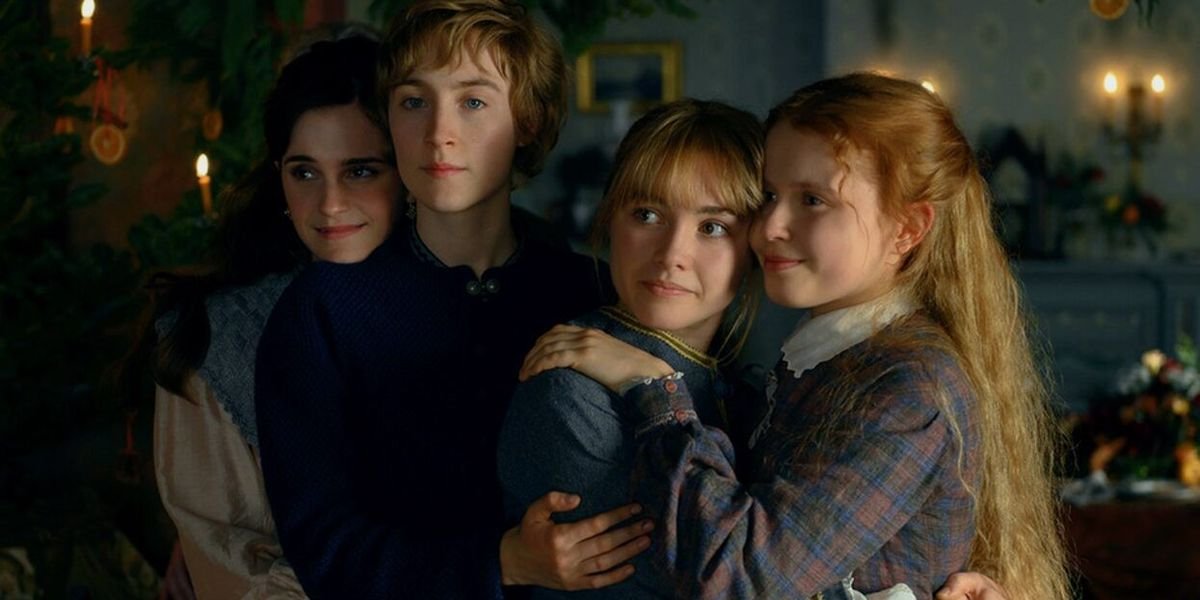
Her solo directorial debut, Lady Bird (2017), is now canon. A coming-of-age story so precise and warm that it made critics remember that teenage girls are not a niche demographic—they’re human beings with inner lives worth taking seriously. The film was nominated for five Oscars, and Gerwig became only the fifth woman ever nominated for Best Director. She followed it up with Little Women (2019), a radical reimagining of the classic novel that played with nonlinear storytelling and authorial identity. Gerwig’s version of Jo March is just as concerned with copyright law as she is with heartbreak—and that’s saying something.
Then came Barbie (2023)—a pink plastic grenade disguised as a summer blockbuster. Critics were stunned that Gerwig took what could have been a cash-grab and turned it into a full-blown cultural Rorschach test. Part existential comedy, part feminist think-piece, part surreal musical, the film grossed over a billion dollars and became the highest-grossing film ever directed by a woman. Not bad for someone who once starred in films where characters forgot their own lines.
Gerwig’s special gift is that she trusts the audience. She doesn’t condescend, doesn’t simplify. She just opens a door to something real—be it mother-daughter tension in Sacramento or metaphysical crisis in Barbie Land—and says, “Come on in. Let’s figure it out together.”
That kind of authorship is refreshing and totally makes history.
9. Ava DuVernay
Ava DuVernay’s movies are known for moving conversations, which she does without raising her voice. Whether it’s through the aching realism of Selma (2014), the gut-punch clarity of 13th (2016), or the spiritual defiance of When They See Us (2019), DuVernay’s work challenges systems without ever losing sight of the people stuck inside them.
With Selma, she became the first Black woman to direct a film nominated for Best Picture at the Oscars. This biopic was a reframing of history, one where Martin Luther King Jr. was not a statue but a man, both resolute and exhausted. With 13th, she brought academic discussions on mass incarceration and the prison-industrial complex into mainstream households. And with When They See Us, she made millions feel the weight of injustice that five teenage boys once carried alone.
What’s especially remarkable about DuVernay is her command over both form and infrastructure. She founded ARRAY, a distribution collective to support films by women and people of color—because, in addition to directing movies, she wants to change who gets to make them. In an industry built on gatekeeping, DuVernay builds bridges.
Ava DuVernay’s legacy is already being written in syllabi, policy panels, and film school curricula. She makes socially urgent cinema feel intimate. Instead of yelling at the system, she peels it open. And that, more than any glass ceiling shattered, is the real revolution.
10. Julie Dash
When Julie Dash made Daughters of the Dust in 1991, it became the first feature film directed by an African American woman to receive a national theatrical release—and soon after became cinematic folklore. Set in 1902, told in the lyrical dialect of Gullah Geechee people, and steeped in mysticism, memory, and matriarchy, Dash’s film was unlike anything American cinema had ever seen.
And that was the problem: studios didn’t know what to do with it.
But Daughters of the Dust didn’t need a studio’s approval to make history. The film’s non-linear structure, dreamlike visuals, and unapologetically Black, feminine perspective made it a quiet revolution. It inspired generations of artists—most notably Beyoncé, whose Lemonade borrows its coastal aesthetics and cultural DNA almost shot-for-shot in places. But Dash’s influence runs deeper. She showed that history could be told through emotion and ancestral memory rather than exposition and male narration.
Julie Dash’s achievement goes beyond breaking a barrier. Her impact also shines in the fact that she rewrote the language of cinematic memory. Her camera moves with grace but holds firm; she frames her Black women subjects not as victims or symbols, but as guardians of culture, wisdom, and survival.
Daughters of the Dust is now preserved in the Library of Congress, but Dash’s broader legacy is still unfolding. She kicked open a door, left it swinging, and said, “Your turn.” And the echoes of that invitation can still be heard every time a Black woman puts her heritage on the screen without apology.
Conclusion
Turns out, you don’t need to shout to shake up an industry. You just need a camera, a vision, and absolutely no time for anyone’s outdated nonsense.
These, and many more, women didn’t wait for trends to catch up or for doors to magically swing open. They told stories their way, made audiences look twice, and forced the system to squirm a little.
Cinema’s way is more interesting because of it.