Somewhere this evening, a first date is taking place. Across a candlelit table or over the bustle of a noisy bar, two people are performing the ritual of romantic assessment. The conversation flows, the green flags pile up, some mutual friends might even be discovered. Then a wrist flicks or a sleeve rolls up, revealing an intriguing piece of ink. “Oh, I love that, what’s the story behind it?” There is a quiet, telltale hesitation before the truth: “It’s a matching tattoo, actually. With my ex.”
In an era governed by provisional connection, relationships are frequently soft-launched, and can be erased just as subtly with an unfollow and delete. We have become masters of keeping our exits clear. While many of us are comfortable with the idea of marking our bodies forever, the matching tattoo remains a taboo, widely seen as a reckless and overly-emotional gamble.
“There’s an idea that matching tattoos are cursed, that they mark a relationship for an ending. I’ve heard that from clients a lot,” says tattoo artist Jayson*. “I’ve always wondered if there’s a sort of desperation element. Maybe the reason they’re getting matching tattoos in the first place is to try to save the relationship, like the issues are already there waiting to erupt.”
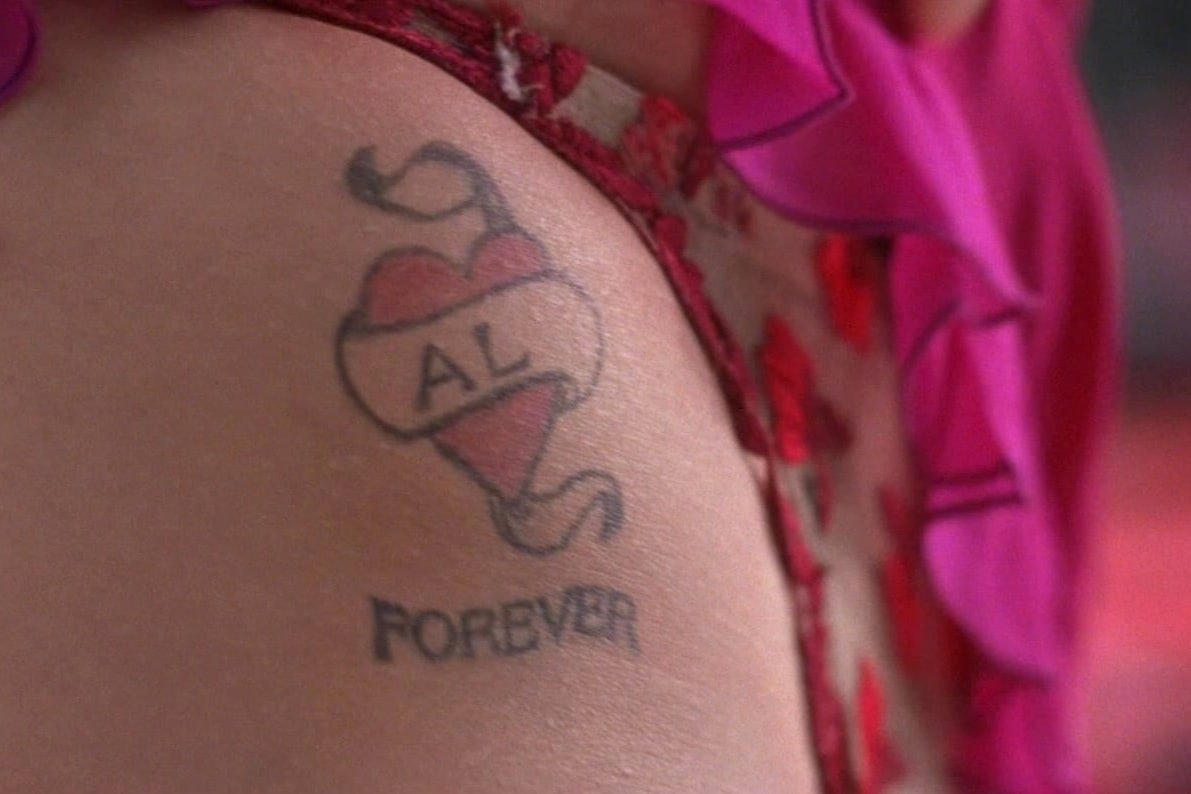
Bristol-based artist Natalie* says that tattooing a partner’s name, in particular, is “a big no no, definitely the kiss of death.” Whether it becomes a constant reminder of someone painful or someone you no longer care about, “either way it’s probably best to avoid it to save yourself any regret,” she says. And although Ayşe, a Leeds-based tattoo artist, says she thinks they can be cute, she has also “seen a lot of times where I’ve had to cover up couple tattoos not long after they’ve gotten them.”
Tattooing has become an industry built on the premise of the self, with the body seen as a canvas for displaying your individuality. “I don’t think I’d get a matching [tattoo]. Maybe that’s just because I’m selfish. I want my body to be about me,” Jayson laughs. A joke, but this sentiment explains why an industry so comfortable with permanence can balk specifically at shared permanence. The discomfort is cultural. Online, we have built an entire framework for talking about the self (self-care, self-expression, self-actualisation and so on) and comparatively little language for talking about commitment to other people.
We are, by most accounts, in the middle of a loneliness epidemic, one heavily documented and discoursed on the same platforms that have made most of our commitments reversible. Nowadays you can unfollow, unmatch, leave a group chat, let a friendship lapse without ever having the conversation or seeing them IRL again. We scroll through reams of content without lingering, and a new option is always a swipe away. Very little in modern social life is designed to outlast a change of heart. Against this backdrop, in a world that has made almost everything about connection fleeting, making a statement that can’t be undone is arguably a small act of rebellion.
“I actually think it’s kind of cool,” says Maria*, a 23-year-old art student. “Like when young people get married, not in the Christian way, but in a rockstar, shotgun wedding sort of way. It goes against so much of what we are told is cool – to be nonchalant or whatever.” Whether or not you have a tattoo for an ex doesn’t change the fact that they were in your life, she says, or erase them from your past. “I don’t think I’d really care if a partner had a matching tattoo with an ex. Unless it was literally their name on their throat or something. I just don’t think it’s that deep.”
Elsie*, 26 from London, has a matching tattoo with an ex and doesn’t regret it. “We don’t talk anymore and haven’t for years. But I don’t really regret the tattoo. It’s not really about her anymore, it’s about who I was then. It’s more of a timestamp.” Though, she adds, she might feel differently if she had fewer tattoos. “I have quite a few so it can stay a bit hidden. People don’t notice it and point it out.”
This, unfortunately, is the issue for James*, 29. “New partners always ask about it. I’ve had to explain it more times than I can count. It’s not that I regret getting it, exactly, I just wish I’d thought about the after,” he says. It’s the “after” that seems to be the real fear underpinning the taboo; the awkward conversations it will force you into having years down the line alongside any painful or uncomfortable memories.
A lot of the resistance to matching tattoos is about what they force us to admit: that we were once vulnerable enough for someone to leave a permanent mark. In a dating scene that prizes cool detachment, a matching tattoo is an inescapable piece of emotional evidence. It proves that you didn’t just pass through someone’s life unscathed, you let them leave a footprint. Cover-ups and laser removals have become a booming side-industry of their own, offering an expensive form of absolution. Yet, ironically, even erasing a matching tattoo leaves a shadow. The skin rarely returns to a pristine slate; it carries the faint, raised white lines of what used to be there.
We live in a culture that encourages us to curate memories until only the polished highlights remain. But real life isn’t a gallery of sleek, standalone decisions. It is an accumulation of detours, bad timing, impulse decisions, and fierce, sometimes temporary devotions. In the end, the ultimate act of romance isn’t promising that a feeling will last forever; it’s acknowledging that even if it doesn’t, the moment was real enough to bleed for. Whether worn as a regret, or a timestamp, a matching tattoo signals that at least once, you were willing to risk the future for the sake of the present. There is something stubbornly human about that.
*names have been changed.