Summer is here, and with it the annual scramble to decide what kind of season we’re supposed to be having. What will it be? On offer in 2026 are “freaky sandal summer”, which requires you to wear weird shoes, and “euromaxxing”, which is presumably about making the most of the easyJet sale without considering the environmental impact. Maybe “poet girl summer” is for you, whereby you listen to Gracie Abrams while wearing a silk camisole. Or simply “no mascara summer”, which I won’t spell out but sounds quite appealing.
The most plausible contender is “board short summer”, a phrase coined by Marie Claire, which broadly involves dressing like you surf even if you’ve never set foot on a board.
Miu Miu’s board shorts.
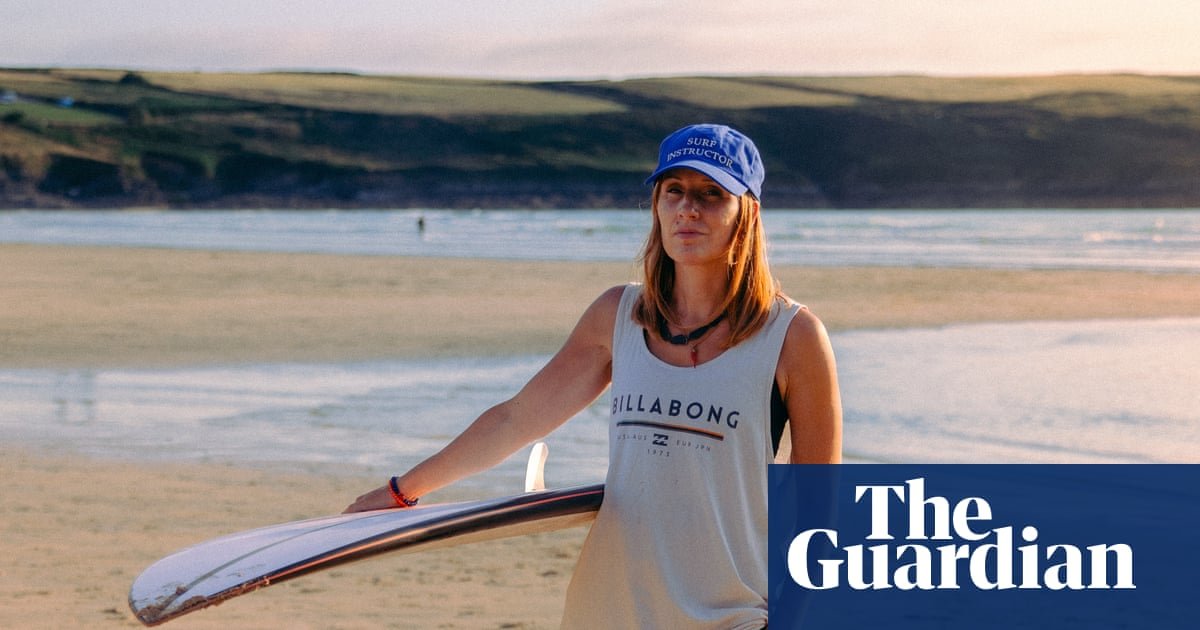
Marie Claire’s declaration came after a Miu Miu show that featured satin board shorts. There have also been sparkly board shorts at Dries Van Noten and a flurry of flip-flops on the catwalks at Chloé, Balenciaga and Bottega Veneta. On the high street, the bestselling shorts this summer, according to Uniqlo, are long and board-like, while Asos is selling a blue baseball cap embroidered with the words “surf instructor”.
The pièce de résistance, though, came from Louis Vuitton, the biggest luxury fashion house in the world, which built an artificial wave 8 metres (26ft) high in the centre of Paris as the backdrop to a collection of board shorts and wetsuits for its show in June. To avoid any confusion, there were even a few surfboards thrown in (price on request).
Ride the logo … Louis Vuitton’s menswear show at Paris Fashion Week last month. Photograph: Stéphane Cardinale/Corbis/Getty Images
In practice, board short summer is rather more old school. It’s about wearing oversized knee-length shorts with sun-faded Quiksilver T-shirts and bleaching your hair. It’s baggy jean shorts from Old Navy instead of Daisy Dukes, and choosing flip-flops over Birkenstocks. Culturally, it borrows as much from Point Break and Blue Juice as it does from William Finnegan’s Pulitzer-winning memoir Barbarian Days and the brilliant (if problematic) 60s documentary The Endless Summer. Spiritually, it’s about feeling grounded with the sand between your toes, rather than what gen Z might call “touching grass”.
And, unlike most internet summers, it’s based on a lifestyle that actually exists. In Newquay, a coastal town in Cornwall built on surf culture and tourism and framed by some of Europe’s most breathtaking beaches, it’s always board short summer.
It’s a hot day and I’m at Newquay’s Box & Barber cafe, where waiting staff in board shorts serve flat whites. Outside on the high street, lean surfers the colour of oak trees walk past me, topless without reproach. Arrived on the train with no gear? No problem. At the Cornwall Air Ambulance charity shop you can pick up a perfectly serviceable shortboard for £50 and a pair of board shorts for under a fiver.
It seems easy to get the look. Just throw on an old Rip Curl vest, borrow your boyfriend’s shorts and fail to brush your hair. But, as with any hyperspecific trend, you run the risk of cosplay.
‘I just wear relaxed stuff’ … Delphine Gwilliam-O’Connor, with Jack Day Photograph: Luke Gartside/The Guardian
“People think they have to dress a certain way in order to be accepted,” says Delphine Gwilliam-O’Connor, 28, an artist and surfer from Newquay. “It’s not so much people copying the look that might bother surfers. It’s the attitude they think needs to come with it. I surf but don’t really dress like ‘a surfer’. I just wear relaxed stuff. I think most of us do.”
If you grew up in the 90s and 00s, there’s every chance you took your styling cues from one subculture or another. Skatewear tended to dominate in urban areas, so in some ways “surfwear feels like a natural progression”, says Mia Jacobs, a youth fashion strategist at trend forecaster WGSN. “Surf and skate culture share a similar aesthetic language and mindset, rooted in freedom, creativity and community,” she continues.
Skatewear has already been absorbed by advertisers and fashion types eager to flatten it into a marketable lifestyle. Brands that started out specifically for and by skateboarders – such as Vans, Supreme and Palace – have collaborated with luxury fashion houses, from Ralph Lauren to Comme des Garçons to Valentino. Though equally irreverent (and baggy), surfwear has largely resisted the same level of commercialisation. Until now.
Its resistance has been helped by the fact that you need to be by the sea to pull it off. In the early 00s, when I was a teenager in the West Country, all my friends wanted to be surfers. Summer after summer, we came to Newquay. It was here that my friend got her first tattoo, and another lost his virginity in a tent. Though I progressed from the humiliating yellow foam boards to mid-length fibreboard ones during the summer holidays, I never got any further than that.
Ben Skinner … ‘Certain brands want to be part of the surfing image.’ Photograph: Luke Gartside/The Guardian
“A lot of people come here to learn to surf, but only a few keep it going,” says Ben “Skindog” Skinner, 42, a renowned surfer and board carver who runs a surfboard shop 10 minutes outside Newquay town centre. Surfers here are broadly divided into types. There are cores (hardcores), carvers (surfers who make boards) – Skinner is both – and groms (under-16s). “You can see why it’s so popular, and why it’s growing as a culture for all ages. It’s the travelling, the community, a lot of things that people would like to be part of,” he says.
Skinner moved to Cornwall when he was 10 and started competing, winning British surfing titles for under-12s and under-14s and making the finals in the European championships. Now he is up there with the British greats, though he says his son Lukas Skinner, who competes globally, has “passed me”. If you’re under any illusions about surfwear’s direction of travel, Lukas was invited to that Louis Vuitton show (he didn’t go because he was competing in Spain).
“You see it a lot – certain brands wanting to be part of the surfing image, and I think it just goes in cycles of fashion, like a lot of clothing,” Skinner says. What does he make of board short summer? “It’s funny, because [in Britain] we don’t really get to surf in shorts very often. We tend to wear wetsuits all year round. I prefer to wear something that keeps me warm.”
Maddie Meddings … ‘A lot of people that live here don’t want to have loads of branded stuff.’ Photograph: Luke Gartside/The Guardian
Maddie Meddings, 31, a photographer who has been surfing for 17 years, isn’t surprised the style has been co-opted. “As subcultures go, it’s a very aesthetic one,” she says. “If you’re a surfer, you’re outside, on the beach, getting a nice tan. Most people don’t live like that.”
“Consumers aren’t just buying into surfing as a sport; they’re buying into what it represents,” says Jacobs. “As daily life becomes increasingly digital and fast-paced, any aesthetic associated with a more carefree way of living is highly aspirational.”
skip past newsletter promotion
Sign up to Fashion Statement
Style, with substance: what’s really trending this week, a roundup of the best fashion journalism and your wardrobe dilemmas solved
after newsletter promotion
The thing is, says Skinner, “the reality of surfing is hard. It all looks nice on Instagram but most of the time it’s about putting on sandy wetsuits in cold weather and just getting on with it.”
One of the few women here to surf all year round, Meddings usually wears wetsuits in the sea. On land, it’s practical clothes collected over the years – baggy T-shirts and shorts, yes, but ones she has found on Vinted. “A lot of people that live here don’t want to have loads of branded stuff,” she says, her eyes drifting towards my Rip Curl vest. “Anything new just feels a bit wrong.”
Indeed, it soon becomes clear that most surfers wouldn’t be seen dead in what I’m wearing. Like some mysterious cult, the surfing life tends to resist sartorial definition. Wevs, 52, a local surfer and former lifeguard, reckons it “still has that punk rock ethic, and you can’t really fake it” – something you don’t see so much in other subcultures any more, he says. “A lot of these boys, they’re like penguins: awkward on land but in water they’re unbelievable. To them, [surfing] is a way of life.” His look? Denim shorts, bare feet “and Blu Tack in my ears – earplugs don’t go in well”.
Nostalgia trip … Morwenna Ferrier in Newquay. Photograph: Luke Gartside/The Guardian
Josh Hughes, a surfer in his early 30s who also works in cybersecurity, is aware of the trend but credits it to the resurgence of all things 90s. “It’s got to be a byproduct of that nostalgia. That 90s baggy look is still what epitomises surfing in people’s eyes. Those brands, like Rip Curl, Billabong, Volcom, they were made in the 90s, they predate all this.”
Hughes is right. While surfwear is growing in high fashion and on the high street, it has already taken off in spectacular form on the secondhand market. In the last month, searches for board shorts have increased by 132% on Vinted compared to July 2025. On eBay, searches for Quiksilver board shorts have gone up by 338% since January, while searches for O’Neill flip-flops have grown 686% since last July. Secondhand shop Rokit also reports a boom in sales of shorts and flip-flops from Quiksilver, Rusty, Billabong, O’Neill and Rip Curl.
You can spot the real surfers because if they’re not wearing wetsuits, and certainly not box-fresh O’Neill T-shirts, they are wearing board shorts. “Surfers aren’t worried about Louis Vuitton stealing their look,” says Jamie, a photographer and surfer in his early 30s. On the contrary, says Skinner: “Ultimately, it’s good news because it’s hard to make a living out of what we do. Surf tourism is obviously holding a lot of us up. So once it goes into fashion, its value goes up.”
A family of surfers demonstrate how to carry off the look in style. Photograph: Luke Gartside/The Guardian
The internet’s fixation with categorising the seasonal cultural mood began in 2019 with #HotGirlSummer, a phrase borrowed from a Megan Thee Stallion lyric. The idea was less about the weather and more about self-possession: anyone could be a “hot girl” if they put their mind to it. But while we tend to think of such epithets as mere branding exercises, sometimes they speak to something greater. Sometimes there’s something in it. And the longer I’m in Newquay, the more I realise the draw of board short summer is less about the clothes and more about what they represent.
Think back to the US in the 50s and 60s, where surfing became a refuge from the expectations of white-collar life and a rejection of capitalism. From the indigenous spirituality of the surf culture in Hawaii, where the sport began, to exploring the great outdoors and even adopting the laid-back look (in the 50s board shorts were made of twill and known as “drowners”), surfing has always been more than just a hobby.
Photograph: LMPC/Getty Images
An element of outsiderism survives today. Many surfers live in vans parked at either end of Newquay’s Fistral beach during the summer months. Jamie lives in a garden shed and only moves into a flat during winter. He describes work as a means to an end. Gwilliam-O’Connor, for her part, is not so much horrified by the idea of non-surfers wearing surf gear as baffled by its ascent into high fashion. “We just don’t have much money,” she says with a laugh.
“For ages, surfing was associated with hippies and stoners, and it became a bit of a parody. But it’s not really like that now,” adds Meddings, who thinks it’s the meditative element that appeals. “Maybe people are seeing it’s not just a sport. There are some people who dedicate their lives to it.”
Board short summer might be easy to buy on eBay, but its credibility is another matter. The foot-high waves rolling into Little Fistral beach on Wednesday reach 3ft by Friday. Come autumn, you could be looking at 10ft. The Cribbar, a notorious wave between Little Fistral and Towan, can reach 20-30ft. No amount of faded vests can stand in for the skill and patience that surfing requires.
As Wevs puts it: “It’s the best thing in the world, but it’s dangerous and it’s hard. You need to have lived the life.”