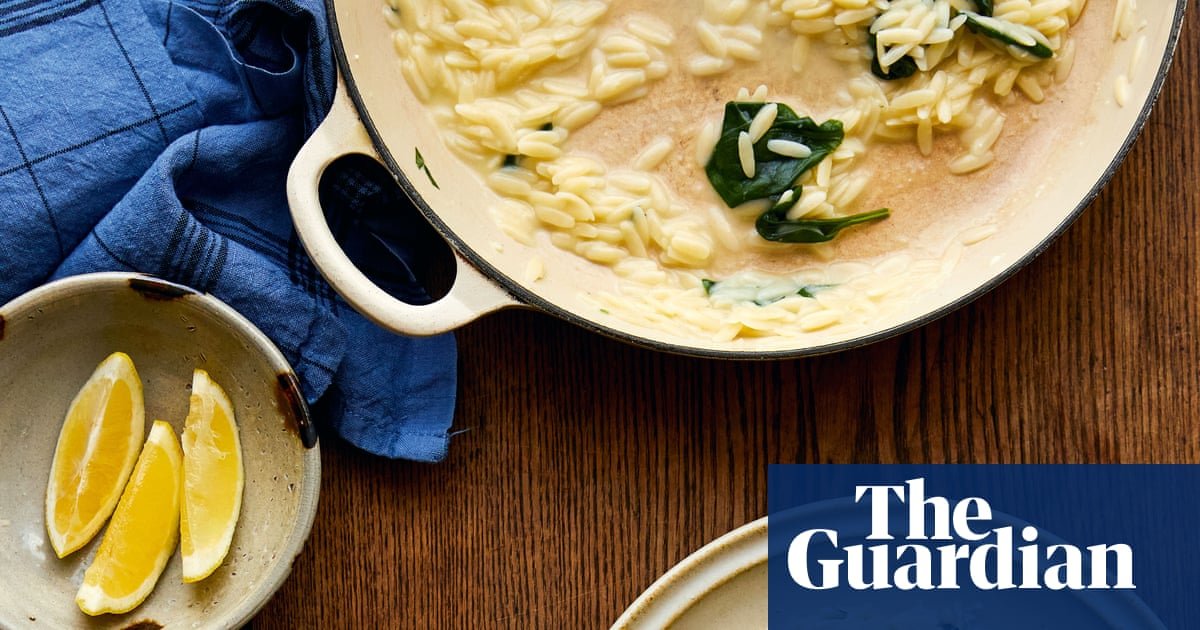
Conjure in your mind the heady hit of warm garlic butter as it spills out of a kiev, then transport that to soft, baked chicken balls and luscious, glossy grains of orzo, which effectively double as both carb and sauce. That’s what today’s first dish is! Then, a method of cooking chicken breast that’s speedy and succulent. It will become a favourite (if it’s not one already). Sage is not typically involved in a piccata, but I like how it imparts its flavours into the cooking fats and, subsequently, the pounded, dredged chicken, too.
Garlic butter chicken balls with orzo
Homemade meatballs do take a short moment to shape, but otherwise this is more straightforward than filling, breading and frying the classic alternative.
Prep 10 min, plus soaking
Cook 30 min
Serves 4
70g breadcrumbs
4 tbsp milk
500g chicken mince
1 lemon, zest finely grated, then cut into 6 segments
25g flat-leaf parsley, finely chopped
6 garlic cloves, peeled and minced
60g parmesan, finely grated, plus extra to serve
1 medium egg
Salt and black pepper
1 tbsp neutral cooking oil
275g orzo
80g salted butter
150g baby spinach
Put the breadcrumbs in a bowl, add the milk, stir and leave to soak for 10 minutes.
In a large bowl, use a spoon to combine the chicken mince with the soaked breadcrumbs, lemon zest, two teaspoons of chopped parsley, a teaspoon of minced garlic, one-third of the parmesan, the egg and a really generous pinch each of salt and pepper.
Heat the oven to 200C (180C fan)/390F/gas 6, and line a baking sheet with greaseproof paper or a silicone mat. Use your hands to spread the oil over the lined sheet, then use the same oily hands to roll the mince mixture into 12 large meatballs weighing about 45g each. Arrange the meatballs on the baking sheet as you work, occasionally wiping your hands over the oil to prevent the meat sticking to them and to apply a little oil to the outside of the balls. Bake for 13 minutes, by which time they will be pale, but set and clearly juicy.
Meanwhile, bring a large pan of generously salted water to a boil. Drop in the orzo and cook at a steady simmer for a little less than the packet instructions, so it’s tender but not swollen. Strain and save the cooking water.
When the meatballs and pasta are both nearly done, gently melt the butter in a medium saucepan on a low-medium heat, then add the remaining garlic and let it warm through, but not colour, for two to three minutes. Take off the heat, stir in the remaining parsley, then transfer two tablespoons of the garlic butter mixture to a large bowl.
Tip the orzo into the garlic butter pan, stir in the remaining parmesan, then add the spinach, pour in 200ml of the reserved pasta water, and shuffle and fold the spinach into the orzo as it wilts. This should flow like a loose risotto, so add more pasta water as the orzo swells and stiffens.
Tip the cooked chicken balls into the bowl of garlic butter, squeeze over two of the lemon segments, and toss gently to coat. Ladle the orzo into shallow bowls or deep plates and top with meatballs, more parmesan and a segment of lemon to squeeze over while eating.
Lemon and sage piccata
Ed Smith’s lemon and sage piccata.
Typically, I’ll serve sauteed spinach and mashed potatoes with this, but it’s great with many combinations of potato, green vegetable, leaves and/or bouncy bread for soaking up the juices.
Prep 10 min
Cook 30 min
Serves 3–4
2 large skinless chicken breasts (370–425g)
Flaky sea salt and black pepper
3 tbsp plain flour
2–3 tbsp neutral oil
40g butter, cubed
12 sage leaves
1 shallot, peeled and finely diced
4 garlic cloves, peeled and finely sliced
2 tbsp baby capers (AKA nonpareilles), drained
100ml chicken stock, or water or white wine
Finely grated zest and juice of 1 lemon
Before you start preparing and cooking the chicken, make sure any sides you plan to serve alongside are in hand, because the chicken cooks very quickly. Butterfly the chicken breasts: hold each one flat on a board with one hand and use a long, sharp knife to cut it in half horizontally. Cut each half-breast in two and use a rolling pin or meat tenderiser to bash the thicker parts so the pieces of chicken are an even 1cm thick all over. Season the chicken very generously all over.
Spread the flour on a plate, then dredge the chicken pieces in it, shaking off any excess.
Set a heavy-based skillet or frying pan on a medium-high heat – you can cook in two batches. Add the oil, half the butter and half the sage leaves to the hot pan and, once the butter has melted and started to foam, push the sage to one side and fry the chicken for a minute and a half on each side, plus another 30-60 seconds for luck – it won’t take longer than four minutes in total. Transfer the chicken and sage to a warm plate and repeat.
When the chicken is resting and all the sage is out of the pan, add the shallot to the remaining fat and fry, stirring occasionally, for 45 seconds. Add the garlic and lemon zest, cook for a minute more, then pour in the stock and bring to a boil. Leave to simmer energetically for two minutes, to deglaze the pan and reduce the liquid by a third, then whisk in the remaining butter. Add the capers and lemon juice, pour the sauce over the chicken breasts and serve at once.
-
These recipes are edited extracts from Peckish, by Ed Smith, published by Quadrille at £22. To order a copy for £19.80, go to guardianbookshop.com