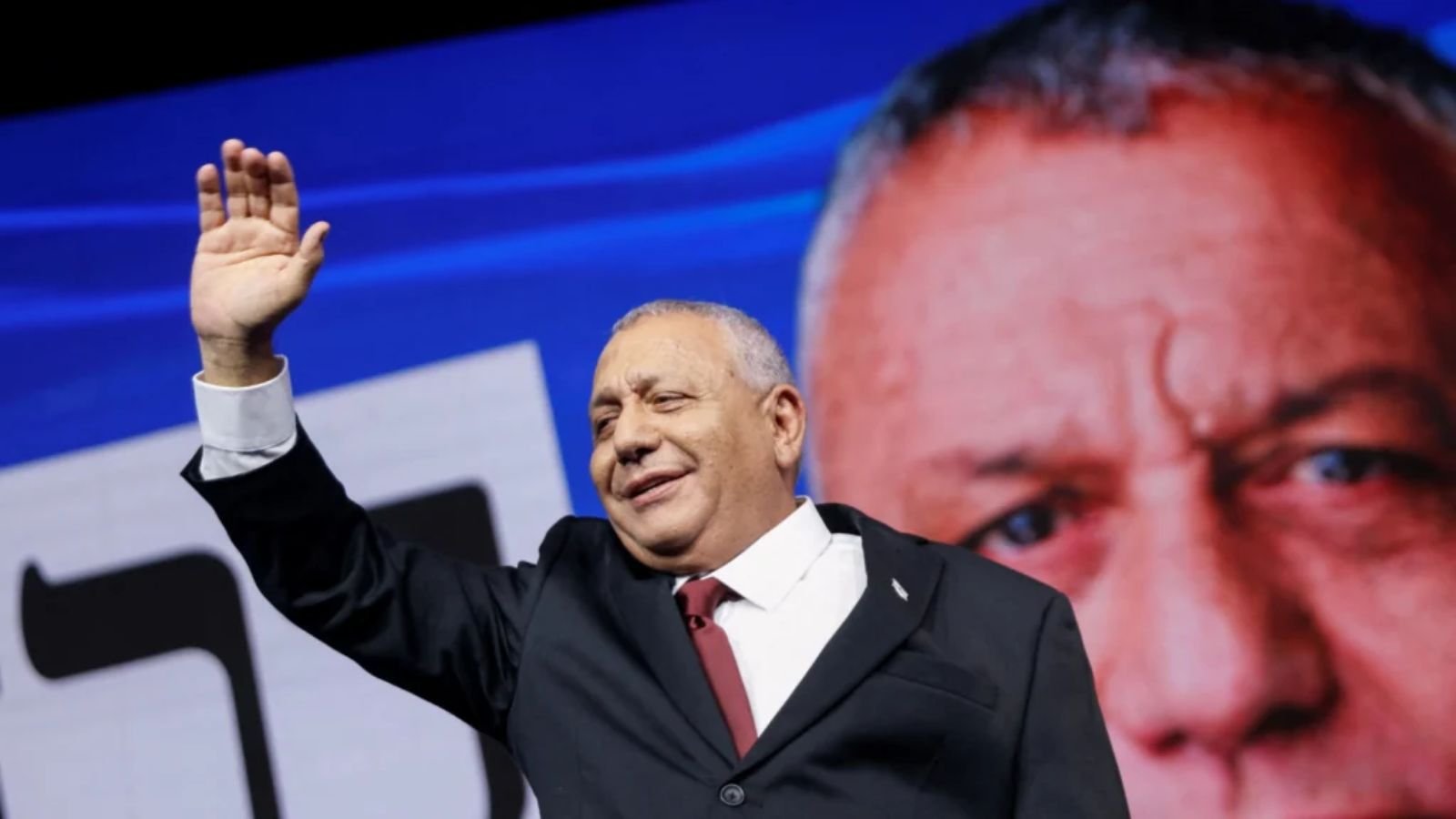
Gadi Eisenkot, the leader of Israel’s Yashar party, is eyeing forming a new government by next Wednesday, December 2, nearly a month after elections left the country without a clear parliamentary majority, The Times of Israel reported on Wednesday, citing Channel 12.
Eisenkot is hoping to conclude coalition agreements with Naftali Bennett’s B’Yachad and Yair Golan’s Democrats in the coming days. However, the Democrats announced on Tuesday that they were suspending talks with Yashar over its negotiations with Prime Minister Benjamin Netanyahu’s Likud party and what they described as a deadlock in efforts to form an alternative government.
Yashar and Likud were due to hold another round of negotiations on Wednesday over the possibility of a unity government.
A coalition agreement was signed between Yashar and Yisrael Beytenu on Tuesday, and MK Avigdor Liberman’s party, Yisrael Beytenu, is likely to gain the Defence Ministry, along with the Immigration and Absorption Ministry, Channel 12 reported.
Liberman was quoted by the news outlet as saying that negotiations with the ultra-Orthodox United Torah Judaism party have been progressing “very nicely”, and that there would be a “Jewish-majority government”.
Announcing an agreement to unite with a right-wing opposition party, Yashar said it agreed to sign a coalition pact with Israel’s Our Home party after a meeting with its leader Avigdor Lieberman, the first alliance of its kind since the election.
Israel’s parliament was sworn in on November 10 without a new government as no party clinched a 61-seat majority.
Story continues below this ad
Why forming a government remains difficult
The election left Netanyahu’s Likud-led bloc with 53 seats, short of the 61 needed for a majority. Eisenkot’s broader opposition bloc has 48 seats, while the Arab-led parties, the Joint List and Ra’am, hold a combined 19.
The Arab-led parties have indicated their willingness to support an Eisenkot-led government to prevent Netanyahu from returning to power. However, several parties in Eisenkot’s bloc have opposed relying on their support, making the question of whether they would join, back or abstain in a parliamentary vote a major point of contention.
Eisenkot is also exploring support from ultra-Orthodox parties, including UTJ and Shas. But this could require compromises over military-service exemptions for ultra-Orthodox men, an issue on which opposition parties had made campaign commitments.
The negotiations have exposed differences within the opposition. While Golan favours forming a government without Netanyahu and with support from Arab-led parties, Bennett has pushed for exhausting the possibility of a unity government with Likud. Lieberman, meanwhile, has been urging Eisenkot to pursue an arrangement with the ultra-Orthodox parties rather than rely on Arab factions.
Story continues below this ad
What happens if Eisenkot fails?
Israel’s parliament was sworn in on November 10 without a new government. Netanyahu continues as caretaker prime minister while coalition negotiations take place.
President Isaac Herzog tasked Eisenkot with forming a government on November 8, giving him 28 days to complete the process. His initial mandate expires on December 6, although Herzog can grant an extension of up to 14 days.
If Eisenkot fails, the president can assign the task to another lawmaker, potentially giving Netanyahu another opportunity to form a government. If the subsequent process also fails, Israel could face another election next year.
The immediate challenge for Eisenkot is to turn his agreement with Lieberman into a broader parliamentary majority while resolving disagreements among his potential partners over Netanyahu, ultra-Orthodox parties and the role of Arab-led factions.
With inputs from Al Jazeera