The pungent and lingering aromas of familiar kitchen herbs – oregano, rosemary, sage, thyme, bay, lavender, mint – seem purposely made to donate their landmark volatiles to our everyday lives and food. In fact, their design is not for domestic calm and onion basket or fridge drawer neglect, but for uncultivated wilds. In particular the limestone terrain of the Mediterranean, where their defining smells are hardcore chemical defences, with every small, tough leaf or needle loaded with enough volatiles to deter both predators and competitors.
Rosemary is particularly kick-arse in this respect, with those volatiles (mostly organic compounds called terpenoids) synthesised and stored in minuscule glands that project from the surface of each dark green needle, which breaks when brushed against or bitten, releasing an intense, hot, bitter shot. It’s the evergreen equivalent of carrying personal defence spray. The needles also mark territory. By leaking their volatiles into the nearby soil, they inhibit the seeds of other plants (maybe even their own) from taking root and, in turn, taking space, water and precious minerals in a challenging environment.
Challenging in another way is my onion and garlic basket, which, despite regular sorting, has a magnetic pull for clothes pegs, hairbands, coins, batteries, Lego, empty lighters and dust, and is where I keep the bay leaves and branches of rosemary I bring home from dog walks. While there are some dried branches under the onions, I neglected those further and picked two nice, bushy fresh branches for this week’s recipe, which is inspired by Joyce Molyneux’s chocolate pots in The Carved Angel Cookery Book and Ada Boni’s panna cotta from Il Talismano della Felicità.
An intense and balanced mix of pine, eucalyptus and camphor, rosemary is a strong-minded and complementary match for the dark roasted, fruity, malty, almost sweaty flavour of dark chocolate; two such strong elements, both of which are rounded by the cream. Another benefit of adding dark chocolate to panna cotta is that it negates a common and annoying problem: that the final set is rubbery rather than tender and wobbly. This is because the chocolate, diluted in a large amount of cream and dominating the gelatine, takes control of the panna cotta, setting into a thick, smooth, almost velvet texture. In order to infuse the cream with the rosemary, though, it is essential to warm it gently and slowly, so sit the pan on a low heat and watch it carefully – it should almost (but not quite) come to a boil.
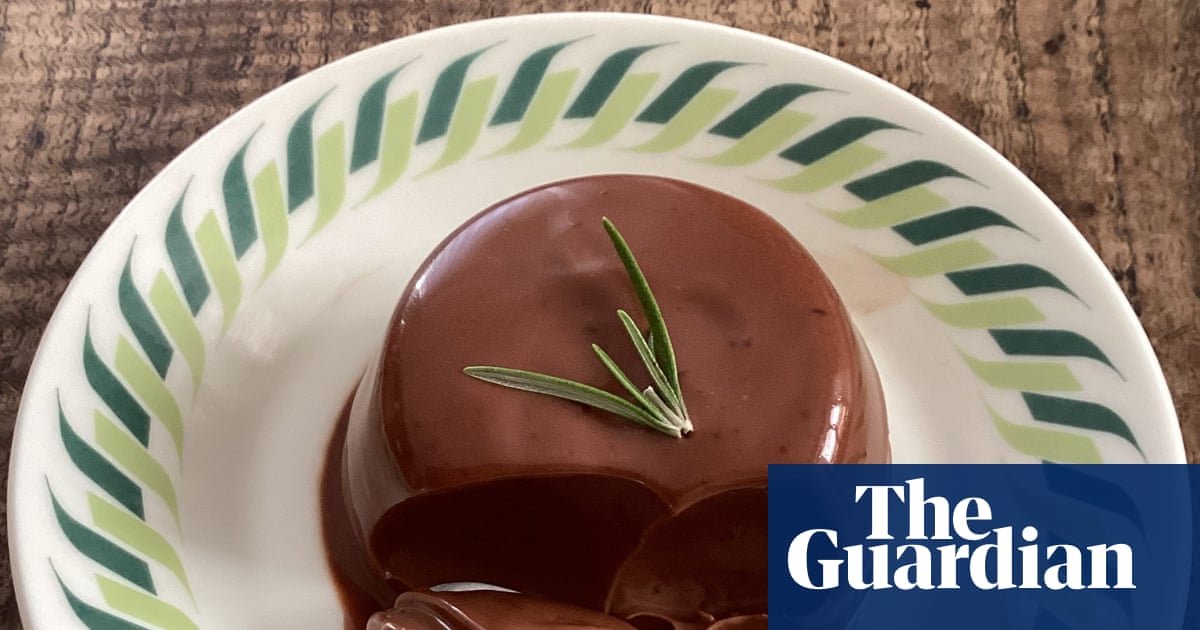
It is important to pull the tray out of the fridge at least 30 minutes before serving, so the consistency of the panna cotta is velvet-like, and that the pungent, resinous and delightful perfume of the rosemary comes through. To unmould, the best way to do this is first to use a slender-bladed knife to ease the top edge of the panna cotta away from sides. Next, pour about an inch of boiling water into a bowl and dip the base of each mould into the hot water, holding it there for about 20 seconds while shaking the mould gently. Invert (it should smootch out like wonderful brown sea anemones) on to plates, and decorate each panna cotta with a few sharp needles of fresh rosemary, which are also useful for fending off competitors.
Chocolate and rosemary panna cotta
Makes 4-6
3 x 2g sheets of gelatine
140g dark chocolate
500ml single cream
100g icing or fine caster sugar
2 bushy sprigs fresh rosemary, plus extra for decorating
Choose four suitable moulds (ramekins, small cups or shot glasses) for the panna cotta and arrange them on a plate or small tray that will fit in the fridge. Soften the gelatine in water as instructed on the packet and finely chop the chocolate.
Pour the cream into a pan, add the sugar and rosemary, then, over a low heat, warm the cream gently and slowly until it almost comes to a boil. Remove and discard the rosemary, then wring out the water from the gelatine, add it to the pan with the chocolate, then stir energetically until both have completely melted. Pull the pan off the heat.
Pour the mixture into the moulds and put the tray in the fridge for at least four hours and up to 12.
Take the tray out the fridge at least 30 minutes before serving. If you want to unmould, dip the base of each mould into boiling water for 20 seconds, then invert on to plates. Decorate each panna cotta with a small sprig of rosemary.