In this sweeping historical epic of love, survival, and devastating loss, taking place while the American Civil War and Reconstruction unfold in the background, we meet Scarlett O’Hara, perhaps the most complex and intriguing heroine in fiction. At first, we see her as your regular Southern belle archetype—charming, vivacious, coquettish, and of course, spoiled.
Everything changes halfway through the movie. The war starts, and her privileged world literally collapses. As everything that made her “her” starts burning, the antebellum debutante dissipates and rises as an unfamiliar figure. She has dirt on her face, her clothes are torn, and she is holding on to a meager radish like it’s a winning lottery ticket.
But no, she hasn’t gone mad. She is aware of what has become of her. As her house burns and the sun sets on her glorious past, she vows to get back at her unfair fate. The dreamy-eyed girl goes to sleep and wakes up a woman on a mission.
This is not just a narrative-pushing plot point; it is a moment that changes the story’s DNA. And quite strongly worded too. This moment sets the stage for everything that follows and for everything she becomes.
Context
In 1861, while the Civil War is brewing, 16-year-old Scarlett O’Hara (Vivian Leigh) is living a blissful life on her family’s cotton plantation, Tara, in Georgia, with her parents, two sisters, and the family’s Black slaves. President Abraham Lincoln’s call for the enlistment of volunteer soldiers and the mobilization of the army creates panic, and the men hurry to enlist with the Confederate army.
As the war rages on, Scarlett goes to Atlanta to live with her cousin, Melanie Hamilton (Olivia de Havilland), and her family. She has lived here for a couple of years. After the Battle of Gettysburg, the tide of war turns against the Confederates, and many men from Scarlett’s town are killed.
Eight months after the Gettysburg battle, Scarlett, now 19 years old, makes her way back to Tara, her home, only to find it in complete ruins. Her mother has died, her father has become mentally imbalanced, and aside from him, the only people who live there are her two sisters and two slaves. Everyone else has either fled or died.
Scarlett is dazed to see her world destroyed. Tara was plundered by the soldiers, fields are untended, and most of her people are dead. There is no food and no help. There is not a trace of the past riches she once relished.
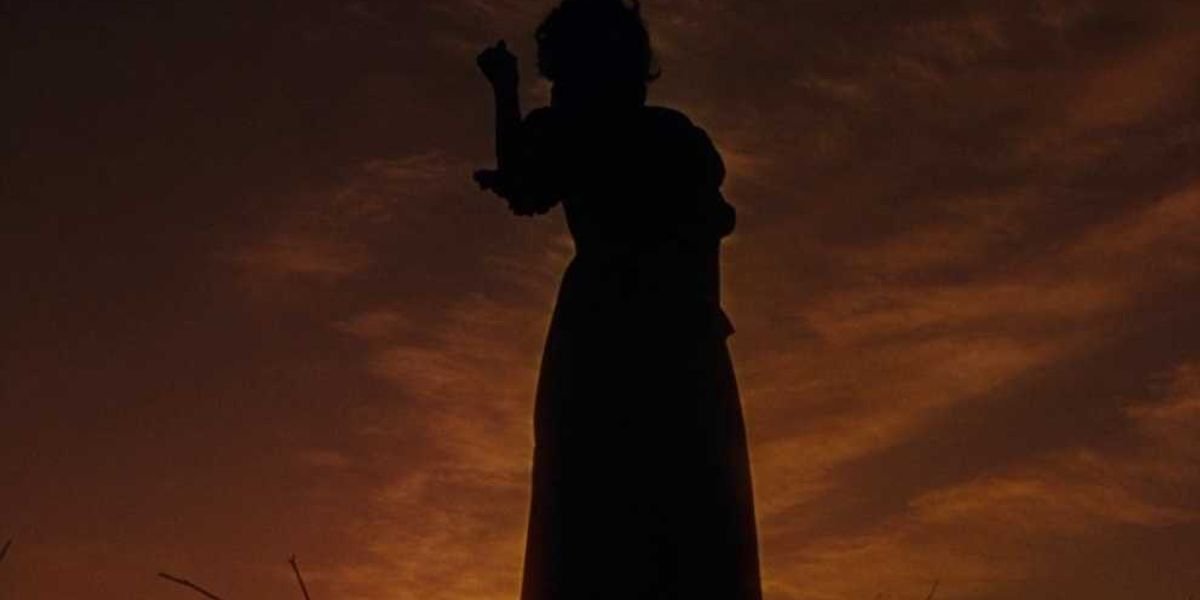
While grieving, Scarlett vows, “As God is my witness… as God is my witness… they’re not going to lick me. I am going to live through this, and when it’s all over, I’ll never be hungry again. No, nor any of my folks.”
What the Vow Reveals About Scarlett
Survival Becomes Her First Priority
The original Scarlett is mostly about status, romance, and social expectations; in short, the pursuit of happiness, all the way. She is the kind of person who thinks it’s her prerogative to hit on Ashley Wilkes (Leslie Howard), whom she is infatuated with, even though he is engaged to be married to her cousin, Melanie. After Ashley and Melanie’s wedding, Scarlett marries Melanie’s brother just to make Ashley jealous. This makes her priorities and overall mindset clear. She’s a coddled prima donna.
Everything changes when she returns to Tara. Her world has shattered, and she is left with absolutely nothing. But she is intrinsically the same “go-getter” that she was earlier. It’s just that now the things she needs to get have drastically changed. Things like romantic pursuits and rank-chasing are replaced by sheer survival, one day at a time.
A Moral Line That Starts to Blur
This promise also creates the moral tension that is famously ubiquitous with Scarlett’s character. And it remains stuck to her throughout the story. This determination indeed brings her out of misery and keeps her family alive, but it also leads her to take some very questionable decisions.
Her willingness to be a hypergamist—marrying someone for money and status, her own sister’s fiancé, no less—speaks volumes about her blown-up self-centeredness. She emotionally abuses all her husbands. She neglects her own children, in addition to having “favorites.” She exploits convict labor and pursues profits from them without any hesitation. She even prostitutes her charms to Rhett Butler while she is married to someone else, all in hopes of money to save her house. When Bonnie, her supposedly favourite child, dies in an accident, she selfishly blames Rhett for it.
Her determination to survive and thrive outweighs all morality, decency, and reputation. At the beginning, she was spoiled, but she still had ideals. By the end, those ideals are replaced by practicality and cold pragmatism.
Crafting a Survivalist Icon
Cinematic Grandeur in the Dirt
Victor Fleming’s choice to use Scarlett’s silhouette against the blackish-orange sky amplified the weight of her words. And to put it (the profundity of her vow) into perspective, he used the scale of the landscape to show how small she is compared to the world and yet how colossal her will has become.
‘Gone With the Wind’ (1939)Credit: Metro-Goldwyn-Mayer
The cinematography strove to make sure that the audience felt both the emptiness of the fields and the fullness of her resolve.
A Departure from Traditional Heroines
Long story short, “damsels in distress” were popular in the ‘30s. People expected to see a heroine who suffers beautifully, stays devoted to her man and values, and patiently waits for rescue. Scarlett broke this chauvinistic mould and valiantly chose to be “unladylike” by taking it upon herself to save her family.
Focus on how this vow signals her willingness to lie, cheat, exploit, and steal if it means never seeing an empty plate again. This is the exact moral grey point that makes her so fascinating.
Conclusion
Scarlett’s promise to herself is one of the most defining moments in Gone With the Wind. Its impact feels even louder because it comes at a time when she has lost all her comfort, pride, and status. From this point onwards, all she has is a single and stubborn vow to cling to. And this vow is what drives the rest of the story and Scarlett’s character arc.
She may have made this vow to the heavens, but it’s only she who did the heavy lifting to make it come true.