You Can See Everything (2026)
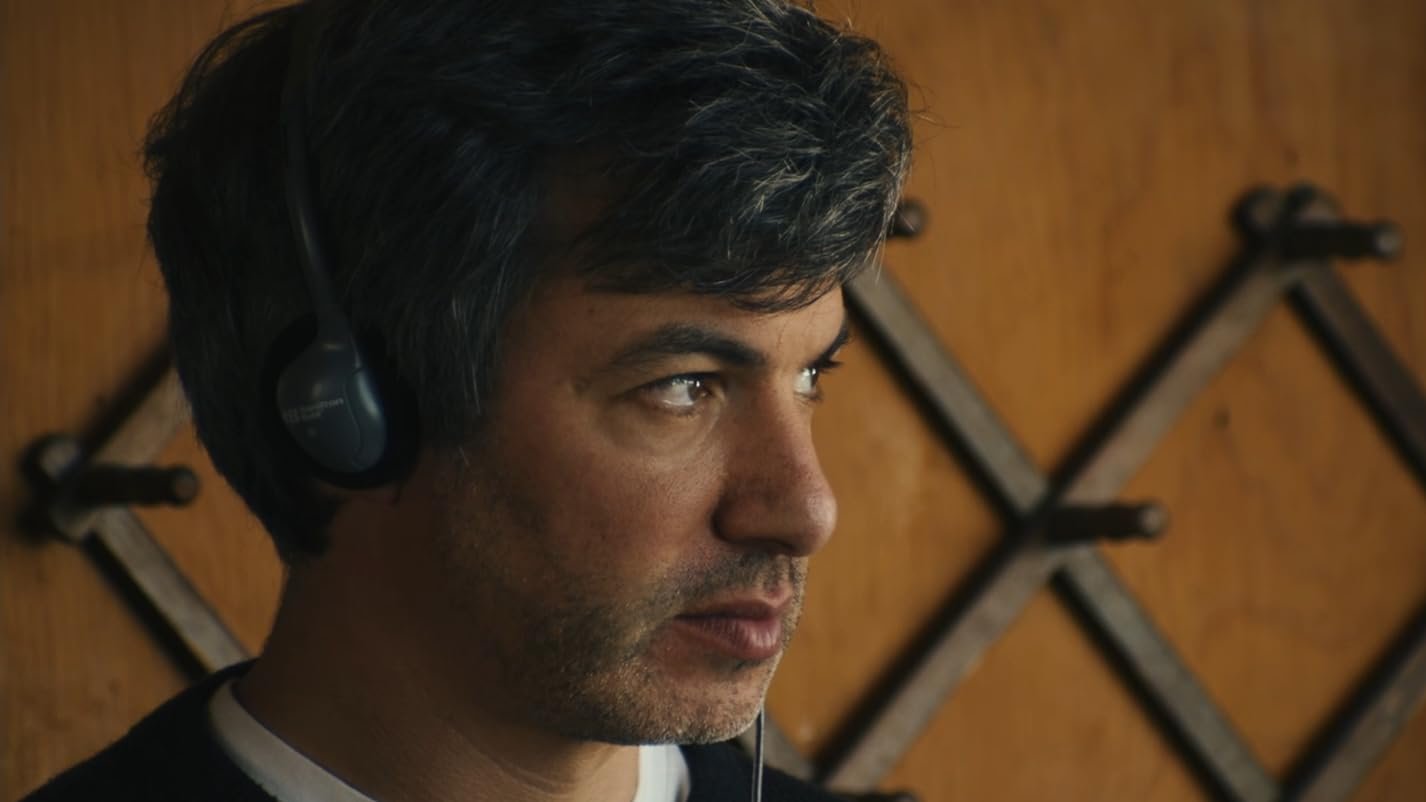
Shortly after its 1974 inception, the Telluride Film Festival began to foster a sense of surprise and exclusivity. The festival, whose slate is composed entirely of North American premieres, doesn’t announce its program until the day before the festival, and special secret screenings have become common. This year’s announcement, however, held an additional layer of surprise: a film whose very existence had been a secret, Nathan Fielder and Lance Oppenheim’s Elizabeth Holmes documentary, You Can See Everything (2026).
Though sightings of Fielder visiting Holmes in prison in 2025 led to some casual speculation that he was working on a project that involved the disgraced Theranos founder, the announcement of a feature-length film with Oppenheim came out of nowhere. The night of the Telluride screening, A24 released the first teaser, setting the internet ablaze with excitement and anticipation. In stark contrast to the way that most films seek to build awareness over the course of many months, You Can See Everything would hit theaters in just three weeks.
While surprise movie releases have never quite matched the ubiquity or magnitude of the surprise album drops that originated in the early years of streaming, there have been a few instances of noteworthy franchise sequels arriving with little to no notice. In 2016, what was thought to be a small horror film called The Woods was revealed at Comic-Con to be Blair Witch, the sequel to The Blair Witch Project, which arrived in theaters seven weeks later. During the 2018 Super Bowl, Netflix aired a teaser announcing that a new Cloverfield movie, The Cloverfield Paradox, would hit the streaming service as soon as the game ended.
You Can See Everything (2026)
There are many reasons to keep a movie—or an early screening of one—a secret. When a film contains sensitive material, it is sometimes kept under wraps as a precaution. In 2022, for instance, Sundance didn’t disclose that its documentary lineup would feature Navalny, Daniel Roher’s covertly produced portrait of the Russian opposition leader and anti-corruption activist Alexei Navalny, until the day before its premiere because of Russian security threats. (In 2017, hackers briefly took down the festival’s box office following the premiere of the Russian doping-scandal documentary Icarus.)
Secret screenings are also a way to bypass festival rules and technicalities; they are not typically considered proper premieres, which allows films to maintain their world premiere status at a later festival. Studios sometimes use them to test the waters. Charlie Sextro, who worked as a programmer at Sundance for 16 years before becoming the Senior VP of Acquisitions at Utopia last year, says that while he was at Sundance it was common for studios to “reach out to us at the last minute saying they had a movie coming out in a couple months.” Placing it at Sundance as a secret screening or last-minute surprise was a way to gauge audience response. When the festival was able to surprise-screen Get Out ahead of its release in 2017, the programmers knew they had gold on their hands. But often, Sextro says, the studios would come to them with “a movie that they didn’t know what to do with, [and they thought] maybe we could make it seem cool.”
Usually, though, secret screenings are reserved for movies that are heavily anticipated, and they are engineered to make a splash. “Just being at Telluride is an exclusive experience,” says Sextro. “But you add a secret screening to it, and it’s like the privilege within the privilege. It’s even more important than the rest of the program.”
You Can See Everything (2026)
Fantastic Fest, one of the festivals that has done the most to popularize the secret screening, has been conducting them since 2006 and frequently features multiple in one edition. In past editions, the festival has surprised audiences with the likes of Pan’s Labyrinth (2006), There Will Be Blood (2007), and The Lighthouse (2019). “The surprise adds to the excitement,” says Fantastic Fest cofounder Tim League. “Coming in for a mystery, where no one knows what’s coming until it pops onscreen, does heighten the adrenaline. Maybe it even increases the likelihood you’re going to respond, because you’re part of a secret club.”
In the current attention economy, where everyone is making as much noise as possible, withholding information and creating a sense of exclusivity can help a film stand out. “When there’s so much spend happening from the majors, doing something that feels different is the key,” says Ash Cook, founder of Video Store.Age, a boutique physical media distributor that hosts bespoke events for each new release. “Something that feels unusual, quick, and immediate is really effective, especially as an antidote to how glacial the pace can sometimes be with rollouts—due to consternation or preciousness. It’s smart to wonder whether those things serve a given film.”
As audiences grow increasingly weary of unjustified hype cycles, sending a film out into the world with no prior marketing also belies a confidence that the work will speak for itself. “Most people get into this industry to show off and brag and seem important,” says filmmaker and actor Jim Cummings. “There is something so wonderful about filmmakers who wait to show off the movie, not show off that they’re making one.”
The flip side, though, is that the anticipation around surprise screenings means there’s more pressure on a given film to dazzle audiences. One person working in distribution told me that programming a movie in AMC’s Screen Unseen series will result in more ticket sales, but if the movie is disappointing, it will end up killing its Letterboxd score.
You Can See Everything (2026)
“We’re in an era where people can’t be conned,” says League. “The movie industry has a long tradition of getting people excited and then word [that the film is not good] doesn’t spread until after the opening weekend, and then it’s too late. But word travels so fast now. Letterboxd is where the trusted voices are. And word spreads immediately. I think it reserves secret screenings—and to a similar extent, festival screenings—[for] movies that deliver.”
Of course, what it means to “deliver” is subjective. In 2014, filmmaker Craig Johnson had what he called the “single weirdest movie experience of my entire life” while at Sundance with his movie Skeleton Twins. He brought his parents to a secret screening, thinking, “‘Maybe it’s the new Wes Anderson movie. My mom will love that!’” Instead, the film turned out to be Nymphomaniac, the extremely graphic Lars von Trier movie, which features actual penetration—a risky choice given audience expectations at Sundance.
Everyone I spoke to who’s been involved with secret screenings stressed the need for the film to be a crowd pleaser. “You generally don’t want everyone coming out of the screening really depressed,” says Bianca Moran Parkes, head of marketing at Black Bear.
You Can See Everything (2026)
To Moran Parkes, the surprise, rapid release of You Can See Everything is indicative of a bigger shift in film marketing. “We’re at a time where people want something that is unexpected” and community-oriented, she says. “There is something exciting about audiences discovering something themselves as opposed to being marketed at before having made a call on a film. There is some satisfaction in going in cold.” Indeed, viewers flocked to the film in its first two weeks to be part of a conversation and avoid spoilers for its twists, leading to a $45 million domestic haul across that period, among the largest openings ever for a non-music documentary.
Though You Can See Everything’s historic success all but guarantees that other distributors will imitate its surprise rollout, few films will be able to tap into the zeitgeist the way it has—with a well-known scandal at its center, a celebrated provocateur directing, and an exceptional level of craft. More important is a boutique approach that meets a film—and its audience—where they’re at.
“Not everyone can harness all those [resources] and have it be immediate with a secret screening and then rocket ship to the moon,” says Cook. Both as a festival programmer and now an independent distributor, Cook has found that for a lot of films, “slow and steady is also a great way to finish the race.”