Rotten Tomatoes’ list of the 200 Best Horror Movies of All Time contains a lot of minted classics, from Frankenstein to Sinners. While many of the movies on the list use fabulous special effects to bring vampires, ghosts, aliens, and other monsters to life, one in particular puts almost none of its horrors on-screen and yet manages to be just as effective as the other entries.
That would be the 2008 Canadian zombie movie Pontypool, which landed a spot at No. 154 thanks to its Certified Fresh Tomatometer score of 83%. Even though it’s lesser known than many of the other titles on the list, it managed to achieve this elite status thanks to the impeccable way it’s constructed.
Pontypool Harnesses Limited Perspective
What Pontypool knows well is the fact that a limited perspective is among the scariest tools in a horror filmmaker’s kit. Horror thrives when the audience knows enough about the scenario to fear for the characters, but not enough to know exactly where the threat is coming from. For instance, a scene of somebody searching a basement with a flashlight is already a bit scary automatically, but the fear gets amped up considerably when you know that a killer clown is down there somewhere, but can’t quite figure out which murky shadow it might pop out of. Almost every horror movie uses this trick in one way or another, but Pontypool does so almost exclusively.
The movie follows an unusual zombie outbreak afflicting the real-life town of Pontypool, Ontario, where it seems that specific words in the English language are infected, causing them to stick in people’s brains and drive them into a mindless, violent rage. All of this is documented by a radio program hosted by disgraced former shock jock Grant Mazzy (Stephen McHattie). As he and his producer, Sydney Briar (Lisa Houle), try to figure out what’s happening, they experience the horrifying death and destruction almost exclusively through what they can hear from the radio booth.
While Grant and Sydney do encounter a few infected people inside the understaffed radio station, the majority of the violence in the movie is conveyed entirely through sound and via the description of terrified off-screen witnesses. One reason this approach is so effective is that it places audiences directly into the headspaces of the characters. At first, neither they nor the audience knows if what they’re hearing is real. Seeing is believing, after all.
However, as the situation spirals out of control, their limited perspective underscores just how impotent they are to do anything to stop it. All they can do is listen and frantically try to disseminate accurate information… using a language that just might be the root cause of the violence in the first place.
How Pontypool Stays Scary
Limited perspective goes a long way when crafting a horror movie, but it’s not the only reason why Pontypool is able to sustain its terrifying tale through the entire length of its run time. One of the reasons it is able to do this is the fact that it boasts exquisite sound design.
The fact that the sound design drives the movie is something that director Bruce McDonald and screenwriter Tony Burgess (who also wrote the novel upon which the movie is based) were aware of from the beginning. In fact, the original plan was not to have visuals at all, having the audio roll over an image of a soundwave, making the movie feel more like a radio play.
Even though the filmmakers did ultimately opt to put the characters and the setting onscreen, what the characters hear in the booth is the most important thing in the movie. The sound department, including recordist Michael LaCroix (Videodrome) and editor Steve Munro (The Grey), also utilizes limited perspective, allowing audiences to hear just enough to know that something terrifying is going on, but avoiding giving them a too-clear sense of what’s going on outside the building.
‘Pontypool’ (2008)
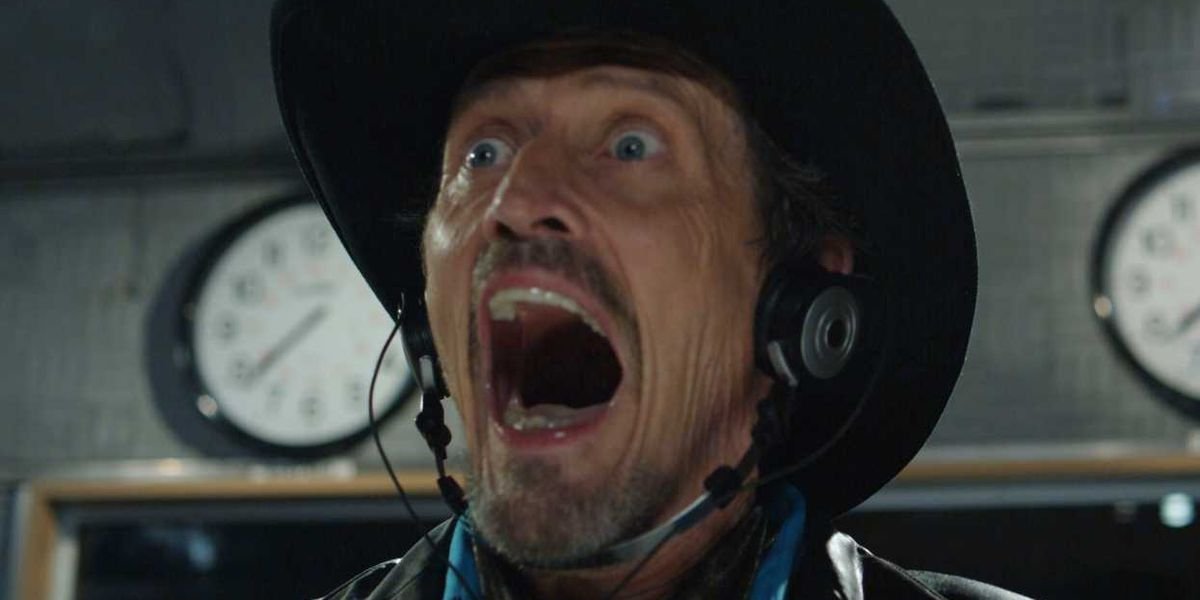
Pontypool also relies on finely tuned performances from its cast to make the horror truly land. Acting teacher Stella Adler famously said that “acting is reacting,” which is proven beyond a shadow of a doubt by the fact that the movie is effective largely because of the way the horror of the situation plays out on the faces of Stephen McHattie and Lisa Houle as they listen.
As both characters try to maintain their professionalism, it is these increasingly terrified reactions that justify their arcs as Grant and Sydney grow more and more erratic and desperate.
This Approach Enhances Pontypool’s Themes
These are all reasons why Pontypool’s limited perspective works, but why is it there in the first place? There are multiple reasons why (including, yes, the simple fact that it works so darn well), but the most important is that the themes of the story demand a less traditional approach to the zombie subgenre.
The threat in the movie is much more cerebral than the average zombie virus. Ultimately, Pontypool is about the power that words have to shape the human mind. Verbal and written communication is the cornerstone of our society, but while words connect humanity, they also have the power to provoke violence, underpin systemic oppression, and much more.
Therefore, it is important that words take center stage in the movie, whether it is the ones that make up the panicked conversations that Grant and Sydney have off-mic, the ones that deliver information to them, or the ones that ultimately tear apart the fabric of society in Pontypool. By limiting the perspective almost entirely to the words themselves, the movie reminds viewers that what we say and what we hear can be just as terrifying as what we see.
‘Pontypool’ (2008)Credit: Maple Pictures
Pontypool isn’t the only horror movie on the list that utilizes limited perspective to boost the effectiveness of its horror premise. Steven Spielberg famously overcame technical difficulties on Jaws (No. 13) by using a POV camera to show the shark approaching victims without actually having to put the animatronic on-screen, while the found footage movie The Blair Witch Project (No. 131) managed to terrify a generation without ever once showing the titular witch onscreen. Are there any other movies that have managed to get under your skin without flooding your eyes with terrifying imagery? Sound off in the comments!