Lumière, Le Cinema!
Thierry Frémaux wears a lot of hats. The 65-year-old Frenchman oversees the programming and operations of the Cannes Film Festival, which will announce its 79th edition next month. At the same time, he runs the Lumière Institute and its accompanying Lumière Festival in Lyon, both of which are dedicated to screening and studying film history. It’s hard to conceive of another top film leader playing such a vital role in both the past and present state of the medium.
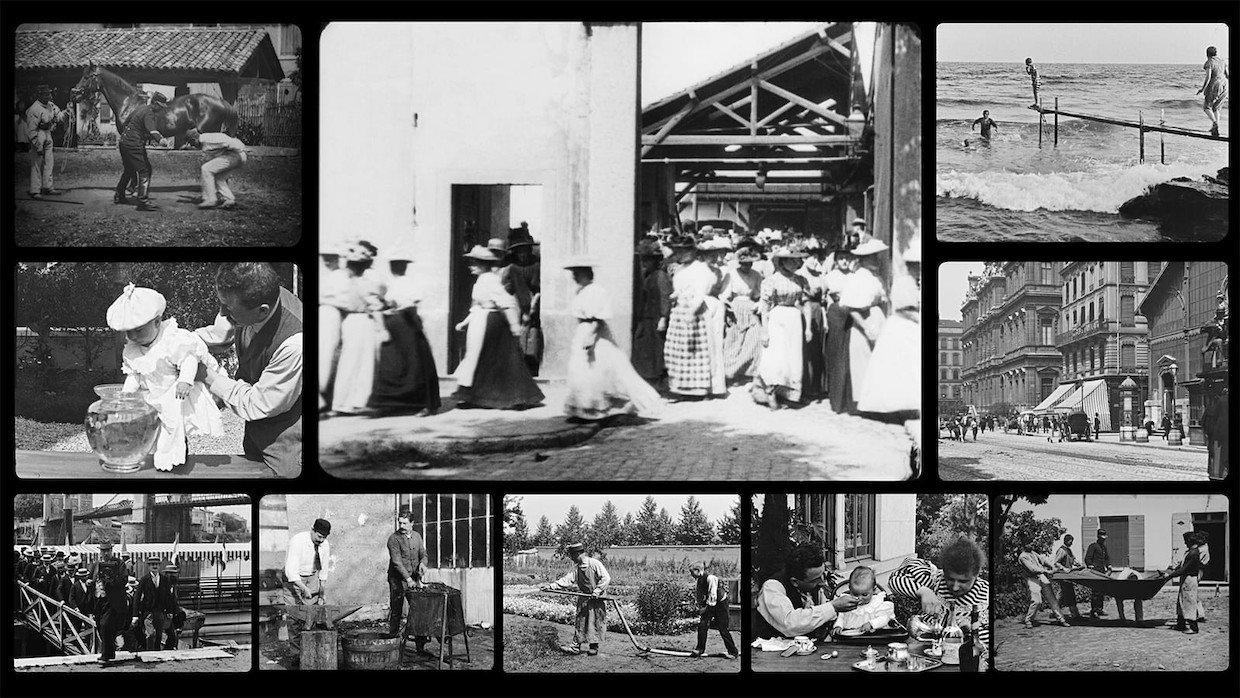
As an extension of his jobs, Frémaux occasionally holds one other title: filmmaker. The newly-released Lumière, Le Cinema! is an essayistic look at the fabled Lumière brothers, Auguste and Louis, whose cinematograph served as a breakthrough for showing movies on the big screen over 130 years ago. Technically a sequel to a similar project in 2016, Lumière, Le Cinema! utilizes roughly 100 short films that the siblings shot during the early days of the medium, while Frémaux muses in voiceover about the significance of their accomplishments.
This week, he hopped on Zoom while dashing down the street to discuss the bigger-picture implications of the project and how it connects with the other facets of his career.
Filmmaker: Where are you now?
Frémaux: I’m in Paris. We’re in the selection process right now. I’m going from one place to another place.
Filmmaker: How does thinking about the earliest days of film history impact the way you look at contemporary cinema as a programmer?
Frémaux: I think it’s connected. The reason why I do this work is because I’m a movie buff. Looking at the history of cinema, nobody cares if you like it or don’t like it. You have to describe the movie for what it is. To me, I do the same job in the selection process. It’s not about what I like or don’t like, is it good or bad, but what is it—and is it important or not for us to show this film? In the same way, is The Cabinet of Dr. Caligari still the most important film in the history of silent German cinema? And so on. I’m watching mainly contemporary cinema these days, but I still have my two loves.
Filmmaker: How do you view the legacy of the Lumière brothers from a 21st century perspective? They weren’t traditional storytellers, but then again, most people who capture images these days aren’t.
Frémaux: I think there are several levels to watching the cinema of the Lumière brothers related to storytelling, some of which people don’t realize. One of the first fiction films is L’Arroseur Arrosé and it’s by the Lumière brothers. [The comedic 1895 film finds a child tricking a gardener into spraying water from a hose in his face.] To me, the main quality in the cinema of Lumière is simplicity. Remember the words of Pablo Picasso: “All my life, I tried to draw like a child.” In a way, the simplicity of each shot by the Lumière is something that to me is still important—and something we’re missing sometimes. The story of cinema is not the story of images. It’s the story of shots. Good, beautiful, efficient shots. That is the language of cinema. Lumière got that right away at the beginning.
Filmmaker: Audiences were shocked by the moving image in those days. Does anything about the medium have that impact today?
Frémaux: At the time, that audience wanted to be surprised. At one point, Lois Lumière was reported to have said, “Cinema is an invention without a future.” I don’t think he actually said that. But even if he did, he would have been right at that time. Who could have guessed during the first months, that first spring, that this machine would become what cinema is? It’s pretty extraordinary. The brothers directed or produced 2,000 films. They believed in this new way of inventing an art to describe the world. Lumière is the last inventor of the cinema. There were many before—especially Thomas Edison—but the Lumières were at the end of the process, and there was no inventor after them. Once they did what they did, it was done.
Filmmaker: The history of the Lumière brothers is also the history of exhibition. How important was it that these films were projected for audiences?
Frémaux: It’s important to talk about that because the superiority of Lumière’s idea over Edison was that Edison had his kinetoscope. To get the film, to get the images, you had to put a coin in. You had to pay. That’s the very American way of life. Edison thought the French were crazy. You put all these people in one room and once they’ve seen the movies, they won’t be back again. Lumière said, “Yes, they will be back, because we will make more movies.” And they made 2,000 films. So technically Edison made one mistake. The desire of people then is our desire now: to gather together and watch cinema on the big screen.
Filmmaker: Is it though? We’ve had a few generations grow up with smaller screens.
Frémaux: We celebrated the centennial of cinema 30 years ago. Now we have to talk about the second invention of Lumière, which is the screening room. Of course, now, the screening room is in a most fragile situation. Cinema has faced a lot of problems ever since the invention of television, video, the internet, DVD, and now platforms. The question Jean-Luc Godard was asking in the ’80s about the death of cinema is not a problem now. Cinema won’t die. Cinema is everywhere. Even an Instagram post has the language of cinema in it.
Filmmaker: Sure, but the business is struggling in new ways.
Frémaux: The cinema industry is something we have to protect. That is something I spoke a lot about with Tom Rothman at Sony, who’s a big supporter of theaters. Sean Baker talked about it on the stage of the Oscars. The younger generation loves going to the movies, but for sure, the world of images is totally different. In a way, are platforms like Netflix the revenge of Thomas Edison against Lumière?
Filmmaker: Or even cat videos?
Frémaux: Yes, individual ways of watching videos is—well, I don’t want to say that it’s the defeat of Lumière, but the legacy of Lumière has something to fight against now.
Filmmaker: How much of an appreciation for film history do you look for when evaluating new works for Cannes?
Frémaux: Look, there was a time when we had presidents of America, France, and other places who were so young that they didn’t know what it was like to live through wartime. Charles de Gaulle and Eisenhower knew the past. Today’s presidents haven’t experienced that in the same way. Similarly, today’s filmmakers don’t know the past. Their first shock of cinema was not on the big screen. It was on television. But, on the other hand, if you say to a child today that we’ll go to the movies next Saturday, they will be very happy. So that’s why I’m not pessimistic.
Filmmaker: It might also help that you live in a country where the government supports the movies.
Frémaux: People do say, “You’re not pessimistic because you’re French!” And it’s true that in France we’re used to fighting for cinema. But our current situation means we have to be more specific about what cinema is. Cinema is the big screen. For this cultural practice to survive, we need movies. Whenever cinema has faced a crisis, we have always said that it will be saved by the artists. I’m confident that will continue to happen.
Filmmaker: There are more people making stuff—for lack of a better word, “content”—than ever before. How has your advice for filmmakers changed as the volume of projects has gone up?
Frémaux: Breathless was roughly 65 years ago and 65 years after the Lumière brothers. Godard, Bresson, Scorsese, Tarantino are more connected to the earlier days of cinema than the younger generations are today. But still, I think they admire the past, the history of film, and they still want to do it.
Filmmaker: Why does Cannes always add films until the last minute? Most festivals lock their lineups much earlier.
Frémaux: The difference from when I started is this: I remember when Clint Eastwood showed me Mystic River. I had to watch the film in January, and say yes when the film was not finished at all in order for him to be finished by May. Now, until a week before their screenings in Cannes, they can still make some changes. That’s how things have changed a lot.
Filmmaker: Do you have any concerns about A.I. impacting the kind of films under consideration?
Frémaux: You can write with a computer, you can write with whatever you want. But if you want to be James Joyce, Faulkner, Hemingway, or Marcel Proust, you have to have the brain for that. Nothing will replace that. I think that despite technology, cinema is still unique. One morning, an artist gets up, calls their producer with an idea. A shot to start with. And then you have a film.