For centuries, across multiple cultures and different mediums of storytelling, prophecies have been considered as sacred, unbreakable truths. I mean, that’s the idea anyway, isn’t it?
When an audience buys into a movie or TV show’s prophecy, it views the entire story through the lens of that prophecy. It acts like a binding force and a singular certainty.
Yet, some stories play the one card nobody expects – the possibility that the prophecy itself was never true at all. The entire foundation of the story becomes a well-cloaked deception that successfully lured you into believing in something that was, in essence, a lie.
Let’s look closer at how the prophecy twist actually works so that next time, “the ultimate truth” doesn’t fool us so easily!
What Exactly Is The Prophecy Twist?
As we’ve discussed, a prophecy twist occurs when a prophecy, presented as the ultimate truth, turns out to be false. In movies and television, the twist hits hardest when large-scale events are at stake, or have already happened, based on the prophecy’s belief system.
Imagine a war and the deaths of multiple prominent characters, only for the audience to find out that it was all for nothing. There are many ways in which a prophecy can reveal its falsities. It could be a mistranslation of some kind, deliberate manipulation, or context that was previously hidden.
Unlike a typical plot twist (though a prophecy twist can behave as one), this one attacks the very concept of fate, maybe the idea of the chosen one, or something so central to the plot that it feels monumental.
The best deployment of the prophecy twist is when it feels fair. As in, the audience does not feel as though they were cheated. The clues were always there, hiding in plain sight, and we refused to see them.
What are some movies and TV shows that leveraged the prophecy twist brilliantly?
Movies & TV Shows That Mastered The Prophecy Twist
Even though the prophecy twist is not an uncommon trope, especially in fantasy movies and TV shows, I have chosen three examples that did it incredibly well.
Dune (2021, 2024)
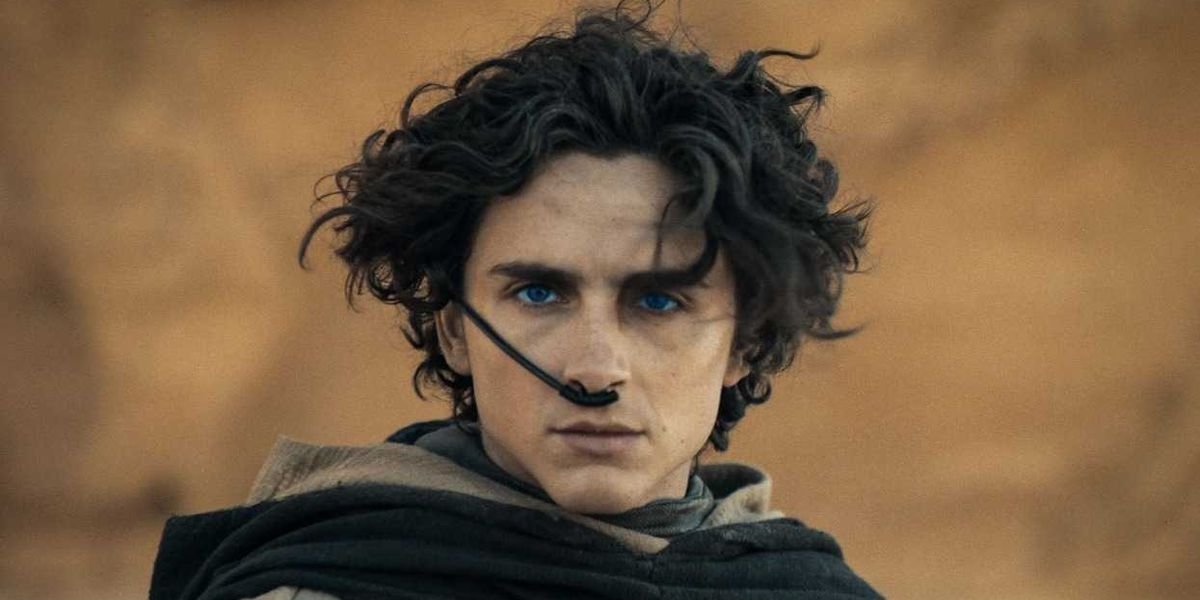
In Dune, a young Paul Atreides (Timothée Chalamet) arrives on the desert planet Arrakis and is hailed by the native Fremen as the messiah they have all been waiting for. The central prophecy of the films (based on Frank Herbert’s books) is that Lisan al-Gaib, a messianic figure, was foretold to appear on Arrakis and liberate the Fremen.
A series of seemingly impossible coincidences makes Paul the immediate embodiment of Lisan al-Gaib. Every proof, as mentioned in the text, such as the one that says that “the savior” will be born to a Bene Gesserit mother, closely aligns with Paul’s life.
The twist: This prophecy was deliberately planted centuries earlier by the Bene Gesserit as a tool of manipulation to safeguard their future. Paul’s Bene Gesserit mother, Jessica (Rebecca Ferguson), activates the myth and coaches Paul to feed the fremen exactly what they want to hear. Paul later sees the horrifying future in which he isn’t the hero he is supposed to be, but rather, the final victim.
The prophecy twist in Dune has inherently strong religious and political connotations. It highlights the issues with putting faith in messianic figures and their hidden agendas. It also speaks of herd mentality and how people are quick to flock towards a certain idea, simply based on coincidences.
Harry Potter (2001 – 2011)
In this iconic series, orphan Harry Potter (Daniel Radcliffe) survives Voldemort’s (Ralph Fiennes) attack as a baby and grows up believing a prophecy that explains why he is the only one who can defeat the Dark Lord. The entire wizarding world treats this as the solitary, unshakeable truth.
Quoting a part of the prophecy: “The one with the power to vanquish the Dark Lord approaches… born as the seventh month dies… and the Dark Lord will mark him as equal, but he will have the power the Dark Lord knows not, and either must die at the hand of the other for neither can live while the other survives.”
The twist: The prophecy became real because Voldemort helped make it real. He overheard the first half and attacked baby Harry, instead of baby Neville Longbottom, who also fit the same birth criteria.
By trying to kill Harry (and failing), Voldemort accidentally split his soul and attached a piece to Harry, making him an equal. By doing so, he created the connection that the prophecy described. Dumbledore (Michael Gambon) confirms that many babies were born at the end of July and that, without Voldemort’s actions, the whole prophecy would have no meaning at all.
Creating a spider web of such stories through books and films, keeping viewers hooked for so many years, must be considered a massive achievement. For a prophecy like this to remain in plain sight and then to contradict itself at a crucial juncture only speaks of how incredible J.K. Rowling’s writing really is.
Game of Thrones (2011 – 2019)
In a world that faces an ancient supernatural threat known as the Long Night, powerful people scour ancient texts for the return of a legendary hero. Multiple kings and queens are proclaimed as the “savior” while the dead march south from the wall, towards all of them.
Priests proclaim the return of Azor Ahai, the prince that was promised, who will save the world from darkness. Stannis Baratheon (Stephen Dillane), Daenerys Targaryen (Emilia Clarke), and Jon Snow (Kit Harrington) are each declared the chosen one at different points in the story.
The twist: Melisandre (Carice van Houten) sees visions about the chosen one. At first, she thinks it is Stannis Baratheon. Unforgettably brutal sacrifices are made. But clearly, he is not the chosen one. Much after Stannis’s death, she proclaims that Jon Snow is the chosen one. But even he doesn’t turn out to be Azor Ahai.
In the end, it is Arya Stark (Maisie Williams) who kills the Night King (leader of the dead). So who was the promised savior? Why did he never show up? Well, that’s the beauty of the prophecy twist in Game of Thrones. The whole idea of a promised savior was an embodiment of human desperation, dressed as the ultimate truth. Humankind needed saving, and they created a prophecy that saw countless deaths and multiple wars, only to reveal its fictional nature.
The Reveal Moment Of A Prophecy Twist
When it comes to the prophecy twist, I think we can all agree that the reveal moment is – everything. When the audience finds out that the sacred truth was a stone-cold lie, sometimes over multiple seasons, it must be told to them in a manner that awes them.
The reveal moment does not always arrive as a thunderous moment. As seen in Dune, the reveal is gradually fed into the story, letting us experience the story from both sides. When it is done in this manner, we are likely to question both the prophecy and the prophecy twist.
I’m particularly impressed with the prophecy twist in Game of Thrones, simply because of how high it is on the irony factor. Imagine thousands of years’ worth of scriptures about men wielding swords and ultimately destroying the darkness, only for a young, unnamed girl to kill the enemy in a sheer moment of bravery and timing.
The idea that the prophecy was never about fortune-telling but about someone else’s fears or greed is a strong one, and great stories reveal this moment with absolute expertise.
Summing It Up
At its core, the prophecy twist is the ultimate betrayal, but if done well, it can be a reward. When the greatest truth turns out to be the greatest lie, just like the script itself, the prophecy feels “written”.
What are some of your favorite prophecy twists? Tell us in the comments below!